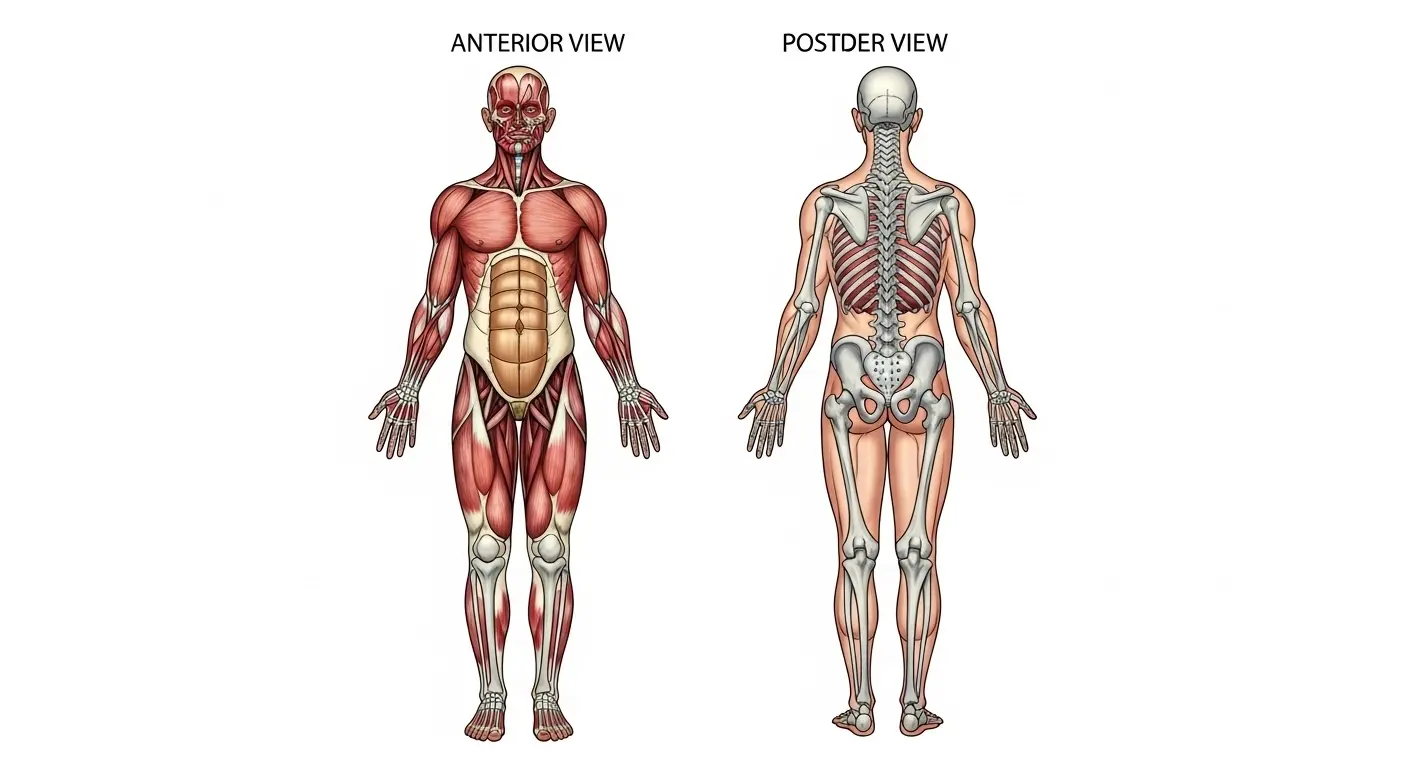
The difference between anterior and posterior is a fundamental concept used in anatomy, biology, and medical science. To understand the difference between anterior and posterior, imagine a doctor explaining body positions to a patient after an injury. In medical terms, anterior refers to the front side of the body, while posterior refers to the back side.
The difference between anterior and posterior helps professionals describe locations clearly and avoid confusion in diagnosis and treatment. For example, chest pain is called anterior chest pain because it occurs at the front, while back pain is posterior because it occurs at the rear. Understanding the difference between anterior and posterior is essential in healthcare, education, and even fitness training.
Key Difference Between Anterior and Posterior
- Anterior means the front side of the body or structure.
- Posterior means the back side of the body or structure.
Difference Between Wheat and Tares: Complete Guide ?
Why Their Difference Is Important
Knowing the difference between anterior and posterior is highly important for doctors, nurses, physiotherapists, and sports trainers. It helps in accurate communication during diagnosis, surgery, and treatment. For students, it builds a strong foundation in anatomy and biology. In society, this knowledge reduces medical errors and improves healthcare outcomes. Even fitness trainers use these terms to guide posture and movement. Without understanding the difference between anterior and posterior, communication in medical and scientific fields would become unclear and potentially dangerous.
Pronunciation
- Anterior
- UK: /ænˈtɪə.ri.ə/
- US: /ænˈtɪr.i.ɚ/
- Posterior
- UK: /pɒˈstɪə.ri.ə/
- US: /pɑːˈstɪr.i.ɚ/
- Difference Between 60Hz and 120Hz: A Complete Guide?
Linking Hook
Now that we understand the basic meaning, let’s explore the difference between anterior and posterior in detail with real-life examples and scientific usage.
Difference Between Anterior and Posterior (10 Key Points)
1. Position
- Anterior: Front side of body or object
- Example: Chest is anterior to the spine.
- Example: Nose is anterior on the face.
- Posterior: Back side of body or object
- Example: Spine is posterior to the chest.
- Example: Shoulder blades are posterior structures.
2. Direction
- Anterior: Faces forward
- Example: Eyes look in anterior direction.
- Example: Knees face anteriorly when standing.
- Posterior: Faces backward
- Example: Back of head faces posterior direction.
- Example: Heel points posteriorly in movement.
3. Anatomical Usage
- Anterior: Used for front anatomical structures
- Example: Anterior brain region is the frontal lobe.
- Example: Anterior heart refers to chest side.
- Posterior: Used for rear anatomical structures
- Example: The posterior brain is the occipital region.
- Example: Posterior body includes lower back.
4. Medical Description
- Anterior: Front-related injuries
- Example: Anterior knee pain affects the front knee.
- Example: Anterior chest wound is front injury.
- Posterior: Back-related injuries
- Example: Posterior shoulder pain affects back.
- Example: Posterior spinal injury affects backbone.
5. Movement Reference
- Anterior: Forward movement
- Example: Leaning forward engages anterior muscles.
- Example: Stepping forward is anterior motion.
- Posterior: Backward movement
- Example: Leaning back engages posterior muscles.
- Example: Moving backward is posterior motion.
6. Muscle Group
- Anterior: Front muscles
- Example: Abdominal muscles are anterior core.
- Example: Chest muscles are anterior muscles.
- Posterior: Back muscles
- Example: Back muscles support the posterior body.
- Example: Hamstrings are posterior leg muscles.
7. Organ Position
- Anterior: Front organs
- Example: Stomach is anterior in abdomen.
- Example: Rib cage protects anterior organs.
- Posterior: Back organs
- Example: Kidneys lie posterior in the abdomen.
- Example: Spine supports posterior organs.
8. Imaging Use
- Anterior: Front scan view
- Example: Anterior X-ray shows chest front.
- Example: Anterior ultrasound scans front organs.
- Posterior: Back scan view
- Example: Posterior X-ray shows spine.
- Example: Posterior imaging checks back structure.
9. Clinical Examination
- Anterior: Front examination
- Example: Doctor checks anterior chest.
- Example: Anterior neck exam checks throat.
- Posterior: Back examination
- Example: Doctor checks posterior spine.
- Example: Posterior shoulder exam for pain.
10. Orientation in Biology
- Anterior: Forward-facing orientation
- Example: The fish head is the anterior side.
- Example: Insects move anteriorly.
- Posterior: Rear-facing orientation
- Example: The fish tail is on the posterior side.
- Example: Animals show posterior tail end.
Nature and Behaviour
Anterior is associated with forward direction, visibility, and action. It represents what is in front and often relates to active functions like movement and perception.
Posterior is associated with support, structure, and protection. It represents what is behind and often provides stability, balance, and support to the body or object.
Why People Are Confused
People often confuse anterior and posterior because both are relative terms depending on body position. In everyday language, “front” and “back” are simple, but in anatomy, orientation changes with posture and species (especially animals). This scientific usage makes the difference between anterior and posterior harder to understand for beginners.
Table: Difference and Similarity
| Feature | Anterior | Posterior |
| Meaning | Front side | Back side |
| Direction | Forward | Backward |
| Function | Active movement | Support & stability |
| Usage | Front anatomy | Back anatomy |
| Similarity | Both describe body orientation in anatomy |
Which is Better in What Situation?
Anterior Usage
The anterior concept is more useful when discussing the front side of the body in medical exams, fitness training, and visual diagnosis. Doctors rely on anterior views to check heart, lungs, and chest conditions. In sports, trainers focus on anterior muscles like abs and chest for strength and posture. It is also important in anatomy education because it helps students understand forward-facing structures. Whenever visibility, communication, or forward movement is involved, anterior becomes more important. Thus, in situations requiring front-side focus, the anterior perspective is the most relevant and widely used.
Posterior Usage
The posterior concept is essential in situations involving the back side of the body, such as spinal health, posture correction, and rehabilitation. Doctors use posterior views to examine the spine, kidneys, and back muscles. Physiotherapists rely on posterior knowledge to treat back pain and improve body balance. In sports science, posterior muscles like hamstrings and glutes are key for power and stability. It is also crucial in injury recovery and ergonomic studies. Therefore, whenever support, structure, and back-side analysis are required, the posterior perspective becomes more important in medical and physical fields.
Metaphors and Similes
- Anterior (Metaphor): “The anterior mind of a leader” means forward-thinking leadership.
- Posterior (Metaphor): “The posterior support of life” means hidden support system.
- Simile (Anterior): “He stands anterior like a shield facing forward.”
- Simile (Posterior): “She supports silently like a posterior backbone.”
Connotative Meaning
- Anterior: Neutral to positive (represents progress, visibility, action)
- Posterior: Neutral (represents support, stability, hidden strength)
Idioms or Proverbs
- “Front and center” (related to anterior focus)
- Example: The issue is front and center in discussion.
- “Backbone of support” (related to posterior meaning)
- Example: Teachers are the backbone of society.
Works in Literature
- No major literary works are specifically titled Anterior or Posterior.
However, anatomical terminology is widely used in medical literature and scientific textbooks such as: - Gray’s Anatomy (Henry Gray, 1858, Medical Science)
- Human Anatomy & Physiology Texts (Modern educational works, various authors)
Movies Related to Keywords
- No widely known movies are specifically titled “Anterior” or “Posterior.”
However, these terms are commonly used in medical documentaries and anatomy educational films across the USA, UK, and global institutions.
Frequently Asked Questions
1. What is anterior?
Anterior means the front side of a body or structure.
2. What is posterior?
Posterior means the back side of a body or structure.
3. Are anterior and posterior opposites?
Yes, they are anatomical opposites.
4. Where are these terms used?
They are used in medicine, biology, and anatomy.
5. Why are they important?
They help in accurate medical communication and diagnosis.
How Both Are Useful for Surroundings
Both anterior and posterior are important in understanding human and animal anatomy. They help doctors, researchers, and trainers describe body parts clearly. In daily life, they improve awareness of posture and movement, helping prevent injuries and improve physical health.
Final Words
Understanding the difference between anterior and posterior is essential in both academic and practical fields. These terms help describe body orientation clearly and accurately. While anterior focuses on the front and action, posterior represents the back and support. Together, they create a complete understanding of anatomy and movement. Their usage in medicine, fitness, and education makes them highly valuable for learners and professionals alike.
Conclusion
In conclusion, the difference between anterior and posterior plays a vital role in anatomy and medical science. These two terms help professionals describe body positions with clarity and precision. Anterior refers to the front side, which is often associated with action, visibility, and forward movement.
On the other hand, posterior refers to the back side, which provides support, structure, and balance. Understanding both terms is essential for students, doctors, and fitness experts to avoid confusion in communication and treatment.
From medical diagnosis to physical training, these concepts are widely used in real-life applications. Therefore, mastering the difference between anterior and posterior improves knowledge, accuracy, and practical understanding in health and science fields.

Hi, I’m LunarCrest, the author behind GrammarCircle. I’m passionate about language, writing, and helping people understand the finer details of English. Through my work, I focus on explaining grammar rules, word differences, and language concepts in a simple and practical way.