Imagine visiting your dentist after years of struggling with missing teeth. You are presented with two major options: dentures or implants. Both promise to restore your smile, but how do you choose the right one? The difference between dentures and implants is more than just cost or convenience; it involves durability, comfort, and long-term oral health.
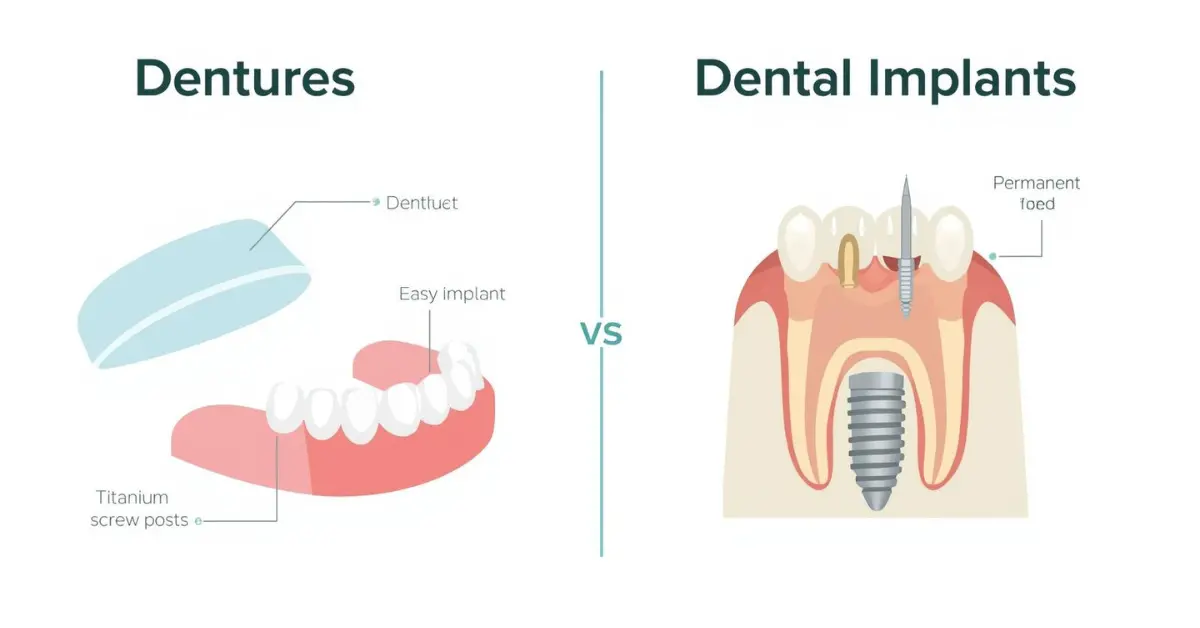
Dentures are removable prosthetic teeth that rest on the gums, while implants are surgically placed into the jawbone to mimic natural teeth. Understanding the difference between dentures and implants can help patients make informed decisions, avoid oral complications, and maintain confidence in social interactions. Whether for cosmetic or functional reasons, knowing this difference is essential for anyone seeking dental restoration.
Pronunciation:
- Dentures: US /ˈden·tʃərz/ | UK /ˈden.tʃəz/
- Implants: US /ˈɪm.plænts/ | UK /ˈɪm.plɑːnts/
Both options have their own advantages and disadvantages. Let’s explore their differences in detail to help you choose wisely.
Difference Between Dentures and Implants
1. Permanency
- Dentures: Removable; patients take them out daily.
- Example 1: Jane removes her dentures before sleeping.
- Example 2: Older adults may prefer dentures for flexibility.
- Implants: Permanent; anchored to the jawbone.
- Example 1: Tom’s implants feel like his natural teeth.
- Example 2: Implants reduce bone loss over time.
2. Durability
- Dentures: Can wear out in 5–10 years.
- Example 1: Susan replaced her dentures after 6 years.
- Example 2: Dentures may crack if dropped accidentally.
- Implants: Can last 20+ years with proper care.
- Example 1: Mark’s implants are 15 years old and still strong.
- Example 2: Titanium implants resist corrosion.
3. Comfort
- Dentures: May cause irritation and sore spots.
- Example 1: Wearing dentures all day gave Liam gum soreness.
- Example 2: New dentures required adjustments for Mary.
- Implants: Feel natural and comfortable like real teeth.
- Example 1: Implants allow Sarah to eat confidently.
- Example 2: Implants do not slip while speaking.
4. Maintenance
- Dentures: Require daily cleaning and soaking.
- Example 1: Emma cleans her dentures every night.
- Example 2: Dentures must be handled carefully to avoid damage.
- Implants: Cleaned like natural teeth with brushing and flossing.
- Example 1: Implants need routine dental check-ups.
- Example 2: Plaque around implants can cause peri-implantitis if ignored.
5. Bone Health
- Dentures: Do not prevent jawbone deterioration.
- Example 1: Long-term denture wearers may have sunken facial appearance.
- Example 2: Dentures do not stimulate bone growth.
- Implants: Stimulate jawbone, preventing bone loss.
- Example 1: Implants maintain natural facial structure.
- Example 2: Jaw strength improves with implants.
6. Cost
- Dentures: Lower initial cost.
- Example 1: Basic dentures are affordable for seniors.
- Example 2: Replacement dentures are cheaper than implants.
- Implants: Higher upfront cost.
- Example 1: Full-mouth implants can be expensive but durable.
- Example 2: Long-term benefits outweigh initial cost.
7. Aesthetics
- Dentures: Can look natural but may shift when eating or speaking.
- Example 1: Carol’s dentures required adhesives for stability.
- Example 2: Denture teeth may appear slightly artificial.
- Implants: Closely resemble natural teeth in look and feel.
- Example 1: John’s implants blend seamlessly with his smile.
- Example 2: Implants enhance self-confidence during social interactions.
8. Speech Impact
- Dentures: May cause difficulty in pronouncing certain words.
- Example 1: Denture wearers often lisp initially.
- Example 2: Dentures can slip while talking.
- Implants: Do not affect speech.
- Example 1: Implants allow clear pronunciation.
- Example 2: No adjustment period needed.
9. Eating Efficiency
- Dentures: Limit certain foods; sticky or hard foods are challenging.
- Example 1: Eating apples may require cutting them into small pieces.
- Example 2: Dentures can reduce chewing efficiency.
- Implants: Function like natural teeth; no dietary restrictions.
- Example 1: Implants allow eating steak without difficulty.
- Example 2: Enjoying crunchy vegetables is easy.
10. Surgical Requirement
- Dentures: Non-invasive; no surgery needed.
- Example 1: Dentures are suitable for patients avoiding surgery.
- Example 2: Quick solution for tooth loss.
- Implants: Require surgical placement and healing time.
- Example 1: Jawbone assessment is needed before implant surgery.
- Example 2: Recovery may take several months.
Nature and Behaviour
- Dentures: Temporary, flexible, require adjustment, convenient for short-term solutions.
- Implants: Permanent, stable, durable, promote long-term oral health.
Why People Are Confused
Many confuse dentures and implants because both replace missing teeth. The confusion arises from appearance similarity, lack of awareness about surgery, cost, and lifestyle impacts.
Dentures vs Implants: Table Comparison
| Feature | Dentures | Implants | Similarity |
| Permanency | Removable | Permanent | Both replace missing teeth |
| Comfort | May cause irritation | Feels like natural teeth | Improve appearance |
| Maintenance | Daily soaking & cleaning | Brushing & flossing | Require oral hygiene |
| Bone Health | No bone stimulation | Prevents bone loss | Support oral health |
| Cost | Lower | Higher | Both have initial costs |
| Eating & Speech | Limited | Normal | Restore oral functions |
| Surgery | Not required | Required | Involve dentist |
Which Is Better in What Situation?
Dentures: Suitable for older patients, temporary replacements, or those avoiding surgery. Affordable and convenient for short-term use.
Implants: Best for long-term oral health, preserving jawbone, and restoring natural function. Ideal for patients seeking durability and comfort.
Metaphors and Similes
- Dentures: “Her smile was like a set of polished pearls, though removable.”
- Implants: “His confidence grew like roots, anchored firmly like implants.”
Connotative Meaning
- Dentures: Neutral to slightly negative (removable, aging). Example: Dentures are sometimes associated with elderly stereotypes.
- Implants: Positive (durable, natural). Example: Implants symbolize modern dental technology.
Idioms or Proverbs
- “Put your teeth into it” – Engage fully (applies to dental effort metaphorically).
- “Bite the bullet” – Face a challenge, like choosing implant surgery.
Works in Literature
- “Teeth and Tales” (Short Story, Sarah Ellis, 2012) – Dentures referenced.
- “Smile Perfected” (Health Guide, John Matthews, 2018) – Discusses implants.
Movies
- “The Tooth Fairy” (2010, USA) – Dentures featured.
- “Tooth Implant Story” (2021, UK) – Dental implants plotline.
Frequently Asked Questions
- Are implants better than dentures?
- Implants are permanent and more natural but costly; dentures are removable and cheaper.
- Can dentures be replaced by implants later?
- Yes, dentures can be a temporary solution before implants.
- Do implants hurt?
- Surgery involves minor discomfort; local anesthesia reduces pain.
- Which lasts longer?
- Implants can last 20+ years; dentures typically 5–10 years.
- Do implants prevent bone loss?
- Yes, implants stimulate the jawbone, unlike dentures.
How Both Are Useful for Surroundings
Both dentures and implants improve oral hygiene, prevent further dental issues, and help maintain social confidence, positively affecting family and community interactions.
Final Words
Both dentures and implants serve the crucial purpose of restoring smiles. Dentures offer affordability and flexibility, while implants ensure longevity and natural function. Knowing the difference between dentures and implants empowers patients and professionals to make the right dental choice.
Conclusion
Understanding the difference between dentures and implants is essential for oral health, aesthetics, and overall confidence. Dentures provide a practical, affordable solution, while implants offer a permanent, natural-feeling alternative.
Both contribute to improved speech, eating efficiency, and self-esteem. Choosing the right option depends on individual health, budget, and lifestyle needs. By considering the long-term impact, patients can make informed decisions that enhance their quality of life and oral well-being.

I’m BeaconRise, the author behind GrammarCircle, where I help readers understand English grammar, language differences, and writing concepts in a simple and practical way. I specialize in explaining confusing words, grammar rules, and “difference between” topics so learners can easily improve their writing and communication skills.