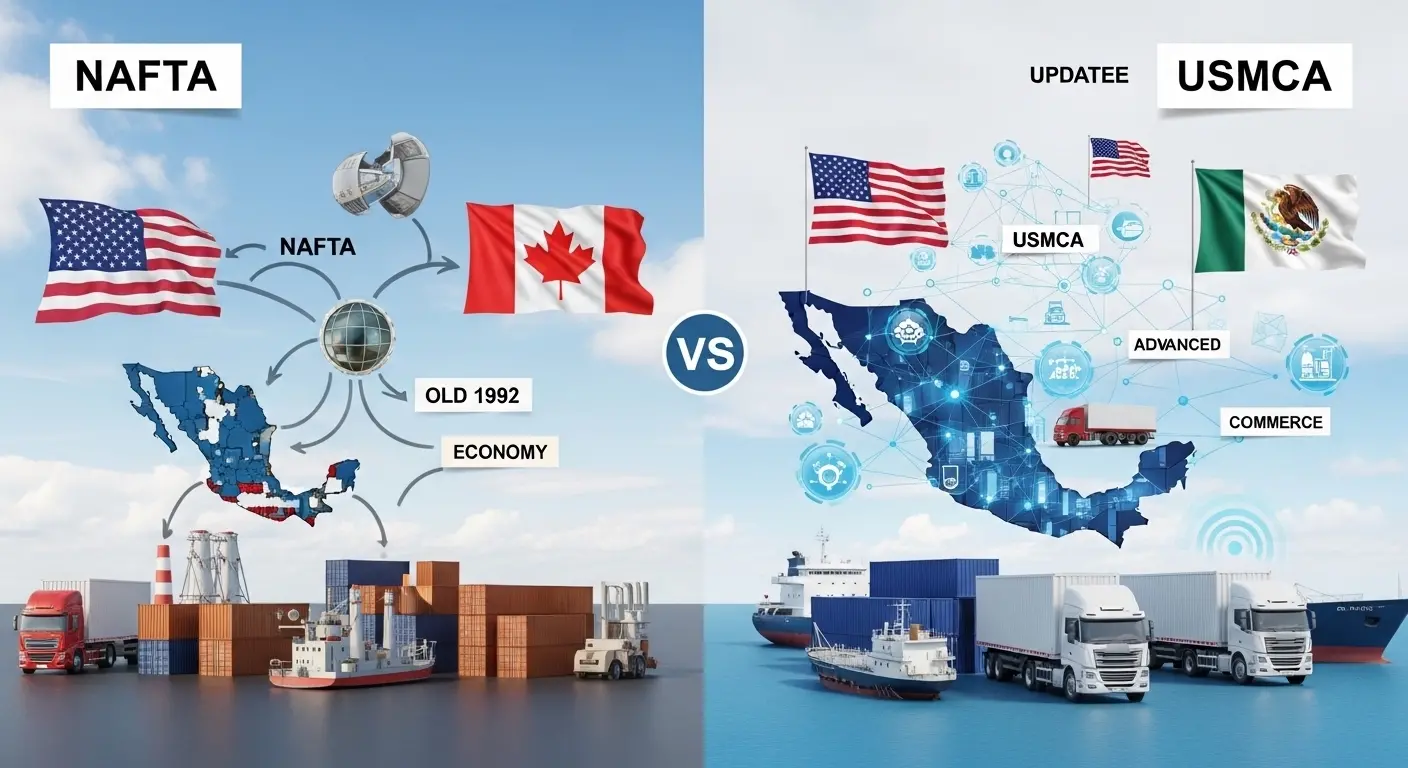
In the world of international trade, understanding agreements like NAFTA and USMCA can seem daunting, but their impact touches everyday life. Imagine a small Canadian company exporting maple syrup to the United States or a Mexican auto-parts manufacturer supplying vehicles to Canada.
These businesses operate under trade rules shaped by agreements like NAFTA and USMCA. While many assume they are interchangeable, there are crucial distinctions that affect tariffs, labor standards, and digital trade.
Knowing the difference between NAFTA and USMCA helps business owners, economists, and students make informed decisions. In this article, we’ll explore the pronunciation, nature, and detailed contrasts between these two key trade agreements, making it simple for everyone to understand.
Pronunciation:
- NAFTA (US: /ˈnæf.tə/, UK: /ˈnɑːf.tə/)
- USMCA (US: /ˌjuː.es.ɛm.siːˈeɪ/, UK: /ˌjuː.es.ɛm.siːˈeɪ/)
Let’s dive into the main differences to understand why these trade agreements matter.
Difference Between NAFTA and USMCA
1. Origin and Timeframe
- NAFTA: Signed in 1992, effective in 1994; included Canada, the US, and Mexico.
- Example 1: A US dairy exporter faced fewer tariffs in Canada under NAFTA.
- Example 2: Mexican avocado exports to the US grew significantly after NAFTA.
- USMCA: Signed in 2018, effective in 2020; replaced NAFTA with updated provisions.
- Example 1: The USMCA enforces stricter labor laws in Mexican factories.
- Example 2: Digital trade protections allow Canadian tech firms better cross-border services.
2. Labor Regulations
- NAFTA: Minimal labor regulations.
- Example 1: Workers’ rights enforcement in Mexico was weak under NAFTA.
- Example 2: US manufacturing jobs moved to Mexico due to lower labor costs.
- USMCA: Stronger labor standards.
- Example 1: Mexican factories must comply with US-style labor inspections.
- Example 2: Wages for auto workers in Mexico must meet minimum thresholds.
3. Environmental Standards
- NAFTA: Limited environmental provisions.
- Example 1: Pollution control in cross-border industries was largely voluntary.
- Example 2: Deforestation and water use in Mexico faced few restrictions.
- USMCA: Explicit environmental commitments.
- Example 1: Companies must follow stricter emission standards.
- Example 2: Protection of endangered species is legally enforceable.
4. Digital Trade
- NAFTA: Virtually no coverage for digital trade.
- Example 1: Online software sales across borders weren’t clearly regulated.
- Example 2: Cloud service exports faced barriers.
- USMCA: Strong digital trade provisions.
- Example 1: Free flow of data across borders without forced storage.
- Example 2: E-commerce protections reduce tariffs on digital goods.
5. Automotive Rules
- NAFTA: Less strict rules of origin for automobiles.
- Example 1: Auto parts sourced from any country qualified for duty-free status.
- Example 2: US car companies imported cheaper parts from Asia indirectly.
- USMCA: Requires 75% North American content.
- Example 1: Automakers must source more parts regionally.
- Example 2: Encourages higher wages for Mexican auto workers.
6. Dispute Resolution
- NAFTA: Chapter 11 allowed corporate lawsuits against governments.
- Example 1: Tobacco companies sued Canada for health regulations.
- Example 2: Environmental laws challenged by foreign investors.
- USMCA: Limits investor-state disputes.
- Example 1: Governments retain more control over public health measures.
- Example 2: Reduces corporate litigation against labor laws.
7. Intellectual Property
- NAFTA: Basic IP protections.
- Example 1: Patent protections for pharmaceuticals were limited.
- Example 2: Copyright enforcement varied across borders.
- USMCA: Extended IP protections.
- Example 1: 10-year protection for biologic drugs in the US.
- Example 2: Stronger copyright enforcement online.
8. Tariffs and Market Access
- NAFTA: Eliminated most tariffs gradually.
- Example 1: US corn faced zero tariffs entering Mexico.
- Example 2: Canadian lumber exports grew under tariff exemptions.
- USMCA: Maintains tariff-free access but with updated rules.
- Example 1: Dairy tariffs adjusted in US-Canada trade.
- Example 2: Auto tariffs remain zero if rules of origin are met.
9. Small Business Benefits
- NAFTA: Limited provisions for SMEs.
- Example 1: Small Canadian tech exporters had limited support.
- Example 2: Mexican artisans struggled with market access.
- USMCA: Encourages small and medium-sized enterprises.
- Example 1: E-commerce support for startups.
- Example 2: Reduced customs paperwork for small traders.
10. Trade Flexibility
- NAFTA: Rigid structure.
- Example 1: Changes required multi-year negotiations.
- Example 2: Limited adaptation to new industries like tech.
- USMCA: Updated for modern economy.
- Example 1: Accommodates digital services and e-commerce.
- Example 2: Easier updates for future trade issues.
Nature and Behavior
- NAFTA: Focused on reducing tariffs and increasing trade, less on labor, environment, or digital issues.
- USMCA: Modernized, enforceable, and broader in scope, addressing labor, environmental standards, and technological developments.
Why People Are Confused
Many assume USMCA is just a renaming of NAFTA, but USMCA introduces stricter rules, new protections, and modern provisions that differ significantly from NAFTA.
NAFTA vs USMCA Table: Differences and Similarities
| Feature | NAFTA | USMCA | Similarity |
| Signed Year | 1992 | 2018 | Trade between US, Canada, Mexico |
| Effective Year | 1994 | 2020 | Duty-free market access |
| Labor Regulations | Minimal | Stronger | Aims to boost trade |
| Environmental Rules | Limited | Enforceable | Promotes cross-border business |
| Digital Trade | Not included | Included | Trade promotion |
| Auto Rules | Flexible | 75% regional content | Supports auto industry |
| IP Protection | Basic | Stronger | Protects intellectual property |
| Tariffs | Gradual elimination | Tariff-free with rules | Promotes exports |
| SME Support | Limited | Enhanced | Supports businesses |
| Dispute Mechanism | Corporate lawsuits possible | Limited investor-state disputes | Maintains trade fairness |
Which Is Better in What Situation?
- NAFTA: Better for historical analysis of trade growth in the 1990s and early 2000s, especially for industries relying on flexible sourcing and minimal labor oversight.
- USMCA: Better for modern trade, especially digital services, labor compliance, and environmental accountability, ensuring more sustainable and equitable cross-border commerce.
Metaphors and Similes
- NAFTA is often described as “the bridge over troubled trade waters” (metaphor for easing trade barriers).
- USMCA can be a “modern armor for trade”, protecting labor and environmental rights (simile).
Connotation:
- NAFTA: Neutral to positive — enabled trade growth, but criticism over labor issues.
- USMCA: Positive — enforces standards and adapts to the modern economy.
Idioms / Proverbs
- “Level the playing field” — USMCA seeks to level labor and market conditions.
- “A rising tide lifts all boats” — NAFTA expanded overall trade.
Works in Literature
- “NAFTA’s Promise: Lessons from the Past” — Economics, Robert Pastor, 1995
- “USMCA in the 21st Century” — Policy Analysis, Cecilia Rouse, 2021
Movies
- Trade Wars: NAFTA (2010, Canada)
- USMCA: Modern Trade Story (2021, USA)
Frequently Asked Questions
- Are NAFTA and USMCA the same?
- No, USMCA replaces NAFTA with updated rules.
- Which countries are involved?
- US, Canada, Mexico for both agreements.
- Does USMCA improve labor rights?
- Yes, significantly more than NAFTA.
- Are tariffs still zero?
- Yes, if rules of origin are met.
- Which supports digital trade better?
- USMCA has comprehensive digital trade rules.
How Both Are Useful for Surroundings
- NAFTA: Expanded trade boosted economies, creating jobs and market access.
- USMCA: Promotes environmentally sustainable trade and protects labor rights, benefiting communities and surroundings.
Final Words
Understanding NAFTA and USMCA is crucial for anyone involved in international trade, economics, or business. While NAFTA laid the groundwork for cross-border commerce, USMCA modernizes and strengthens these foundations.
Conclusion
The difference between NAFTA and USMCA reflects how international trade evolves. NAFTA revolutionized North American trade in the 1990s, while USMCA addresses modern challenges, including labor rights, environmental standards, and digital commerce. Both agreements have shaped economies, industries, and everyday life across three nations.
For business owners, policymakers, and students, understanding these differences ensures informed decisions in trade, investment, and economic planning. Whether analyzing past impacts or preparing for future opportunities, knowing the nuances between NAFTA and USMCA is indispensable.

Hi, I’m DreamAnchor, the author behind GrammarCircle. I am passionate about language, writing, and helping people understand the small but important differences in English words and concepts. Through my work, I focus on explaining grammar rules, word comparisons, and language usage in a simple and practical way so that students, writers, and professionals can improve their communication skills.