On a quiet morning walk through a village field, you might notice birds sitting on trees, insects buzzing around flowers, and cows grazing peacefully. Each living thing seems to have its own place and role. This simple observation helps us understand the difference between niche and habitat. While many people think they mean the same thing, they actually describe two different aspects of how organisms live.
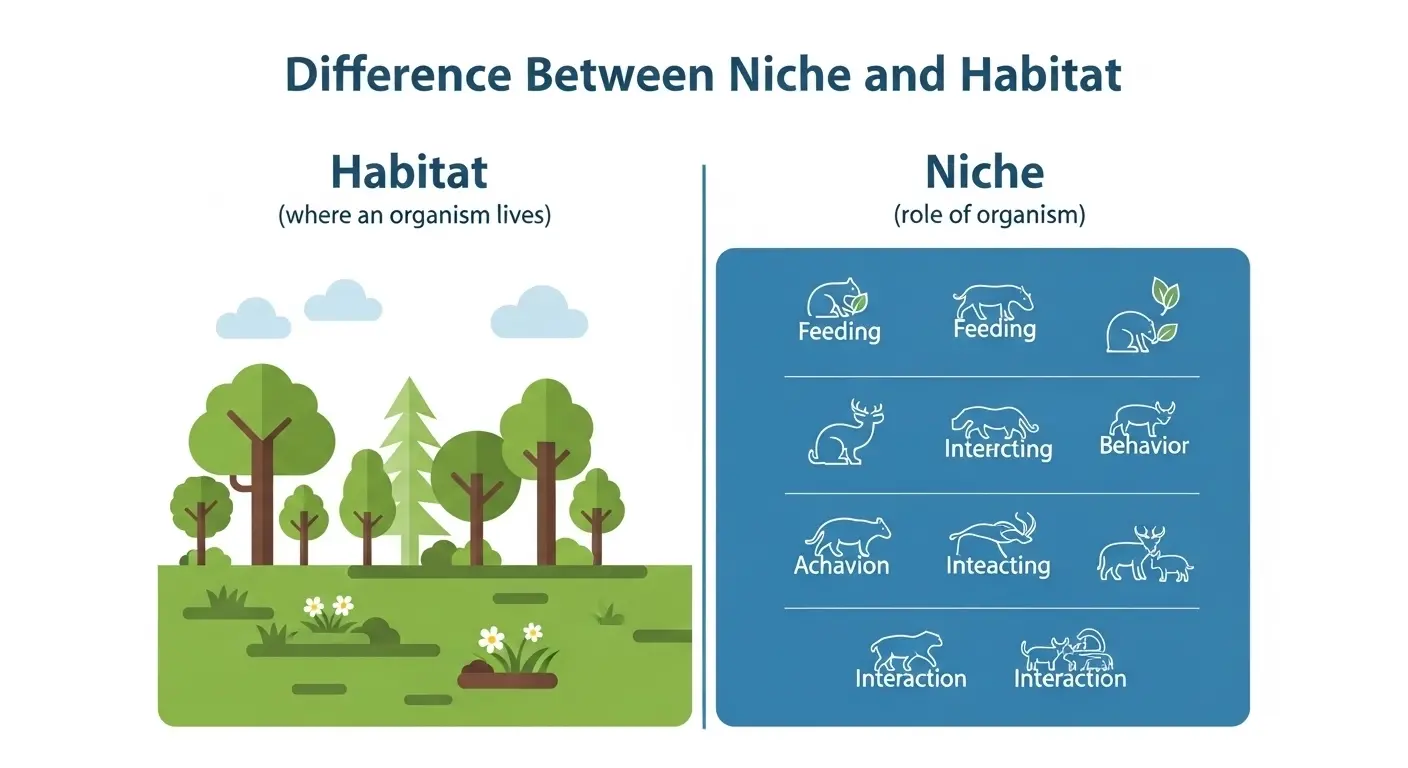
The difference between niche and habitat becomes clearer when you realize that habitat is where an organism lives, while niche is how it lives. For example, a frog lives in a pond (habitat), but its role as an insect eater and prey for birds is its niche. Understanding the difference between niche and habitat is essential for students, researchers, and environmentalists. The difference between niche and habitat also helps explain how ecosystems stay balanced and how species survive together.
Pronunciation (US & UK)
- Niche
- US: /niːʃ/ or /nɪtʃ/
- UK: /niːʃ/
- Habitat
- US: /ˈhæbɪtæt/
- UK: /ˈhæbɪtæt/
A Linking Hook
Now that we understand the basic idea, let’s explore the difference between niche and habitat in detail to avoid confusion and apply this knowledge effectively.
H2: Difference Between Niche and Habitat
1. Definition
- Habitat: The physical place where an organism lives.
- Example 1: A desert is the habitat of camels.
- Example 2: A pond is the habitat of fish.
- Niche: The role or function of an organism in its environment.
- Example 1: A camel stores water and survives harsh heat.
- Example 2: Fish maintain aquatic food chains.
2. Focus
- Habitat focuses on location.
- Example 1: Forests are habitats for tigers.
- Example 2: Oceans are habitats for whales.
- Niche focuses on roles.
- Example 1: Tigers control prey population.
- Example 2: Whales help nutrient cycling.
3. Nature
- Habitat is physical.
- Example 1: Grasslands.
- Example 2: Mountains.
- Niche is functional.
- Example 1: Pollination by bees.
- Example 2: Decomposition by fungi.
4. Components
- Habitat includes water, air, soil.
- Example 1: Wetlands with water bodies.
- Example 2: Forests with trees and soil.
- Niche includes behavior and diet.
- Example 1: Herbivores eating plants.
- Example 2: Predators hunting prey.
5. Uniqueness
- Habitat can be shared.
- Example 1: Many animals live in forests.
- Example 2: Many fish share oceans.
- Niche is usually unique.
- Example 1: No two species have the same exact role.
- Example 2: Each insect species has specific feeding habits.
6. Scope
- Habitat is broader.
- Example 1: A jungle contains many species.
- Example 2: A river hosts multiple organisms.
- Niche is narrower.
- Example 1: A bird’s feeding behavior.
- Example 2: A worm’s role in soil fertility.
7. Changeability
- Habitat can change due to the environment.
- Example 1: Deforestation destroys forests.
- Example 2: Pollution affects rivers.
- Niche changes with adaptation.
- Example 1: Animals change diet.
- Example 2: Birds adapt migration patterns.
8. Relationship
- Habitat is the “address.”
- Example 1: A cave for bats.
- Example 2: A lake for ducks.
- Niche is the “profession.”
- Example 1: Bats eat insects at night.
- Example 2: Ducks filter water for food.
9. Dependency
- Habitat depends on the environment.
- Example 1: Rainfall affects forests.
- Example 2: Temperature affects deserts.
- Niche depends on interactions.
- Example 1: Predator-prey relationships.
- Example 2: Competition for food.
10. Importance
- Habitat supports survival.
- Example 1: Shelter for animals.
- Example 2: Food availability.
- Niche maintains balance.
- Example 1: Bees pollinate plants.
- Example 2: Decomposers recycle nutrients.
Nature and Behaviour
- Habitat: Static and environmental. It provides shelter and resources but does not describe behavior.
- Niche: Dynamic and behavioral. It defines how organisms interact, survive, and reproduce.
Why People Are Confused
People often confuse these terms because both relate to how organisms live. In simple language, both seem to describe “where and how life exists.” However, habitat is about place, while niche is about role, which makes the distinction subtle but important.
Table: Difference and Similarity
| Aspect | Habitat | Niche |
| Meaning | Place of living | Role/function |
| Type | Physical | Functional |
| Scope | Broad | Narrow |
| Sharing | Shared by many | Mostly unique |
| Focus | Environment | Behavior |
| Similarity | Both describe survival of organisms in ecosystems |
Which is Better in What Situation?
When discussing physical environments, such as forests, oceans, or deserts, habitat is the better term. It clearly explains where an organism lives and what conditions support its survival. For example, conservationists use habitat to protect endangered species by preserving forests or wetlands.
On the other hand, niche is more useful when explaining ecological roles and interactions. Scientists studying food chains or ecosystem balance rely on niche to understand how species contribute to their surroundings. Both terms are important but used in different contexts.
Metaphors and Similes
- Habitat is like a “home” where life exists.
- Niche is like a “job” that defines responsibility.
Example:
- “The forest is the tiger’s home (habitat), but hunting deer is its job (niche).”
Connotative Meaning
- Habitat: Neutral (home/place)
- Example: “Protecting natural habitats is essential.”
- Niche: Positive (specialized role)
- Example: “She found her niche in teaching.”
Idioms / Proverbs
- “Find your niche”
- Example: He found his niche in online teaching.
(No common idioms for habitat, but used literally)
Works in Literature
- The Niche – Poetry, various modern writers (2000s)
- Habitat – Novel by Ruth Prawer Jhabvala (1989)
Movies
- Habitat (1997, USA)
- Human Nature (2001, France/USA – explores human niche behavior)
FAQs
1. What is the main difference between niche and habitat?
Habitat is where an organism lives, while niche is how it lives.
2. Can two species share the same habitat?
Yes, many species can share one habitat.
3. Can two species have the same niche?
No, they usually compete, and one dominates.
4. Why is niche important?
It helps maintain ecological balance.
5. Is habitat more important than niche?
Both are equally important for survival.
How Both Are Useful for Surroundings
Habitats provide shelter and resources, while niches maintain ecological balance. Together, they ensure biodiversity and ecosystem stability.
Final Words
Habitat gives organisms a place to live, while niche gives them a purpose. Both are essential for understanding life on Earth.
Conclusion
The difference between niche and habitat is simple yet powerful in understanding ecosystems. Habitat refers to the physical environment where organisms live, while niche explains their role, behavior, and interactions. Without habitats, organisms would have no place to survive, and without niches, ecosystems would lose balance.
This distinction is not only important for students but also for environmental conservation and ecological studies. By understanding both concepts clearly, we can better protect nature and maintain harmony among living organisms.

Hi, I’m LunarCrest, the author behind GrammarCircle. I’m passionate about language, writing, and helping people understand the finer details of English. Through my work, I focus on explaining grammar rules, word differences, and language concepts in a simple and practical way.