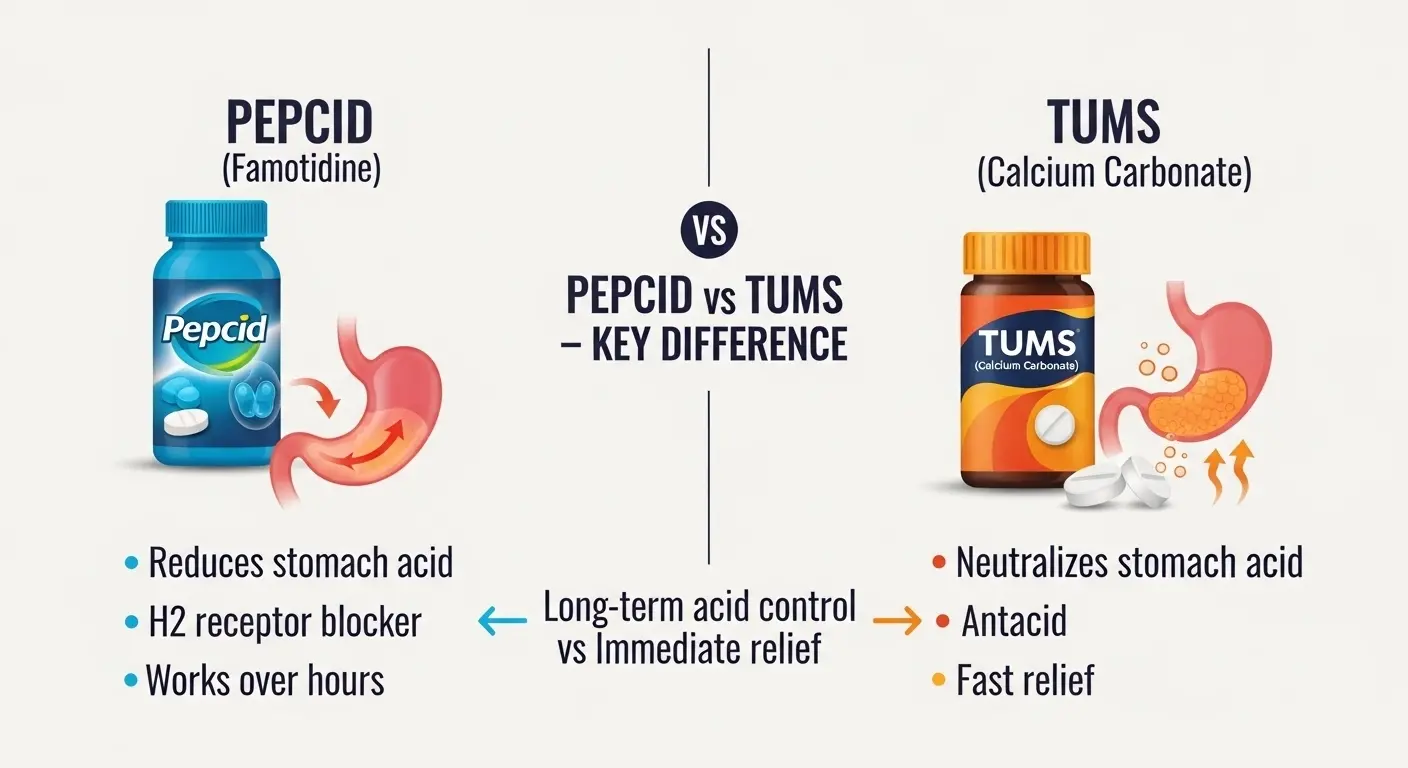
If you’ve ever felt sudden heartburn after a spicy dinner or overeating, you’ve probably reached for remedies like Pepcid or Tums. Both are popular over-the-counter medications, but they work very differently. Pepcid is a histamine-2 blocker, while Tums is a calcium-based antacid. Understanding the difference between Pepcid and Tums can save you from confusing choices and help you manage your digestive discomfort effectively.
Imagine sitting at a family dinner and feeling that sharp burning in your chest. You grab a Tums, expecting fast relief, but your cousin suggests Pepcid instead, citing long-term protection. This real-world scenario illustrates why knowing the difference between Pepcid and Tums is essential. Whether you experience occasional heartburn or frequent acid reflux, distinguishing these two medications is key for your health and safety.
Both Pepcid and Tums are widely available and easy to use, but using them interchangeably without understanding their roles may lead to ineffective treatment or overuse. Before diving deeper, let’s explore their pronunciation:
- Pepcid: /ˈpɛp.sɪd/ (US & UK)
- Tums: /tʌmz/ (US & UK)
Now, let’s dive into the main differences between these two remedies.
Difference Between Pepcid and Tums
Here are 10 key differences between Pepcid and Tums, with examples for each:
- Type of Medication
- Pepcid: H2 receptor blocker that reduces stomach acid production.
Example 1: John takes Pepcid to prevent nighttime acid reflux.
Example 2: Sarah uses Pepcid before meals that usually trigger heartburn. - Tums: Antacid that neutralizes existing stomach acid.
Example 1: Mark chews Tums immediately after a spicy meal for instant relief.
Example 2: Emily keeps Tums in her bag to manage sudden indigestion.
- Pepcid: H2 receptor blocker that reduces stomach acid production.
- Speed of Relief
- Pepcid: Works slowly (30–60 minutes) but provides longer-lasting protection.
Example 1: Taking Pepcid before dinner reduces heartburn throughout the night.
Example 2: Pepcid helps people with chronic acid reflux over the day. - Tums: Provides immediate relief within minutes.
Example 1: After a rich dessert, Tums stop burning sensation quickly.
Example 2: Tums is effective during sudden, intense heartburn episodes.
- Pepcid: Works slowly (30–60 minutes) but provides longer-lasting protection.
- Duration of Action
- Pepcid: Lasts up to 12 hours.
- Tums: Relief lasts 30–60 minutes per dose.
- Mechanism of Action
- Pepcid: Blocks histamine receptors in the stomach lining.
- Tums: Neutralizes acid chemically in the stomach.
- Use Cases
- Pepcid: Chronic acid reflux, GERD prevention.
- Tums: Occasional heartburn, quick neutralization of acid.
- Side Effects
- Pepcid: Rare headaches, dizziness, or constipation.
- Tums: Excess calcium may cause kidney stones if overused.
- Form Availability
- Pepcid: Tablets, chewables, liquid form.
- Tums: Chewable tablets, sugar-free tablets, flavored options.
- Prescription Status
- Pepcid: Available both OTC and in higher doses by prescription.
- Tums: Completely OTC, widely available.
- Impact on Calcium Intake
- Pepcid: Does not contribute calcium.
- Tums: Adds calcium, sometimes used as a supplement.
- Pregnancy Safety
- Pepcid: Generally safe in pregnancy, consult a doctor.
- Tums: Considered safe for occasional use during pregnancy.
Nature and Behavior
- Pepcid: Works preventatively, ideal for frequent or chronic heartburn. It is systemic, acting over time.
- Tums: Works reactively, ideal for sudden or mild discomfort. It acts locally in the stomach.
Why People Are Confused
People often confuse Pepcid and Tums because both treat heartburn but differ in timing, mechanism, and use cases. Misunderstanding leads to using the wrong medication, either delaying relief or overmedicating.
Pepcid vs Tums: Comparison Table
| Feature | Pepcid | Tums | Similarity |
| Type | H2 blocker | Antacid | Both relieve heartburn |
| Speed of relief | 30–60 min | Immediate | Both are OTC remedies |
| Duration | Up to 12 hours | 30–60 min | Both manage stomach acid |
| Mechanism | Blocks histamine receptors | Neutralizes acid | Both improve digestive comfort |
| Side effects | Rare headaches, dizziness | Possible kidney stones | Both generally safe |
| Prescription | OTC & prescription | OTC only | Both widely available |
| Form | Tablet, chewable, liquid | Chewable, sugar-free | Both chewable forms available |
| Use case | Chronic acid reflux | Occasional heartburn | Both treat heartburn |
| Calcium contribution | None | Yes | Both accessible without doctor advice |
| Pregnancy safety | Consult doctor | Safe occasionally | Both can be used in moderation |
Which Is Better in What Situation?
- Pepcid: Better for people who experience frequent or chronic heartburn, especially before meals or at night. Its long-lasting effect prevents recurring discomfort.
- Tums: Best for instant relief after overeating or spicy meals. Its quick action neutralizes acid immediately, making it perfect for sudden heartburn.
Metaphors, Similes, and Connotation
- Pepcid: Metaphorically “a shield against fire in the belly” (positive).
- Tums: Simile “like a cooling balm on a fiery chest” (positive).
Both have neutral-to-positive connotations, as they provide relief and comfort in daily life.
Idioms or Proverbs Related
- “Fight fire with fire” – sometimes used metaphorically for managing acid (Tums as immediate neutralizer).
- “An ounce of prevention is worth a pound of cure” – aligns with Pepcid’s preventative action.
Literary References
- Pepcid and Tums are rarely mentioned by name in literature, but digestive relief is discussed:
- The Joy of Cooking (Cookbook, Irma S. Rombauer, 1931) – Tums-like remedies
- Gastrointestinal Health Guide (Health book, 2008) – Pepcid reference
Movies
- Heartburn or digestive discomfort is portrayed, though not named:
- Heartburn (1986, USA) – Movie about relationships, metaphorical acid
- Julie & Julia (2009, USA) – Overeating and digestive relief scenes
FAQs
- Can I take Pepcid and Tums together?
- Yes, for fast relief plus long-term control, but consult a doctor.
- Which works faster, Pepcid or Tums?
- Tums act immediately; Pepcid takes 30–60 minutes.
- Is one safer in pregnancy?
- Tums is generally safe; Pepcid requires doctor consultation.
- Do both prevent heartburn recurrence?
- Pepcid prevents it; Tums only relieve existing discomfort.
- Are there side effects?
- Pepcid: rare headaches; Tums: excessive calcium may cause kidney stones.
Environmental and Social Usefulness
Both medications are widely accessible, contributing to public health by reducing digestive discomfort. They prevent unnecessary hospital visits and improve overall quality of life.
Final Words
Pepcid is your preventive ally for recurring acid issues, while Tums is the quick rescuer for sudden heartburn. Understanding their differences ensures safe and effective use.
Conclusion
In summary, Pepcid and Tums serve different roles in managing stomach acid. Pepcid works proactively for long-term relief, while Tums offers instant comfort. Knowing the difference between Pepcid and Tums is crucial for safe, effective, and timely treatment of heartburn and digestive issues.
Choosing the right one based on your needs can improve comfort, prevent complications, and enhance daily life. Both medications, when used correctly, complement each other and offer a complete solution for acid-related discomfort.

Hi, I’m LunarCrest, the author behind GrammarCircle. I’m passionate about language, writing, and helping people understand the finer details of English. Through my work, I focus on explaining grammar rules, word differences, and language concepts in a simple and practical way.