When summer hits, many people flock to lakes and rivers to enjoy the serenity of boating. Two types of popular recreational boats are the pontoon and the tritoon. At first glance, they may seem similar, but understanding the difference between a pontoon and tritoon can save both money and safety concerns for boating enthusiasts.
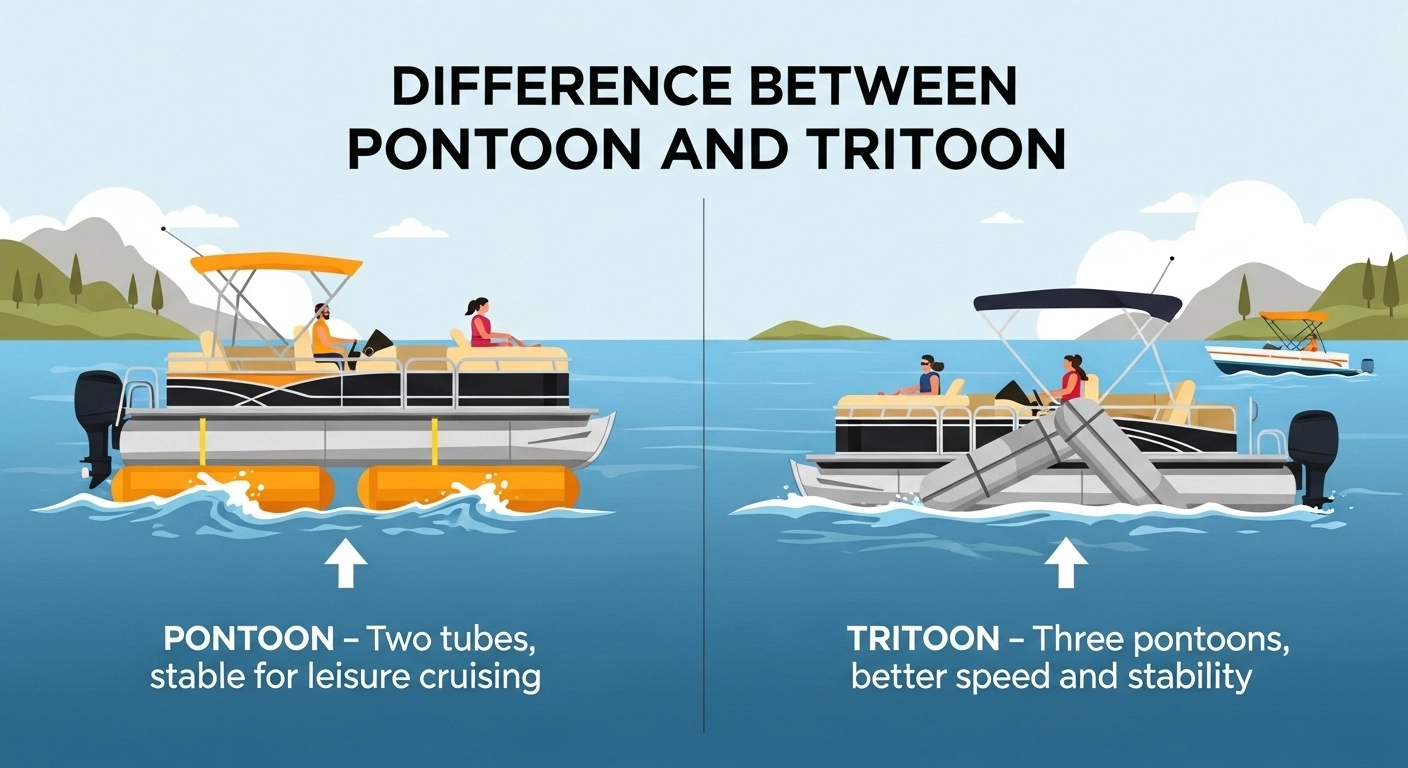
A pontoon is a flat-deck boat supported by cylindrical tubes, while a tritoon has three tubes instead of two, offering extra stability. Knowing the difference between pontoon and tritoon ensures you choose the right boat for leisure, fishing, or even watersports. Whether you’re an experienced captain or a beginner, distinguishing between a pontoon and a tritoon makes a big difference in performance and comfort.
Pronunciation:
- Pontoon: US /pɑnˈtuːn/, UK /pɒnˈtuːn/
- Tritoon: US /ˈtraɪtuːn/, UK /ˈtraɪtuːn/
Now that we know what each boat is, let’s dive deeper into the key differences between them.
Difference Between Pontoon and Tritoon
Here are 10 points of difference between pontoon and tritoon, with simple explanations and examples:
- Number of Hulls
- Pontoon: Has two cylindrical tubes (hulls). Example: A small lake pontoon boat floats easily for family leisure. Another example: Two-tube pontoons are ideal for calm river cruises.
- Tritoon: Has three hulls. Example: A tritoon handles waves in large lakes better. Another example: Tritoon boats are used for larger fishing expeditions requiring stability.
- Stability
- Pontoon: Moderate stability. Example: Suitable for light fishing trips. Example: Children’s parties on small lakes are safe but careful in waves.
- Tritoon: Highly stable due to extra hull. Example: Perfect for watersports like tubing. Example: Can safely accommodate more passengers.
- Capacity
- Pontoon: Smaller capacity (6–12 people). Example: Weekend family rides. Example: Picnic outings on calm waters.
- Tritoon: Larger capacity (12–18 people). Example: Large group parties. Example: Corporate events on lakes.
- Speed
- Pontoon: Slower, less suited for high-speed activities. Example: Leisure cruises. Example: Fishing trips.
- Tritoon: Can reach higher speeds. Example: Pulling water skis. Example: Faster transport across lakes.
- Fuel Efficiency
- Pontoon: More fuel-efficient with smaller engines. Example: Eco-friendly lake trips. Example: Budget weekend rides.
- Tritoon: Requires larger engines, less fuel-efficient. Example: High-speed outings cost more. Example: Long trips may consume more fuel.
- Cost
- Pontoon: Generally cheaper. Example: $15,000–$30,000 for a new boat. Example: Affordable for beginner boaters.
- Tritoon: More expensive due to extra hull. Example: $30,000–$60,000. Example: Preferred by commercial operators.
- Handling in Rough Water
- Pontoon: Less stable in waves. Example: Avoid choppy lakes. Example: Good only for calm rivers.
- Tritoon: Excellent handling. Example: Can navigate windy lakes safely. Example: Offshore parties remain safe.
- Maneuverability
- Pontoon: Easier to maneuver in small spaces. Example: Docking at a small marina. Example: Navigating narrow river paths.
- Tritoon: Slightly harder to maneuver due to size. Example: Needs more room to turn. Example: Better for open water than tight spaces.
- Comfort
- Pontoon: Comfortable for moderate groups. Example: Small family picnic. Example: Casual boating.
- Tritoon: Extremely spacious and luxurious. Example: Lounge areas with more seating. Example: Party boats.
- Usage
- Pontoon: Leisure, fishing, calm water cruising. Example: Weekend relaxation. Example: Family outings.
- Tritoon: Leisure, watersports, large gatherings. Example: Jet skiing or tubing. Example: Corporate or social events.
Nature and Behaviour
Pontoon:
- Calm, steady, and simple.
- Best for casual and family boating.
- Prefers calm waters and short trips.
Tritoon:
- Powerful, versatile, and stable.
- Handles large groups and rougher waters.
- Suitable for extended trips and high-speed activities.
Why Are People Confused About Their Use?
Many people confuse pontoons and tritoon because both have similar flat decks and appear stable. The main confusion arises from the visual similarity of hulls, but the performance and purpose of each are distinct.
Pontoon vs Tritoon Table
| Feature | Pontoon | Tritoon | Similarity |
| Hulls | 2 | 3 | Flat deck |
| Stability | Moderate | High | Both stable on calm water |
| Speed | Slower | Faster | Can be used for leisure |
| Capacity | 6–12 people | 12–18 people | Recreational use |
| Fuel Efficiency | High | Lower | Powered by engines |
| Cost | Affordable | Expensive | Recreational boats |
| Comfort | Moderate | High | Spacious decks |
| Rough Water | Not ideal | Excellent | Suitable for lakes/rivers |
| Handling | Easy | Moderate | Maneuverable |
| Usage | Leisure/fishing | Leisure/watersports | Both for recreational boating |
Which is Better in What Situation?
- Pontoon: Ideal for calm lake trips, family outings, and short-distance leisure boating. It’s economical, fuel-efficient, and easy to handle.
- Tritoon: Best for watersports, larger groups, rough water, or extended trips. It offers superior stability, speed, and comfort, making it perfect for parties or high-speed fun.
Metaphors and Similes
- Pontoon: “As steady as a pontoon on a calm lake” – implying reliability.
- Tritoon: “Like a tritoon slicing through waves” – implying power and stability.
Connotative Meaning:
- Pontoon: Neutral to positive (calm, leisurely). Example: “A pontoon afternoon is always peaceful.”
- Tritoon: Positive (powerful, reliable). Example: “The tritoon handled the storm like a champion.”
Idioms or Proverbs Related
- “Steady as a rock” – like a pontoon.
- “Riding the waves” – like a tritoon handling rough waters.
Works in Literature
- Boating Adventures – Fiction, J. H. Miller, 2015 (Pontoon)
- Lakeside Thrills – Fiction, L. Saunders, 2018 (Tritoon)
Movies About Keywords
- Pontoon Summer – 2020, USA
- Tritoon Waves – 2022, Canada
Frequently Asked Questions
- Can a tritoon be slower than a pontoon?
- Usually no, tritoons are faster due to additional hull support.
- Is a pontoon safer for kids?
- Yes, on calm waters due to moderate stability.
- Which is better for fishing?
- Pontoon is ideal for small groups; tritoon for larger fishing parties.
- Are tritoons more expensive?
- Yes, generally due to the extra hull and capacity.
- Can a pontoon handle watersports?
- Light activities, yes, but for tubing or skiing, a tritoon is better.
How Both Are Useful for Surroundings
- Pontoon: Quiet operation, minimal disturbance to wildlife in lakes.
- Tritoon: Supports large eco-friendly groups, efficient for extended recreational trips.
Final Words for the Both
Both pontoon and tritoon boats have their unique strengths. Choosing depends on your purpose: leisure, fishing, watersports, or large gatherings. Knowing the difference ensures safety, comfort, and maximum enjoyment.
Conclusion
Understanding the difference between a pontoon and tritoon is essential for every boating enthusiast. While pontoons provide calm, easygoing fun on lakes and rivers, tritoons offer enhanced stability, speed, and capacity for larger groups and more adventurous activities. Knowing their distinctions helps in choosing the right boat for the right occasion, ensuring safety, efficiency, and an unforgettable water experience.
Both types enrich recreational boating, making lakes and rivers more enjoyable for families, friends, and professionals alike.

Hi, I’m LunarCrest, the author behind GrammarCircle. I’m passionate about language, writing, and helping people understand the finer details of English. Through my work, I focus on explaining grammar rules, word differences, and language concepts in a simple and practical way.