In a small kitchen in Lahore, a grandmother prepares biryani while her granddaughter watches closely. “Add the herbs first,” she says, tossing in fresh mint and coriander. “Now the spices,” she adds, sprinkling cumin and cloves. The child pauses and asks the most common question: what is the real difference between spice and herb?
Many people search for the difference between spice and herb because both add flavor, aroma, and color to food. Yet, the difference between spice and herb lies in their origin, plant parts, and usage. Understanding the difference between spice and herb not only improves cooking skills but also deepens knowledge of culture, trade, and health traditions.
Before diving deeper, let’s clearly define and pronounce both words.
Meaning of the Keywords
- Spice: A dried part of a plant (such as seeds, bark, roots, or buds) used to flavor food.
- Herb: The fresh or dried leafy green part of a plant used for flavoring or garnishing.
Pronunciation (US & UK)
- Spice
- US: /spaɪs/
- UK: /spaɪs/
- Herb
- US: /ɝːb/ (the “h” is usually silent)
- UK: /hɜːb/ (the “h” is pronounced)
Now that we understand the basics, let’s explore the detailed difference between spice and herb in a structured way.
Key Difference Between the Both
The main difference is simple:
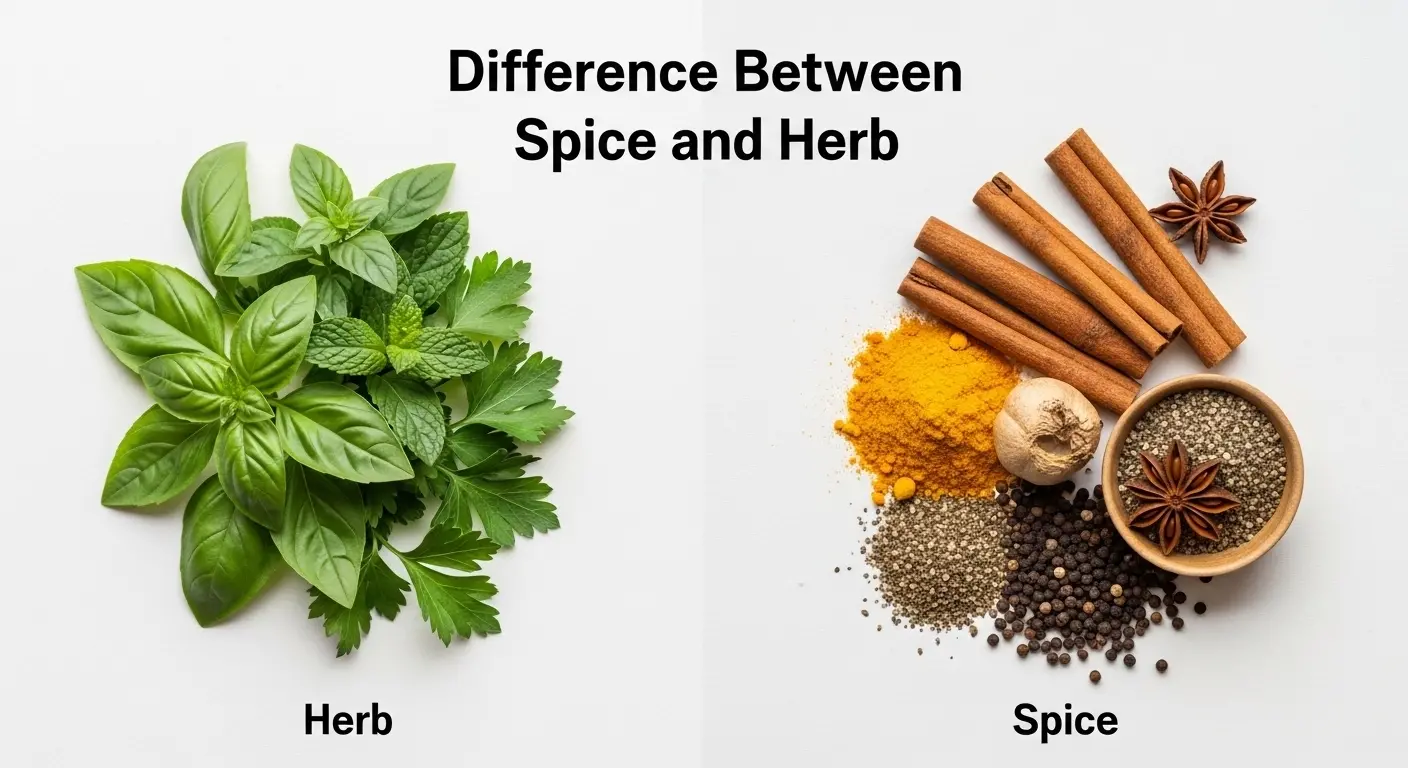
- Spices come from non-leafy parts of plants like seeds, roots, bark, or fruits.
- Herbs come from the leafy green part of plants.
For example, coriander leaves are an herb, but coriander seeds are a spice.
Why Is Their Difference Necessary to Know for Learners and Experts?
Understanding the difference between spice and herb is important for:
- Culinary students who need correct ingredient classification.
- Nutritionists who study plant-based benefits.
- Farmers and traders involved in agriculture and export.
- Cultural researchers exploring historical spice routes.
Spices once shaped world history through trade routes, while herbs were commonly grown in home gardens. Knowing the difference helps society in cooking, medicine, agriculture, and economics.
H2: Difference Between Spice and Herb
Here are 10 clear points of difference:
1. Plant Part Used
- Spice: Comes from seeds, bark, roots, or fruits.
- Examples: Cinnamon (bark), Cumin (seed)
- Herb: Comes from leaves.
- Examples: Mint leaves, Basil leaves
2. Form
- Spice: Mostly dried before use.
- Examples: Dried cloves, Turmeric powder
- Herb: Can be fresh or dried.
- Examples: Fresh parsley, Dried oregano
3. Flavor Strength
- Spice: Strong and intense flavor.
- Examples: Black pepper, Chili
- Herb: Mild and fresh flavor.
- Examples: Cilantro, Thyme
4. Usage in Cooking
- Spice: Added during cooking.
- Examples: Garam masala in curry, Paprika in soup
- Herb: Often added at the end.
- Examples: Basil on pizza, Parsley garnish
5. Climate Growth
- Spice: Mostly grown in tropical climates.
- Examples: Cardamom, Nutmeg
- Herb: Can grow in many climates.
- Examples: Rosemary, Mint
6. Shelf Life
- Spice: Longer shelf life.
- Examples: Whole cloves, Dried ginger
- Herb: Shorter shelf life if fresh.
- Examples: Fresh dill, Fresh coriander
7. Historical Importance
- Spice: Used in ancient trade routes.
- Examples: Pepper trade, Cinnamon trade
- Herb: Used mainly locally in homes.
- Examples: Sage in Europe, Mint in Asia
8. Medicinal Use
- Spice: Used in traditional medicine systems.
- Examples: Turmeric for healing, Cloves for toothache
- Herb: Used in herbal remedies.
- Examples: Chamomile tea, Basil for digestion
9. Aroma
- Spice: Warm and deep aroma.
- Examples: Nutmeg, Star anise
- Herb: Fresh and green aroma.
- Examples: Mint, Parsley
10. Color Impact
- Spice: Adds strong color.
- Examples: Turmeric (yellow), Paprika (red)
- Herb: Adds green freshness.
- Examples: Basil, Coriander leaves
Nature and Behaviour
Spices are bold, intense, and warming. They change the entire character of a dish.
Herbs are light, refreshing, and aromatic. They enhance rather than dominate flavor.
Why Are People Confused About Their Use?
People get confused because:
- Some plants provide both (coriander plant).
- Both are used in small quantities.
- Both improve flavor and aroma.
- The terms are sometimes used loosely in conversation.
Table: Difference and Similarity Between Spice and Herb
| Feature | Spice | Herb | Similarity |
| Plant Part | Seeds, bark, root | Leaves | Both come from plants |
| Flavor | Strong | Mild | Add flavor |
| Form | Usually dried | Fresh or dried | Used in cooking |
| Shelf Life | Long | Short (fresh) | Stored carefully |
| Use | Cooking base | Garnish or flavor | Enhance dishes |
Which Is Better in What Situation?
Spices are better when you want deep flavor, warmth, and strong aroma. In curries, stews, and baked goods, spices create richness. They are perfect for winter meals and preserved foods.
Herbs are better when you want freshness and light aroma. Salads, soups, and pasta dishes benefit from herbs. They are ideal for summer meals and garnishing.
Metaphors and Similes
- “Variety is the spice of life.” (Metaphor for excitement)
- “Her words were like fresh herbs, light and comforting.” (Simile)
Connotative Meaning
Spice
- Positive: Excitement (“She added spice to the event.”)
- Neutral: Ingredient (“Add spice carefully.”)
- Negative: Conflict (“The debate had some spice.”)
Herb
- Positive: Healing (“He believes in herbal remedies.”)
- Neutral: Plant (“This herb grows easily.”)
- Negative: Rarely negative; sometimes slang use.
Idioms and Proverbs
- “Variety is the spice of life.”
- Example: Trying new hobbies is the spice of life.
- “Spice things up.”
- Example: Add music to spice things up.
(Herbs have fewer common idioms.)
Works in Literature
- “The Spice-Box of Earth” – Poetry, Leonard Cohen, 1961
- “Herb: Mastering the Art of Cooking with Cannabis” – Non-fiction, Laurie Wolf, 2015
Movies Related to the Keywords
- Dune – 1984, USA (Fictional spice central to story)
- Dune – 2021, USA
Frequently Asked Questions
1. Are all spices dried?
Most are dried, but some can be used fresh like ginger.
2. Can a plant be both herb and spice?
Yes, like coriander (leaves = herb, seeds = spice).
3. Which is healthier?
Both offer health benefits. It depends on usage.
4. Why is spice stronger than herb?
Because it comes from concentrated plant parts.
5. Can herbs replace spices?
Not always. Their flavor intensity is different.
How Both Are Useful for Surroundings
Spices and herbs improve health, promote agriculture, support farmers, and boost international trade. They also make food enjoyable and culturally rich.
Final Words for Both
Spices bring warmth and boldness.
Herbs bring freshness and balance.
Together, they complete every kitchen.
Conclusion
The difference between spice and herb may seem small, but it is meaningful. Spices come from seeds, roots, bark, and fruits, while herbs come from leaves. Spices are strong and warming, whereas herbs are fresh and light.
Understanding their difference helps cooks, students, farmers, and health experts. Both play a powerful role in culture, trade, medicine, and daily cooking. When used wisely, spices and herbs create harmony in food and life.

Hi, I’m DreamAnchor, the author behind GrammarCircle. I am passionate about language, writing, and helping people understand the small but important differences in English words and concepts. Through my work, I focus on explaining grammar rules, word comparisons, and language usage in a simple and practical way so that students, writers, and professionals can improve their communication skills.