Imagine visiting a hospital with severe back pain and frequent urination. You may wonder whether to see a urologist or a nephrologist. This real-world scenario highlights the difference between urology and nephrology, two medical specialties often confused.
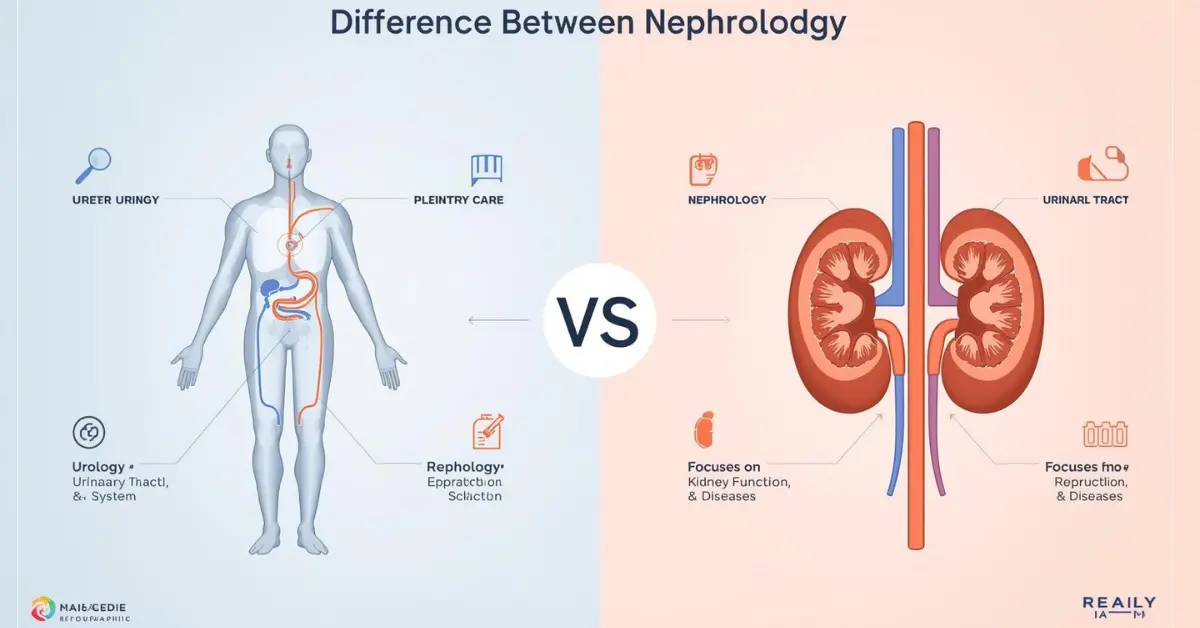
Urology primarily deals with the urinary tract system, including kidneys, bladder, and male reproductive organs, while nephrology specifically focuses on kidney function and diseases.
Knowing the difference between urology and nephrology is essential for patients, students, and healthcare professionals alike. When you understand these distinctions, you can seek accurate treatment and make informed decisions. In this article, we will break down the key differences, usage, and relevance of both fields.
Pronunciation:
- Urology – US: /juːˈrɑːlədʒi/, UK: /juːˈrɒlədʒi/
- Nephrology – US: /nəˈfrɑːlədʒi/, UK: /nəˈfrɒlədʒi/
Let’s dive deeper to understand their core differences, importance, and applications.
Key Difference Between Urology and Nephrology
Understanding the difference between urology and nephrology is crucial because it helps learners and experts distinguish between surgical and medical treatments for urinary and kidney-related diseases. Urologists often perform surgeries, while nephrologists focus on managing kidney conditions medically. This distinction is necessary not only in hospitals but also for society, as it ensures patients receive appropriate care and avoids misdiagnosis.
Difference Between Urology and Nephrology
Here are 10 points of difference between urology and nephrology with examples:
- Scope of Practice
- Urology: Deals with urinary tract and male reproductive organs.
Example 1: Treating kidney stones surgically.
Example 2: Addressing prostate enlargement. - Nephrology: Focuses on kidney function and diseases.
Example 1: Managing chronic kidney disease.
Example 2: Treating electrolyte imbalances.
- Urology: Deals with urinary tract and male reproductive organs.
- Nature of Treatment
- Urology: Surgical interventions.
Example: Removing bladder tumors.
Example: Correcting urinary tract blockages. - Nephrology: Non-surgical, medicinal approach.
Example: Dialysis for kidney failure.
Example: Prescribing medication for high blood pressure affecting kidneys.
- Urology: Surgical interventions.
- Patient Age Range
- Urology: Treats both adults and children.
Example: Pediatric urology for congenital urinary defects.
Example: Adult male prostate issues. - Nephrology: Mostly adults with kidney disease.
Example: Elderly with chronic kidney failure.
Example: Adults with nephrotic syndrome.
- Urology: Treats both adults and children.
- Emergency Interventions
- Urology: Handles surgical emergencies.
Example: Acute urinary retention.
Example: Traumatic injury to kidneys. - Nephrology: Focuses on long-term management.
Example: Managing chronic kidney disease progression.
Example: Treating hypertension affecting kidneys.
- Urology: Handles surgical emergencies.
- Diagnostic Approach
- Urology: Uses imaging and endoscopy.
Example: Cystoscopy to examine the bladder.
Example: Ultrasound for kidney stones. - Nephrology: Uses lab tests and biopsies.
Example: Blood tests for kidney function.
Example: Kidney biopsy to detect disease type.
- Urology: Uses imaging and endoscopy.
- Surgical Procedures
- Urology: Performs surgeries like nephrectomy.
Example: Kidney removal due to cancer.
Example: Prostate surgery. - Nephrology: Rarely performs surgery.
Example: Kidney transplantation (collaborates with surgeons).
Example: Dialysis access placement (in coordination).
- Urology: Performs surgeries like nephrectomy.
- Disease Focus
- Urology: Structural and functional issues.
Example: Urinary obstruction.
Example: Erectile dysfunction. - Nephrology: Internal kidney disorders.
Example: Glomerulonephritis.
Example: Acute kidney injury.
- Urology: Structural and functional issues.
- Medication Use
- Urology: Supports surgical recovery.
Example: Antibiotics after prostate surgery.
Example: Pain management for kidney stone removal. - Nephrology: Primary treatment method.
Example: ACE inhibitors for proteinuria.
Example: Immunosuppressants for kidney disease.
- Urology: Supports surgical recovery.
- Lifestyle Guidance
- Urology: Focus on post-surgical care.
Example: Catheter management instructions.
Example: Diet after bladder surgery. - Nephrology: Preventive care for kidney health.
Example: Low-salt diet for hypertension.
Example: Fluid management in CKD patients.
- Urology: Focus on post-surgical care.
- Collaboration
- Urology: Works with nephrologists for kidney-related surgery.
Example: Kidney stone removal in nephropathy patients.
Example: Cancer surgery for patients with renal disease. - Nephrology: Works with urologists for advanced treatments.
Example: Kidney transplantation evaluation.
Example: Dialysis support during surgical recovery.
Nature and Behavior of Both
- Urology: Surgical, procedural, patient-focused interventions for urinary tract and male reproductive organs.
- Nephrology: Medical, diagnostic, long-term management, focused solely on kidneys and internal homeostasis.
Why People Are Confused
Both deal with kidneys, urinary tract, and related organs, which is why patients and learners often mix their roles. The key difference is surgery versus medical management.
Table: Difference and Similarity
| Feature | Urology | Nephrology | Similarity |
| Focus | Urinary tract & male organs | Kidney function & diseases | Both treat kidney-related issues |
| Treatment | Surgical | Medicinal/diagnostic | Both aim to restore health |
| Age range | All ages | Mostly adults | Both consult patients |
| Emergency care | Yes, surgical emergencies | Rare, mostly chronic care | Both handle kidney complications |
| Diagnostics | Imaging & endoscopy | Lab tests & biopsies | Both require accurate diagnosis |
Which is Better in What Situation?
- Urology: Best when immediate surgical intervention is needed, like kidney stones, prostate enlargement, or urinary blockages. Surgeons in this field provide fast, procedural solutions.
- Nephrology: Best for chronic kidney conditions, monitoring disease progression, or managing internal kidney disorders medically. They provide ongoing care, preventing complications over time.
Keywords in Metaphors and Similes
- Urology: “Like a urologist clearing a blockage,” meaning removing obstacles efficiently.
- Nephrology: “As careful as a nephrologist monitoring kidneys,” meaning meticulous and attentive.
Connotation:
- Urology – Neutral/positive (associated with problem-solving).
- Nephrology – Positive (associated with careful, ongoing care).
Idioms/Proverbs Related:
- “An ounce of prevention is worth a pound of cure” – aligns with nephrology preventive care.
- “Cut to the chase” – aligns with urology surgical intervention.
Works in Literature Featuring Keywords
- The Kidney Patients (Medical Non-fiction, John Smith, 2015)
- Urology Tales (Health Memoir, Sarah Lee, 2018)
Movies Based on Keywords
- A Kidney Story (2020, USA)
- Urologist: The Surgeon’s Path (2017, UK)
FAQs About the Difference
- Can urologists treat kidney disease?
Yes, but they often perform surgery; nephrologists manage it medically. - Do nephrologists perform surgery?
Rarely; they collaborate with urologists for transplants or procedures. - Which is better for kidney stones?
Urology, due to surgical removal techniques. - Are both necessary for patient care?
Yes, they complement each other for complete kidney and urinary health. - Why are they often confused?
Because both deal with kidneys and urinary systems but in different ways.
How Both Are Useful for Surroundings
- Urologists help reduce urinary infections, kidney stones, and reproductive disorders.
- Nephrologists ensure long-term kidney health, reducing disease burden and promoting wellness.
Final Words for Both
Both urology and nephrology are vital specialties. One focuses on immediate surgical solutions, while the other ensures long-term kidney health. Understanding their roles is essential for healthcare efficiency.
Conclusion
The difference between urology and nephrology lies primarily in approach surgical versus medical. Urology addresses structural issues, while nephrology manages kidney function and chronic disease.
Both are indispensable in healthcare, complementing each other to provide complete care. Patients, learners, and experts benefit from knowing when to consult each specialist. If dealing with urinary emergencies or chronic kidney conditions, understanding these differences improves outcomes, reduces misdiagnosis, and enhances societal health literacy.

Hi, I’m DreamAnchor, the author behind GrammarCircle. I am passionate about language, writing, and helping people understand the small but important differences in English words and concepts. Through my work, I focus on explaining grammar rules, word comparisons, and language usage in a simple and practical way so that students, writers, and professionals can improve their communication skills.