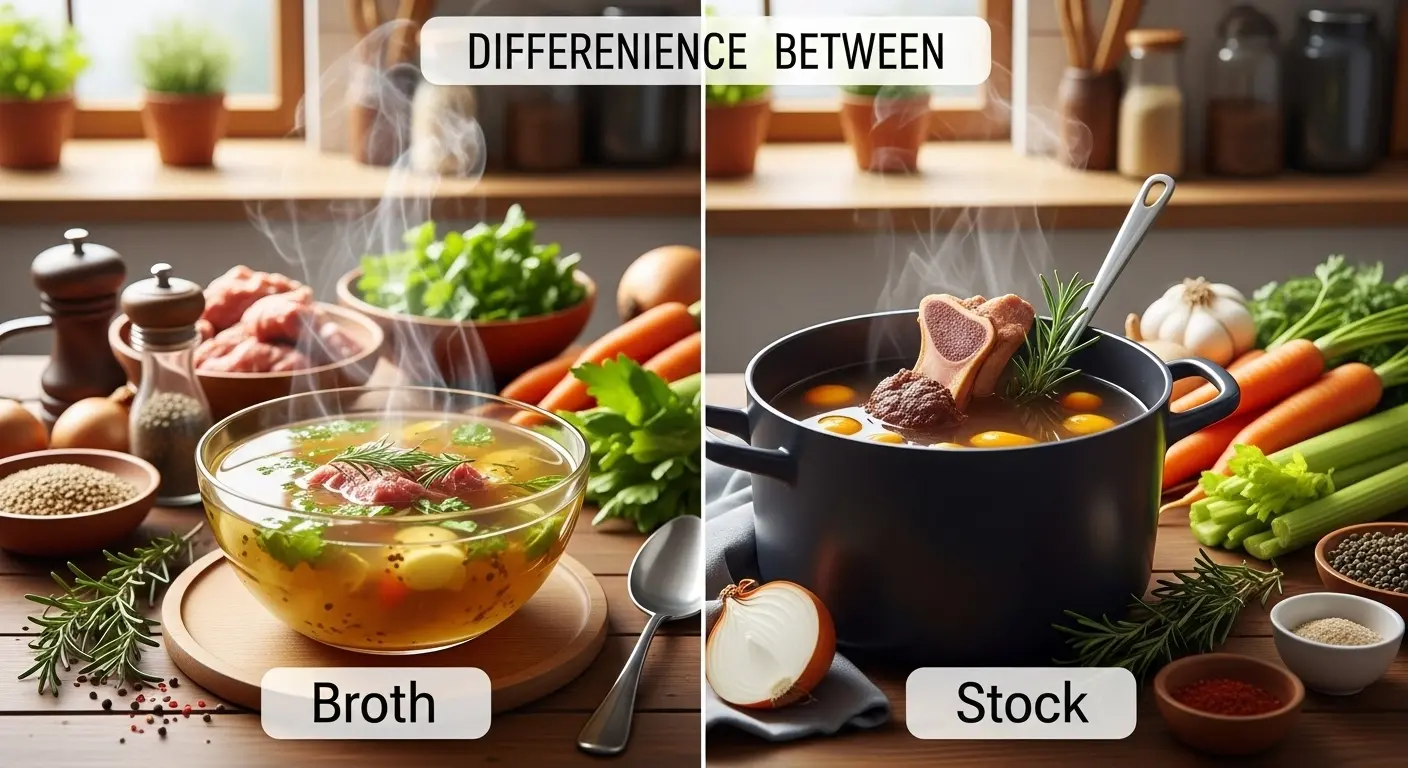
One winter evening, a home cook was preparing dinner for the family. The recipe asked for stock, but only broth was available in the kitchen. The cook wondered, are they the same thing? This small moment reflects a common question people ask: what is the difference between a broth and a stock?
In simple terms, broth is a flavorful liquid made by simmering meat and vegetables, while stock is made mainly from bones to extract collagen and deep flavor. Yet the difference between a broth and a stock goes beyond ingredients. Chefs, home cooks, and culinary students often debate the difference between a broth and a stock because both form the base of soups, sauces, and many dishes.
Understanding the difference between a broth and a stock helps people cook better meals and follow recipes more accurately.
Key Difference Between the Both
The main difference between a broth and a stock lies in their ingredients and cooking purpose. Broth usually uses meat and vegetables and is often seasoned, while stock is made primarily from bones and is typically unseasoned. Stock is thicker due to gelatin extracted from bones, whereas broth is lighter and ready to drink.
Why Knowing Their Difference Is Important for Learners and Experts
Understanding the difference between a broth and a stock is important in cooking education and professional kitchens. Culinary students must learn this distinction to follow classic recipes accurately. Professional chefs rely on stock for sauces and reductions because of its gelatin-rich texture.
For home cooks, knowing the difference improves cooking results. Using stock instead of broth can make sauces thicker and richer, while broth may work better for light soups. This knowledge also helps food writers, nutritionists, and culinary experts communicate clearly about recipes and techniques. In society, food culture continues to grow, and understanding these small differences improves both culinary appreciation and practical cooking skills.
Pronunciation of the Words
Broth
- US pronunciation: /brɔːθ/
- UK pronunciation: /brɒθ/
Stock
- US pronunciation: /stɑːk/
- UK pronunciation: /stɒk/
Cooking terminology often looks simple, but small distinctions matter greatly. Let us now explore the difference between a broth and a stock in detail.
Difference Between Broth and Stock
1. Main Ingredients
Broth: Usually made with meat, vegetables, herbs, and sometimes bones.
Examples:
- Chicken broth made with chicken meat and carrots.
- Beef broth made with beef pieces and onions.
Stock: Primarily made from bones and connective tissue.
Examples:
- Chicken stock made from roasted chicken bones.
- Beef stock made from marrow bones.
2. Flavor Intensity
Broth: Lighter and more directly flavored because of meat and seasoning.
Examples:
- A light soup base for vegetable soup.
- Drinking broth served in cups.
Stock: Richer and deeper flavor after long simmering.
Examples:
- Base for French sauces.
- Used for gravy preparation.
3. Cooking Time
Broth: Usually cooked for a shorter period (1–2 hours).
Examples:
- Quick chicken broth for noodle soup.
- Vegetable broth prepared in one hour.
Stock: Cooked for longer (4–6 hours or more).
Examples:
- Beef stock simmered overnight.
- Bone stock for restaurant sauces.
4. Texture
Broth: Thin and watery.
Examples:
- Broth served as a warm drink.
- Clear soup base.
Stock: Thick and gelatinous when cooled.
Examples:
- Chilled stock forming jelly.
- Thick base for sauces.
5. Seasoning
Broth: Usually seasoned with salt and spices.
Examples:
- Salted chicken broth.
- Herb-flavored vegetable broth.
Stock: Generally unseasoned.
Examples:
- Plain chicken stock for cooking.
- Neutral beef stock for sauces.
6. Culinary Use
Broth: Used directly in soups or drinking.
Examples:
- Chicken noodle soup.
- Clear vegetable soup.
Stock: Used as a cooking base.
Examples:
- Sauce reduction.
- Risotto base.
7. Nutritional Content
Broth: Contains protein from meat.
Examples:
- Chicken broth with small protein amounts.
- Beef broth used for light meals.
Stock: Higher in collagen from bones.
Examples:
- Bone stock rich in gelatin.
- Stock used in health-focused diets.
8. Preparation Style
Broth: Often made quickly in home kitchens.
Examples:
- Homemade chicken broth from leftover meat.
- Vegetable broth made with kitchen scraps.
Stock: Often prepared in large batches.
Examples:
- Restaurant kitchens making beef stock.
- Professional culinary stock preparation.
9. Appearance
Broth: Clear and light-colored.
Examples:
- Golden chicken broth.
- Clear vegetable broth.
Stock: Slightly cloudy and darker.
Examples:
- Brown beef stock.
- Dark roasted chicken stock.
10. Role in Cooking
Broth: Final dish component.
Examples:
- Served as soup.
- Used as a drink during illness.
Stock: Foundation ingredient.
Examples:
- Used in sauces.
- Used in stews.
Nature and Behaviour of Both
Broth:
Broth is lighter, more aromatic, and ready to consume. Its flavor comes from meat and vegetables, making it suitable for soups and direct serving.
Stock:
Stock behaves as a culinary foundation. Because it contains gelatin from bones, it thickens sauces and enhances texture in dishes.
Why People Are Confused About Their Use
People often confuse broth and stock because they look similar and can sometimes replace each other in recipes. Many packaged products also label them interchangeably. Additionally, both are liquid bases used in cooking, so the difference is not always obvious to beginners.
Table Showing Differences and Similarities
| Feature | Broth | Stock | Similarity |
| Main ingredient | Meat | Bones | Both may include vegetables |
| Cooking time | Short | Long | Both simmer slowly |
| Texture | Thin | Gelatinous | Both liquid bases |
| Seasoning | Usually seasoned | Usually unseasoned | Both flavorful |
| Usage | Soups/drinks | Sauces and cooking | Both used in recipes |
Which Is Better in What Situation?
Broth:
Broth is better when you need a ready-to-eat soup or light dish. Because it is already seasoned and flavorful, it can be served directly. People often drink broth during cold weather or illness because it is warm and comforting.
Stock:
Stock is better for cooking foundations. Chefs use stock to create sauces, gravies, and rich dishes. Its gelatin content thickens food and gives dishes a deep flavor.
Use in Metaphors and Similes
Broth:
Sometimes used metaphorically to describe something nourishing or comforting.
Example: Her kind words were like warm broth on a cold day.
Stock:
Used metaphorically to describe resources or supply.
Example: The company keeps a stock of ideas for future projects.
Connotative Meaning
Broth
- Positive: Comfort and nourishment
- Example: “Grandmother’s broth healed everyone in winter.”
- Neutral: Simple food base
Stock
- Positive: Prepared resources or reserves
- Example: “He has a stock of knowledge.”
- Neutral: Supply or foundation
Idioms or Proverbs Related to the Words
“In hot broth” (rare usage meaning trouble)
Example: He found himself in hot broth after breaking the rule.
“Take stock of something”
Example: She took stock of her life before making a big decision.
Works in Literature Containing the Words
- “Chicken Soup for the Soul” – Self-help anthology by Jack Canfield and Mark Victor Hansen (1993) – Genre: Inspirational literature
- “Take Stock in Children” – Educational writing and programs (various authors)
Movies Related to the Words
- Chicken Soup for the Soul – Released in 1999, United States
- Soup for One – Released in 1982, United States
Frequently Asked Questions
1. Are broth and stock the same thing?
No. Broth is made mainly from meat and vegetables, while stock is made from bones.
2. Can broth replace stock in recipes?
Yes, but the dish may be lighter in flavor and texture.
3. Which one is healthier?
Both can be healthy, but stock may contain more collagen.
4. Why does stock become jelly when cold?
Because bones release gelatin during long cooking.
5. Which is better for soup?
Broth is usually better for simple soups.
How Both Are Useful for Surroundings
Broth and stock help reduce food waste because leftover bones and vegetables can be used to prepare them. They also support healthy diets by providing nutrients and hydration. In restaurants and homes, they form the foundation of many nutritious meals.
Final Words for Both
Broth represents comfort and simplicity in cooking, while stock represents depth and culinary structure. Both are essential tools in the kitchen.
Conclusion
Understanding the difference between a broth and a stock helps both beginner cooks and professional chefs improve their cooking. Broth is typically made from meat and vegetables and is light, flavorful, and ready to serve. Stock, on the other hand, is made mainly from bones and cooked longer to extract gelatin and deep flavor.
Although they look similar, their uses in cooking differ greatly. By learning the difference between a broth and a stock, cooks can select the right base for soups, sauces, and other dishes. Ultimately, both broth and stock play an important role in culinary traditions and continue to be valuable ingredients in kitchens around the world.

Hi, I’m DreamAnchor, the author behind GrammarCircle. I am passionate about language, writing, and helping people understand the small but important differences in English words and concepts. Through my work, I focus on explaining grammar rules, word comparisons, and language usage in a simple and practical way so that students, writers, and professionals can improve their communication skills.