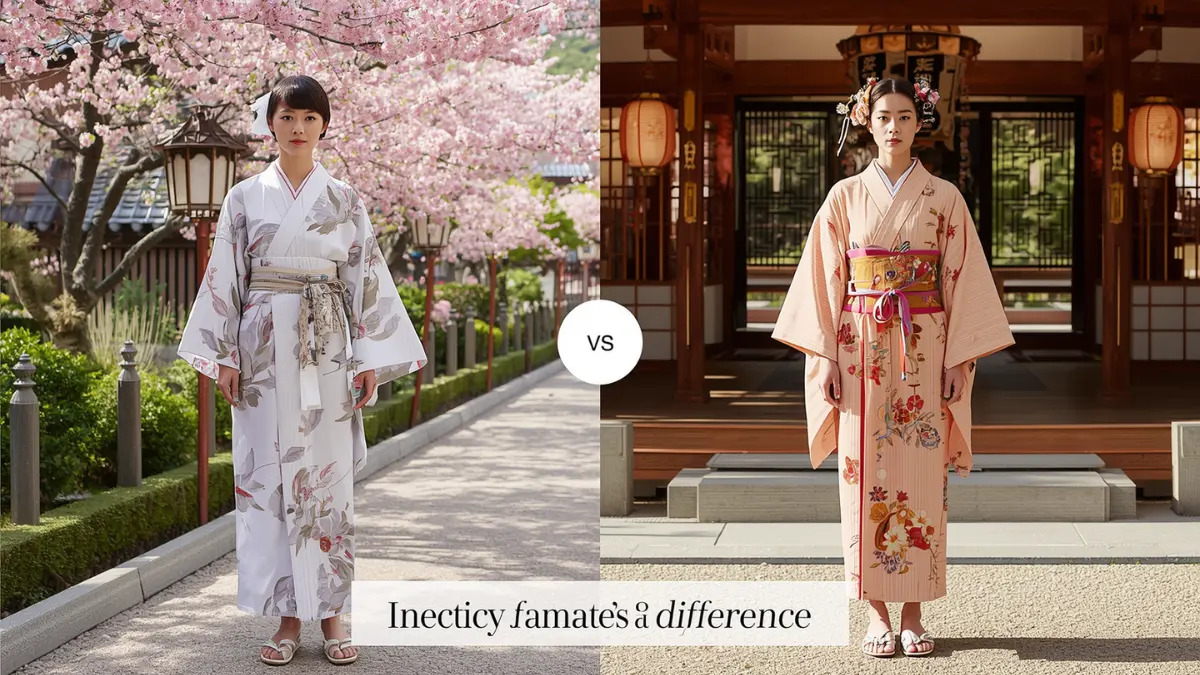
Imagine walking through the colorful streets of Kyoto during a summer festival. Some people wear light cotton robes with simple patterns, while others wear elegant silk garments with layered designs and formal accessories.
To many tourists, both outfits may look the same, but in Japanese culture, there is a clear difference between a yukata and kimono. Understanding the difference between yukata and kimono helps people appreciate Japanese traditions, fashion, and social customs more deeply.
The difference between yukata and kimono is not only about clothing style; it also reflects history, occasion, weather, and cultural meaning. Many learners, travelers, and even fashion lovers often confuse the two garments because they share similar shapes.
However, once you understand the difference between yukata and kimono, you can easily identify which one suits casual events and which belongs to formal ceremonies.
Japanese traditional clothing continues to influence global fashion, art, and tourism today. That is why learning the difference between yukata and kimono is useful for both beginners and experts interested in Japanese culture.
Pronunciation of Yukata and Kimono
| Word | US Pronunciation | UK Pronunciation |
| Yukata | yoo-KAH-tah | yoo-KAH-tuh |
| Kimono | kih-MOH-noh | kih-MOH-nuh |
Both words come from the Japanese language and are widely used internationally.
Before diving deeper into their cultural beauty, let us explore the real distinctions that separate these two iconic Japanese garments.
Difference Between Yukata and Kimono
1. Material Used
Yukata
Yukata is usually made from cotton or lightweight synthetic fabric. It feels soft and breathable during hot weather.
Examples:
- A cotton yukata worn during a summer fireworks festival.
- A lightweight printed yukata used in Japanese hot spring resorts.
Kimono
Kimono is commonly made from silk, brocade, or expensive fabrics. It is heavier and more luxurious.
Examples:
- A silk kimono worn at a wedding ceremony.
- A formal embroidered kimono used during tea ceremonies.
2. Formality Level
Yukata
Yukata is considered informal and casual.
Examples:
- Wearing yukata at a summer fair.
- Using yukata after bathing in a ryokan.
Kimono
Kimono can be formal or semi-formal depending on style and design.
Examples:
- A bride wearing a ceremonial kimono.
- A woman attending graduation in a kimono.
3. Season of Use
Yukata
Yukata is mainly worn during summer.
Examples:
- Summer festivals in July.
- Evening walks during hot weather.
Kimono
Kimono can be worn in all seasons.
Examples:
- Wool kimono during winter.
- Light silk kimono during spring.
4. Number of Layers
Yukata
Yukata usually has one simple layer.
Examples:
- A single cotton robe for festivals.
- A lightweight robe in hot climates.
Kimono
Kimono often includes multiple inner and outer layers.
Examples:
- Inner robe beneath wedding kimono.
- Decorative layered kimono for ceremonies.
5. Accessories
Yukata
Yukata uses simple accessories.
Examples:
- A casual obi belt.
- Wooden sandals called geta.
Kimono
Kimono includes detailed accessories.
Examples:
- Decorative obi with ornaments.
- Elegant handbags and special footwear.
6. Cost
Yukata
Yukata is generally affordable.
Examples:
- Budget-friendly tourist yukata.
- Simple cotton yukata for students.
Kimono
Kimono can be very expensive.
Examples:
- Handmade silk kimono costing thousands of dollars.
- Antique kimono collections.
7. Complexity of Wearing
Yukata
Yukata is easy to wear without help.
Examples:
- Tourists dressing themselves in yukata.
- Simple tying methods for casual use.
Kimono
Kimono often requires expert dressing techniques.
Examples:
- Professional kimono dressers at weddings.
- Traditional geisha kimono preparation.
8. Patterns and Designs
Yukata
Yukata usually features bright and playful patterns.
Examples:
- Floral prints for summer.
- Cartoon-inspired festival designs.
Kimono
Kimono patterns are often elegant and symbolic.
Examples:
- Crane designs representing longevity.
- Cherry blossom embroidery symbolises beauty.
9. Purpose
Yukata
Yukata is mostly for relaxation and casual outings.
Examples:
- Spa and hot spring wear.
- Casual summer celebrations.
Kimono
Kimono represents tradition, status, and ceremony.
Examples:
- Religious ceremonies.
- Coming-of-age celebrations.
10. Historical Background
Yukata
Yukata began as bathwear for nobles.
Examples:
- Ancient bathhouse clothing.
- Edo-period summer garments.
Kimono
Kimono developed as Japan’s national traditional dress.
Examples:
- Samurai-era clothing.
- Traditional court fashion.
Nature and Behaviour of Yukata and Kimono
Yukata
Yukata represents simplicity, comfort, and relaxation. It is cheerful, youthful, and connected with summer celebrations. People often associate yukata with fun social gatherings and informal traditions.
Kimono
Kimono reflects elegance, discipline, and cultural heritage. It carries a sense of respect and ceremony. Wearing a kimono often symbolizes dignity and tradition.
Why Is Their Difference Necessary to Know for Learners and Experts?
Understanding the difference between yukata and kimono is important because these garments represent Japanese identity and social customs. Wearing the wrong outfit at an important event may appear disrespectful in Japanese society.
For learners, knowing the distinction improves cultural awareness and language understanding. For fashion experts, historians, and designers, these garments provide insight into Japanese art, symbolism, and textile traditions.
Their importance in society includes:
- Preserving cultural heritage.
- Supporting tourism and traditional arts.
- Teaching respect for ceremonial customs.
- Promoting Japanese fashion worldwide.
Why Are People Confused About Their Use?
People become confused because both garments have similar T-shaped designs and wide sleeves. Movies, anime, and tourism advertisements often use the terms interchangeably.
Another reason is that many international visitors see yukata and kimono together during festivals without understanding their formal differences.
Difference and Similarity Table
| Feature | Yukata | Kimono | Similarity |
| Fabric | Cotton | Silk or formal fabric | Traditional Japanese wear |
| Formality | Casual | Formal or semi-formal | Both use obi belts |
| Season | Summer | All seasons | Similar robe shape |
| Layers | Single layer | Multiple layers | Traditional heritage |
| Cost | Affordable | Expensive | Japanese cultural symbols |
| Purpose | Relaxation | Ceremony | Worn by men and women |
| Accessories | Simple | Decorative | Require traditional footwear |
| Weight | Lightweight | Heavy | Long sleeves |
| Difficulty | Easy to wear | Complex to wear | Wrapped left over right |
| Cultural Role | Casual culture | Formal tradition | Important in Japanese society |
Which Is Better in What Situation?
Yukata in Casual Situations
Yukata is better for summer festivals, vacations, spa visits, and casual cultural experiences. It is comfortable, affordable, and easy to wear. Tourists usually prefer yukata because it allows freedom of movement and does not require complex dressing skills. During hot weather, its lightweight fabric keeps the body cool and relaxed.
Kimono in Formal Situations
Kimono is better for weddings, tea ceremonies, graduation events, and traditional celebrations. Its elegant design reflects sophistication and cultural respect. People choose kimono when they want to honor Japanese customs or attend important occasions. The rich fabrics and detailed accessories make kimono suitable for prestigious events.
How the Keywords Are Used in Metaphors and Similes
Yukata in Figurative Language
- “Her personality was as light as a summer yukata.”
- “The festival felt wrapped in yukata-like warmth.”
Yukata often symbolizes comfort, youth, and simplicity.
Kimono in Figurative Language
- “Her grace flowed like a silk kimono.”
- “The city carried a kimono of tradition.”
Kimono often symbolizes elegance, culture, and dignity.
Connotative Meaning of Yukata and Kimono
| Word | Connotation | Examples |
| Yukata | Positive and Neutral | Relaxation, summer joy, festivals |
| Kimono | Positive | Elegance, tradition, respect |
Example Sentences
- “The yukata gave the evening a cheerful atmosphere.”
- “Her kimono reflected timeless beauty.”
Idioms or Proverbs Related to the Words
Japanese culture does not have many direct English idioms using these words, but some expressions are inspired by them.
Yukata Expressions
- “Light as a yukata” — meaning relaxed and carefree.
Example:
“After the exam, he felt light as a yukata.”
Kimono Expressions
- “Wearing the kimono of responsibility” — symbolizing honor and duty.
Example:
“She wore the kimono of responsibility during the ceremony.”
Works in Literature Featuring Yukata or Kimono
- “The Book of Tea” — Cultural essay by Okakura Kakuzō (1906)
- “Memoirs of a Geisha” — Historical fiction by Arthur Golden (1997)
- “Snow Country” — Literary fiction by Yasunari Kawabata (1948)
- “The Kimono Tattoo” — Mystery novel by Rebecca Copeland (2009)
Movies Related to Yukata or Kimono
- “Memoirs of a Geisha” — 2005, United States
- “The Last Samurai” — 2003, United States/New Zealand
- “Our Little Sister” — 2015, Japan
- “Kimono” — 2008, Japan
Frequently Asked Questions
1. Is yukata a type of kimono?
Yes, yukata is considered a casual form of kimono.
2. Can a kimono be worn in summer?
Yes, special lightweight summer kimonos are available.
3. Is a yukata cheaper than a kimono?
Yes, yukata is usually much more affordable.
4. Do both men and women wear yukatas and kimonos?
Yes, both garments are worn by men and women.
5. Can foreigners wear kimono or yukata?
Yes, many tourists wear them during festivals and cultural events in Japan.
How Both Are Useful for Surroundings
Yukata and kimono support traditional textile industries and cultural tourism. Their production helps artisans preserve ancient weaving and dyeing techniques. Festivals featuring these garments also encourage community gatherings and cultural education.
Additionally, natural fabrics used in many traditional garments promote environmentally friendly fashion practices.
Final Words for Both
Yukata represents comfort, youthfulness, and joyful celebration, while kimono symbolizes elegance, respect, and deep cultural tradition. Together, they form an important part of Japanese identity and continue to inspire global fashion and art.
Conclusion
The difference between a yukata and kimono goes far beyond appearance. Although both are traditional Japanese garments, they serve different purposes in society. Yukata is casual, lightweight, and ideal for summer festivals, while kimono is formal, elegant, and connected with ceremonies and tradition. Understanding these differences helps learners, travelers, and fashion enthusiasts appreciate Japanese culture more deeply.
Both garments continue to influence modern fashion and preserve Japan’s artistic heritage. Whether someone chooses a yukata for comfort or a kimono for elegance, each outfit carries cultural beauty and historical significance. Learning about them not only improves cultural knowledge but also builds respect for one of the world’s richest traditions.

Hi, I’m DreamAnchor, the author behind GrammarCircle. I am passionate about language, writing, and helping people understand the small but important differences in English words and concepts. Through my work, I focus on explaining grammar rules, word comparisons, and language usage in a simple and practical way so that students, writers, and professionals can improve their communication skills.