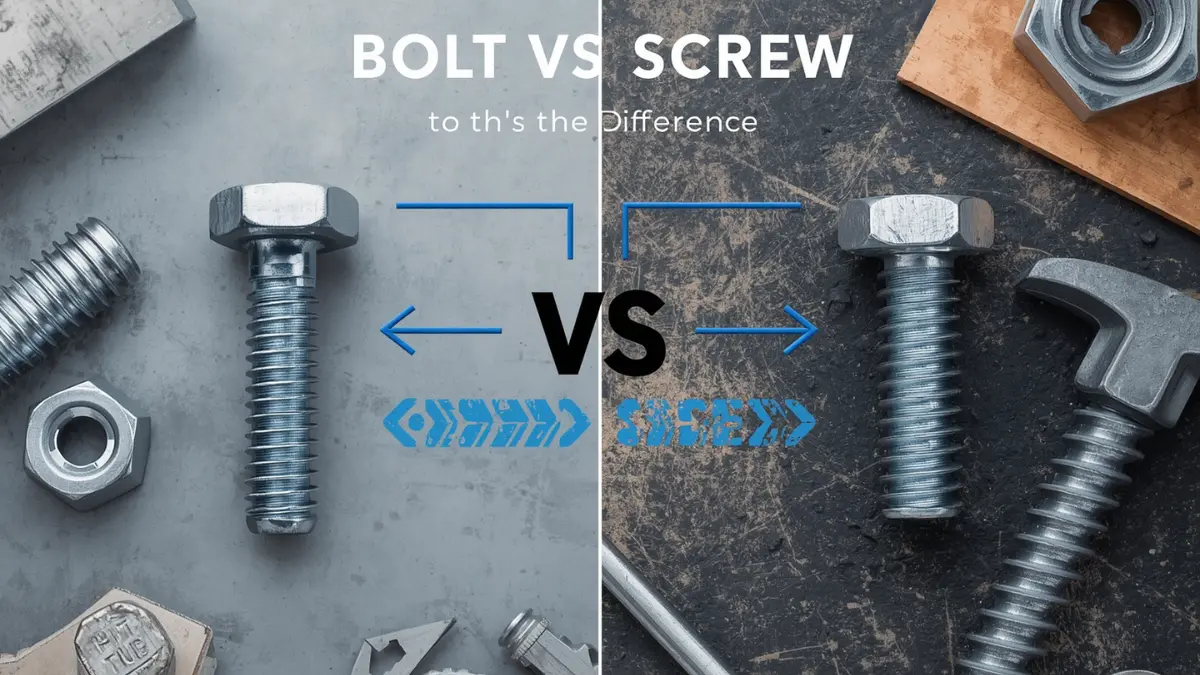
Imagine watching a carpenter repair a wooden chair while a mechanic fixes a motorcycle nearby. Both are using metal fasteners, yet one reaches for a screw while the other chooses a bolt. At first glance, they may look almost identical, but the difference between bolt and screw becomes very important when strength, stability, and safety matter. Many beginners, DIY learners, and even professionals sometimes confuse these two fastening tools because both are designed to hold objects together.
Understanding the difference between bolt and screw helps in construction, engineering, furniture making, and household repairs. The difference between bolt and screw also matters when selecting the right hardware for durability and performance. Whether you are assembling furniture or working on heavy machinery, knowing the difference between bolt and screw can save time, money, and effort.
Both fasteners play vital roles in modern society, from bridges and buildings to electronic devices and automobiles.
Pronunciation of Bolt and Screw
| Word | US Pronunciation | UK Pronunciation |
| Bolt | /boʊlt/ | /bəʊlt/ |
| Screw | /skruː/ | /skruː/ |
Before exploring their detailed distinctions, it is important to understand how these two fasteners function differently in real-life situations.
Difference Between Accept and Except: in (2026)
Difference Between Bolt and Screw
Key Difference Between Both
A bolt usually works with a nut and passes through unthreaded holes to join materials together. A screw, however, is generally inserted directly into material and creates its own grip through threads.
Bolts are commonly used for heavy-duty applications, while screws are preferred for lighter or medium fastening tasks.
Why Is Their Difference Necessary to Know for Learners and Experts?
Understanding the difference between bolts and screws is important because these fasteners support countless structures in society. Engineers use bolts in bridges and buildings where strong clamping force is required. Carpenters and technicians rely on screws for furniture, electronics, and woodwork.
For learners, this knowledge prevents mistakes during DIY projects. For experts, selecting the correct fastener improves safety, durability, and efficiency. Using the wrong fastening tool can damage materials or weaken structures. In industries such as construction, aviation, and automobile manufacturing, proper fastener selection directly affects human safety.
Difference Between Yukata and Kimono: in (2026)
10 Points of Difference Between Bolt and Screw
1. Method of Use
Bolt
A bolt is inserted through holes and tightened with a nut.
Examples:
- Bolts are used in steel bridges.
- Car wheel assemblies use bolts and nuts.
Screw
A screw is twisted directly into material.
Examples:
- Wood screws are used in furniture.
- Screws fasten electrical switch plates.
2. Need for a Nut
Bolt
Bolts almost always require a nut.
Examples:
- Machine bolts connect metal plates.
- Railway tracks use nuts and bolts.
Screw
Screws generally do not require nuts.
Examples:
- Drywall screws attach boards.
- Deck screws secure wooden planks.
3. Thread Design
Bolt
Bolts may have partially threaded shafts.
Examples:
- Hex bolts often have smooth sections.
- Structural bolts use limited threading.
Screw
Screws are usually fully threaded.
Examples:
- Wood screws have continuous threads.
- Sheet metal screws are fully threaded.
4. Strength Capacity
Bolt
Bolts are stronger for heavy loads.
Examples:
- Construction cranes use bolts.
- Industrial machines depend on bolts.
Screw
Screws are better for moderate loads.
Examples:
- Cabinet assembly uses screws.
- Electronics contain tiny screws.
5. Installation Tools
Bolt
Bolts require wrenches or spanners.
Examples:
- Mechanics tighten bolts with socket wrenches.
- Pipeline bolts use torque tools.
Screw
Screws require screwdrivers or drills.
Examples:
- Phillips screwdrivers tighten screws.
- Power drills install deck screws.
6. Material Compatibility
Bolt
Bolts are common in metal structures.
Examples:
- Steel towers use bolts.
- Engines contain bolted parts.
Screw
Screws are common in wood and plastic.
Examples:
- Wooden doors use screws.
- Plastic toys contain screws.
7. Ease of Removal
Bolt
Bolts are easier to remove without damaging material.
Examples:
- Car parts can be detached safely.
- Industrial equipment uses removable bolts.
Screw
Screws may damage softer material during removal.
Examples:
- Old wooden screws loosen wood fibers.
- Over-tightened screws strip plastic holes.
8. Precision
Bolt
Bolts provide precise clamping force.
Examples:
- Aircraft structures use precision bolts.
- Bridges require accurate bolt tension.
Screw
Screws focus more on grip than precision force.
Examples:
- Furniture screws prioritize hold.
- Drywall screws secure surfaces quickly.
9. Cost
Bolt
Bolts are usually more expensive due to nuts and washers.
Examples:
- Structural bolts cost more.
- High-grade industrial bolts are expensive.
Screw
Screws are generally cheaper.
Examples:
- Household screws are inexpensive.
- Bulk wood screws are affordable.
10. Typical Shape
Bolt
Bolts usually have hexagonal heads.
Examples:
- Hex bolts are common in vehicles.
- Anchor bolts use large heads.
Screw
Screws come in many head types.
Examples:
- Flat-head screws fit furniture.
- Star-head screws resist slipping.
Nature and Behaviour of Both
Nature of Bolt
Bolts are designed for strength, stability, and high-pressure applications. They behave as secure clamping devices and are suitable for structures requiring durability.
Nature of Screw
Screws are flexible, versatile, and easier to install. They behave as self-gripping fasteners and are ideal for quick assembly tasks.
Why Are People Confused About Their Use?
People often confuse bolts and screws because both have threaded metal bodies and similar appearances. In daily language, many individuals use the terms interchangeably. Hardware stores may also categorize them together. Additionally, modern fastener designs sometimes combine features of both, making identification harder for beginners.
Difference and Similarity Between Bolt and Screw
| Feature | Bolt | Screw | Similarity |
| Usage | Requires nut | Self-tightening | Both join materials |
| Strength | Heavy-duty | Medium-duty | Both provide support |
| Installation | Wrench needed | Screwdriver needed | Both require tools |
| Threading | Partial threading | Full threading | Both contain threads |
| Applications | Machinery and structures | Furniture and electronics | Both are fasteners |
| Removal | Easier without damage | May strip material | Both can be reusable |
Which Is Better in What Situation?
When Bolt Is Better
Bolts are better for heavy-duty situations where maximum strength and safety are required. Construction projects, automotive systems, bridges, and industrial machinery benefit from bolts because they create strong clamping force. They are also ideal when future disassembly is expected since bolts can be removed and reused more easily without damaging materials.
When Screw Is Better
Screws are better for lightweight or medium-duty applications requiring speed and convenience. Furniture assembly, woodworking, electronics, and household repairs commonly use screws because they are easy to install directly into materials. Screws are especially useful in projects where nuts cannot be accessed from the opposite side.
How the Keywords Are Used in Metaphors and Similes
Bolt in Metaphors and Similes
- “He ran like a bolt of lightning.”
- “Her decision bolted the team together.”
Here, “bolt” symbolizes speed, power, or sudden action.
Screw in Metaphors and Similes
- “Life can screw up your plans.”
- “He tightened the rules like a screw.”
Here, “screw” symbolizes pressure, difficulty, or tightening control.
Connotative Meaning of Both Keywords
| Word | Connotation | Example |
| Bolt | Positive/Neutral | “The bolt secured the bridge safely.” |
| Screw | Neutral/Negative | “One small screw caused the machine to fail.” |
Idioms or Proverbs Related to the Words
Bolt Idioms
“A bolt from the blue”
Meaning: A sudden surprise.
Example:
The company closure came like a bolt from the blue.
“Lock, stock, and barrel”
Though not directly using a bolt, it relates to fastening and complete inclusion.
Example:
He sold his workshop lock, stock, and barrel.
Screw Idioms
“Put the screws on someone”
Meaning: To pressure someone.
Example:
The manager put the screws on the workers to finish early.
“Screw up”
Meaning: To make a mistake.
Example:
He screwed up the measurements while building the shelf.
Works in Literature Containing the Keywords
Bolt
- “The Bolt” — Poetry, Edward Thomas, 1916
- “Bolt” — Thriller Novel, Dick Francis, 1986
Screw
- “The Turn of the Screw” — Gothic Novella, Henry James, 1898
- “Screwjack” — Short Fiction, Hunter S. Thompson, 2000
Movie Names Made on Keywords
Bolt
- “Bolt” — 2008, United States
Screw
- “Screwed” — 2000, United States
- “The Screw” — 2022, United Kingdom
Frequently Asked Questions
1. What is the main difference between bolt and screw?
A bolt usually needs a nut, while a screw fastens directly into material.
2. Can a screw replace a bolt?
Sometimes, but screws are generally less suitable for heavy structural loads.
3. Why are bolts stronger than screws?
Bolts distribute force with nuts and washers, providing stronger clamping power.
4. Are screws easier to install?
Yes, screws are usually quicker and easier to install using a screwdriver or drill.
5. Which is more common in furniture?
Screws are more commonly used in furniture because they work well with wood.
How Both Are Useful for Surroundings
Bolts and screws are essential for modern infrastructure and daily life. Buildings, bridges, vehicles, furniture, appliances, and electronic devices all depend on these fasteners. Bolts provide structural stability for large constructions, while screws simplify repairs and assembly tasks in homes and industries. Together, they improve safety, efficiency, and durability in society.
Final Words for Both
Bolts and screws may seem similar, but each serves a unique purpose. Bolts deliver strength and secure clamping for demanding tasks, while screws provide convenience and flexibility for everyday applications. Understanding their differences improves practical skills and technical knowledge.
Conclusion
The difference between bolt and screw goes beyond appearance. Bolts are designed for strength, stability, and heavy-duty fastening, while screws are meant for direct insertion and quick assembly. Their applications vary across industries, homes, and engineering projects. Knowing when to use each fastener can improve safety, durability, and efficiency.
Although people often confuse the two because of their similar threaded designs, their functionality is quite different. From bridges and automobiles to furniture and electronics, bolts and screws play crucial roles in modern society. Learning their characteristics helps both beginners and professionals make smarter choices in construction, repair, and manufacturing tasks.

Hi, I’m LunarCrest, the author behind GrammarCircle. I’m passionate about language, writing, and helping people understand the finer details of English. Through my work, I focus on explaining grammar rules, word differences, and language concepts in a simple and practical way.