A few years ago, a home cook in Lahore followed an online recipe for Italian pasta. The recipe called for fennel, but she used anise seeds instead. The result? A much stronger licorice flavor than expected. This small kitchen mistake perfectly explains the difference between anise and fennel.
Many people search for the difference between anise and fennel because both look similar and taste slightly sweet. They are often used in baking, herbal teas, and spice blends. However, the difference between anise and fennel becomes clear when you study their plant structure, flavor strength, and culinary purpose.
Understanding the difference between anise and fennel helps both beginners and experts avoid confusion in cooking and herbal medicine.
Though they share a licorice-like taste, they belong to different plants and serve slightly different roles in food and health.
Key Difference Between the Both
The main difference lies in the plant and flavor intensity.
- Anise comes from Pimpinella anisum and has a sharp, sweet licorice flavor.
- Fennel comes from Foeniculum vulgare and has a milder, sweeter, and fresher taste.
Anise is mainly used for its seeds. Fennel is used as seeds, leaves, and even its bulb.
Why Is Their Difference Necessary to Know for Learners and Experts?
Knowing the difference is important in cooking, herbal medicine, agriculture, and food production.
- For learners: It prevents recipe mistakes and improves vocabulary accuracy.
- For chefs: The flavor balance changes if the wrong spice is used.
- For herbal experts: Their medicinal effects differ slightly.
- For society: Correct identification supports farming, trade, and health awareness.
Understanding spices improves cultural knowledge, food quality, and professional skills.
Pronunciation (US & UK)
Anise
- US: /ˈæn.ɪs/
- UK: /ˈæn.iːs/ or /əˈniːs/
Fennel
- US: /ˈfen.əl/
- UK: /ˈfen.əl/
Now that pronunciation is clear, let’s explore their detailed differences.
Difference Between Anise and Fennel
1. Plant Family
- Anise belongs to the parsley family (Apiaceae).
- Fennel also belongs to Apiaceae but is a different species.
Examples:
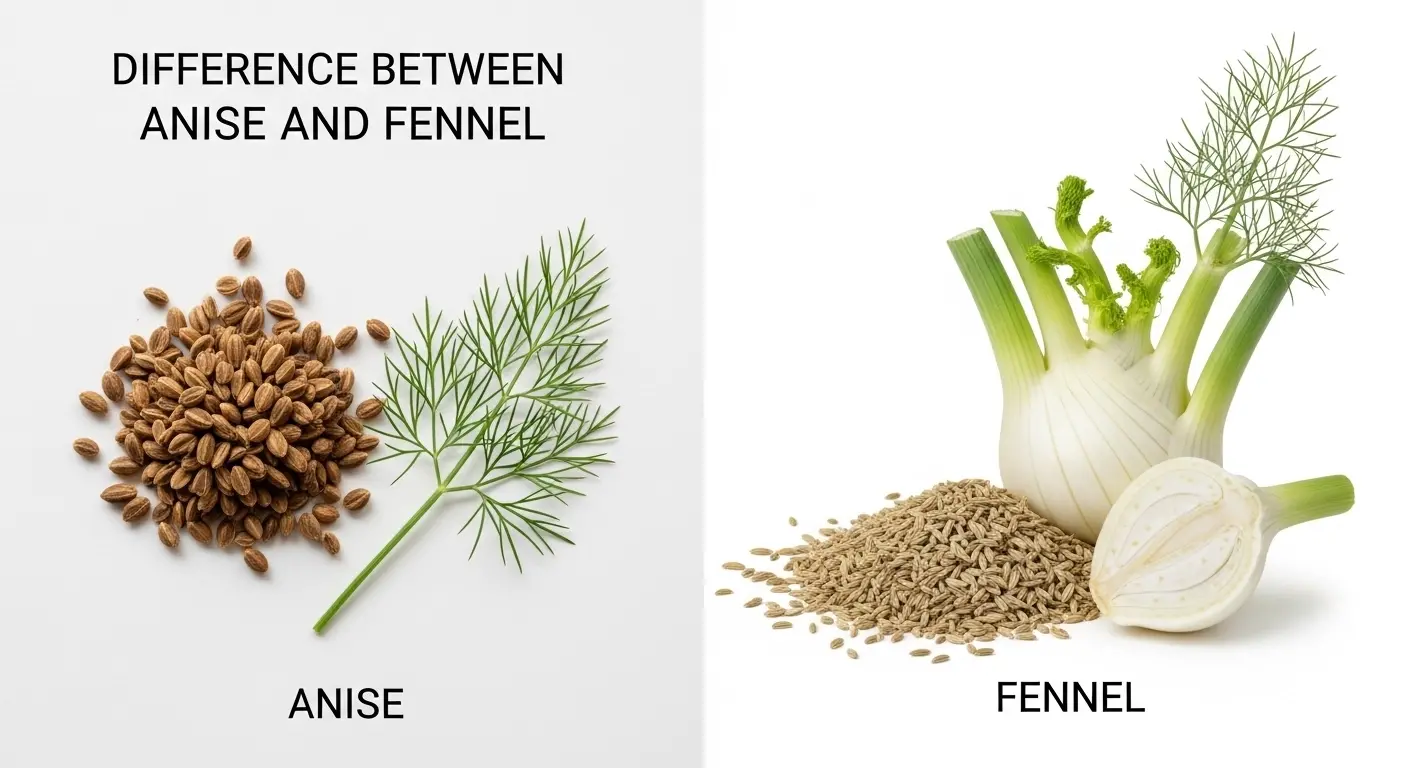
- Anise seeds are small and curved.
- Fennel seeds are larger and greener.
2. Scientific Name
- Anise: Pimpinella anisum
- Fennel: Foeniculum vulgare
Examples:
- Farmers label seeds by scientific names.
- Herbal products mention botanical names for accuracy.
3. Flavor Strength
- Anise has a stronger licorice taste.
- Fennel has a mild, sweet flavor.
Examples:
- Anise is used in strong candies.
- Fennel is used in light salads.
4. Parts Used
- Anise: Mostly seeds.
- Fennel: Seeds, bulb, and leaves.
Examples:
- Anise tea uses crushed seeds.
- Fennel bulb is roasted as a vegetable.
5. Culinary Use
- Anise is common in desserts and baking.
- Fennel is common in soups and curries.
Examples:
- Anise cookies in Europe.
- Fennel in Italian pasta dishes.
6. Medicinal Properties
- Anise helps digestion and cough relief.
- Fennel helps bloating and stomach cramps.
Examples:
- Anise syrup for colds.
- Fennel water for babies’ digestion.
7. Appearance
- Anise seeds are gray-brown and small.
- Fennel seeds are greenish and larger.
Examples:
- Anise looks like cumin but smaller.
- Fennel looks plumper and striped.
8. Aroma
- Anise has a sharper smell.
- Fennel smells fresh and herbal.
Examples:
- Anise oil is used in perfumes.
- Fennel aroma is common in spice markets.
9. Cultural Use
- Anise is popular in Middle Eastern sweets.
- Fennel is popular in Mediterranean cuisine.
Examples:
- Anise bread in Turkey.
- Fennel salads in Italy.
10. Agricultural Growth
- Anise grows as a small flowering plant.
- Fennel grows taller with feathery leaves.
Examples:
- Anise farms harvest only seeds.
- Fennel fields produce bulbs and seeds.
Nature and Behaviour
Anise:
It is delicate and sensitive to climate. It produces small white flowers and aromatic seeds.
Fennel:
It is hardy and grows taller. It spreads easily and adapts to different environments.
Why Are People Confused About Their Use?
- Both taste like licorice.
- Both seeds look similar.
- Recipes sometimes use them as substitutes.
- They belong to the same plant family.
This visual and flavor similarity causes confusion.
Table: Difference and Similarity
| Feature | Anise | Fennel | Similarity |
| Taste | Strong licorice | Mild sweet licorice | Both sweet |
| Size | Small seeds | Larger seeds | Both oval |
| Plant Use | Seeds only | Seeds, bulb, leaves | Used in cooking |
| Aroma | Sharp | Fresh | Aromatic |
| Family | Apiaceae | Apiaceae | Same family |
Which Is Better in What Situation?
Anise is better when you want a bold and sweet licorice flavor. It works best in baking, candies, syrups, and strong herbal teas. If you are making traditional sweets or cough remedies, anise gives a powerful taste and aroma.
Fennel is better for savory dishes and mild herbal drinks. It adds sweetness without overpowering food. It is ideal for salads, curries, roasted vegetables, and digestive teas. If you need balance and freshness, fennel is the better option.
Use in Metaphors and Similes
- “Her voice was sweet like fennel.”
- “His words were sharp as anise.”
Writers use them to describe sweetness and intensity.
Connotative Meaning
Anise
- Positive: Warmth and sweetness
- Neutral: Spice flavor
- Negative: Overpowering taste
Example: “His humor was like anise—strong but memorable.”
Fennel
- Positive: Freshness and calmness
- Neutral: Herbal note
- Negative: Slight bitterness
Example: “Her nature was as gentle as fennel tea.”
Idioms or Proverbs
There are no common English idioms directly about anise or fennel, but:
- “Spice up your life” (used with both).
Example: “Add fennel and spice up your life.”
Works in Literature
- The Book of Spice (Cookbook, John O’Connell, 2015) – mentions fennel and anise in culinary history.
- Herbal Medicine (Non-fiction, Andrew Chevallier, 2007) – discusses medicinal use of both.
Movies Related to Spices
There are no major international movies specifically titled “Anise” or “Fennel,” but spices appear in:
- The Hundred-Foot Journey (2014, USA/India) – focuses on culinary spices.
Five Frequently Asked Questions
1. Are anise and fennel the same?
No, they are different plants with similar flavors.
2. Can I substitute fennel for anise?
Yes, but the taste will be milder.
3. Which is sweeter?
Anise tastes sweeter and stronger.
4. Are both good for digestion?
Yes, both support digestive health.
5. Do they look the same?
They look similar but fennel seeds are larger and greener.
How Both Are Useful for Surroundings
- They attract beneficial insects.
- They improve biodiversity in farms.
- Their oils are used in natural remedies.
- They support sustainable agriculture.
Final Words for the Both
Anise is bold and intense.
Fennel is gentle and versatile.
Both are valuable in kitchens and herbal traditions.
Conclusion
Understanding the difference between anise and fennel helps avoid cooking mistakes and improves knowledge of spices. Although both share a sweet licorice flavor and belong to the same plant family, they differ in strength, appearance, usage, and plant structure. Anise offers a sharper taste ideal for desserts and strong herbal remedies, while fennel provides a mild and fresh flavor perfect for savory dishes and digestive support.
Learning their differences benefits students, chefs, farmers, and health experts. When you choose the right spice for the right situation, your dish—and your knowledge—becomes richer and more precise.