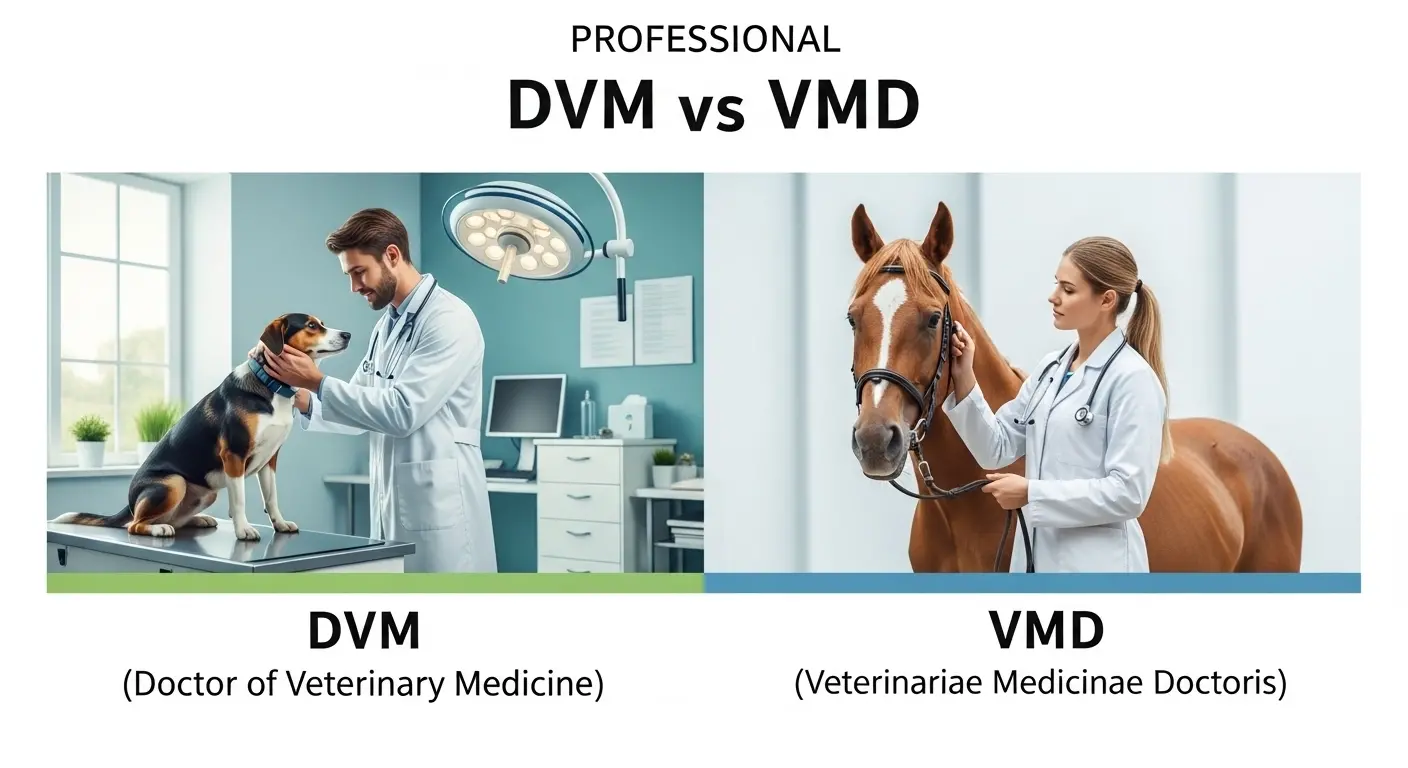
When Ali took his sick calf to a local animal hospital in Punjab, he noticed something interesting. One doctor’s nameplate read DVM, while others said VMD. Ali wondered if one was more qualified than the other. That real-life confusion explains why many people search for the difference between DVM and VMD.
The difference between DVM and VMD is not about skill level or authority. It is mainly about the title awarded by different universities. Still, the difference between DVM and VMD matters for students choosing colleges and for professionals presenting credentials internationally. Understanding the difference between DVM and VMD clears common misunderstandings in the veterinary world and helps learners make informed decisions.
Key Difference Between the Both
The key difference between DVM and VMD lies in the degree title.
- DVM stands for Doctor of Veterinary Medicine.
- VMD stands for Veterinariae Medicinae Doctor (Latin for Doctor of Veterinary Medicine).
Both degrees qualify a person to practice veterinary medicine.
Why Is Their Difference Necessary to Know?
Knowing the difference between DVM and VMD is important for:
- Students choosing veterinary schools.
- Professionals applying internationally.
- Employers verifying credentials.
- Society, because veterinarians protect animal health, food safety, and public health.
Although both degrees offer equal professional value, the naming tradition influences perception and academic identity.
Pronunciation (US & UK)
| Degree | US Pronunciation | UK Pronunciation |
| DVM | Dee-Vee-Em | Dee-Vee-Em |
| VMD | Vee-Em-Dee | Vee-Em-Dee |
Now that we understand the basics, let’s explore the topic in detail.
Difference Between DVM and VMD
Here are 10 clear points explaining the difference between DVM and VMD:
1. Full Form
- DVM: Doctor of Veterinary Medicine.
- VMD: Veterinariae Medicinae Doctor (Latin).
Example 1: A graduate from a US veterinary college earns a DVM.
Example 2: A graduate from the University of Pennsylvania earns a VMD.
2. Language Origin
- DVM: English-based title.
- VMD: Latin-based title.
Example 1: DVM is easy to understand globally.
Example 2: VMD reflects classical academic tradition.
3. Institution Offering the Degree
- DVM: Offered by most veterinary schools worldwide.
- VMD: Only awarded by the University of Pennsylvania.
Example 1: Texas A&M grants DVM.
Example 2: UPenn grants VMD.
4. Historical Background
- DVM: Modern academic naming style.
- VMD: Based on Latin naming tradition used in medical degrees.
Example 1: Many new universities prefer DVM.
Example 2: UPenn follows Latin like MD degrees.
5. Curriculum
- Both have the same curriculum standards.
Example 1: Students study anatomy in DVM.
Example 2: Students study anatomy in VMD.
6. Licensing
- Both qualify for veterinary licensing exams.
Example 1: DVM graduates take NAVLE.
Example 2: VMD graduates also take NAVLE.
7. International Recognition
- Both are equally recognized worldwide.
Example 1: A DVM can work in Canada.
Example 2: A VMD can work in Australia.
8. Public Perception
- Some think VMD sounds more prestigious due to Latin.
- DVM is more commonly recognized.
Example 1: Employers understand DVM quickly.
Example 2: Some clients ask about VMD meaning.
9. Degree Abbreviation Style
- DVM: English order (Doctor of Veterinary Medicine).
- VMD: Latin order reversed.
Example 1: “Dr. Ahmed, DVM”
Example 2: “Dr. Sara, VMD”
10. Usage in Academic Publications
- Both titles are used similarly in research.
Example 1: Research paper by John Smith, DVM.
Example 2: Research paper by Emily Brown, VMD.
Nature and Behaviour of Both
DVM Nature: Practical, globally standardized, widely recognized.
VMD Nature: Traditional, classical, academically historic.
Both represent highly trained professionals who care for animals and protect public health.
Why Are People Confused About Their Use?
People are confused because:
- The abbreviations look different.
- VMD sounds like a higher qualification.
- Latin terms create prestige perception.
- Not everyone knows they are academically equal.
Table Showing Difference and Similarity
| Feature | DVM | VMD | Similarity |
| Full Form | Doctor of Veterinary Medicine | Latin equivalent | Same meaning |
| Language | English | Latin | Equal value |
| Institution | Most universities | University of Pennsylvania | Accredited degree |
| Curriculum | Veterinary sciences | Veterinary sciences | Same standard |
| License Eligibility | Yes | Yes | Equal rights |
Which Is Better in What Situation?
DVM:
DVM is better in situations where clarity and global recognition are important. It is commonly understood across countries. Employers immediately recognize it. Students applying internationally may find DVM easier to explain.
VMD:
VMD is better in academic or traditional contexts. It reflects classical medical tradition. Graduates from UPenn may value its historic identity. However, it does not provide extra authority over DVM.
Metaphors and Similes
- “Choosing between DVM and VMD is like choosing between ‘color’ and ‘colour’.”
- “DVM and VMD are two sides of the same coin.”
Connotative Meaning
- DVM: Neutral to positive (professional, practical).
- Example: “She proudly earned her DVM.”
- VMD: Positive (prestigious, traditional).
- Example: “He carries the respected VMD title.”
Idioms or Proverbs Related
While no direct idioms exist, related expressions include:
- “A rose by any other name would smell as sweet.”
- Example: DVM or VMD, both mean qualified veterinarian.
- “Don’t judge a book by its cover.”
- Example: The title differs, but skills are equal.
Works in Literature
(No major literary works specifically titled DVM or VMD; they are professional degrees.)
Movies Related to Veterinary Field
- All Creatures Great and Small (1975, UK)
- Dr. Dolittle (1998, USA)
Five Frequently Asked Questions
1. Is VMD higher than DVM?
No, both are equal degrees.
2. Can a VMD practice anywhere?
Yes, after licensing requirements.
3. Why does UPenn use VMD?
Because of Latin academic tradition.
4. Is the curriculum different?
No, it follows the same veterinary standards.
5. Should students prefer one over the other?
Choose based on university preference, not title.
How Both Are Useful for Surroundings
Both DVM and VMD graduates:
- Treat animals.
- Prevent zoonotic diseases.
- Ensure food safety.
- Support agriculture and livestock industries.
They play a critical role in public health and rural economies.
Final Words for Both
DVM and VMD are equal in training, respect, and authority. The difference lies only in tradition and naming style.
Conclusion
Understanding the difference between DVM and VMD helps remove confusion among students, employers, and animal owners. While DVM is widely used and easily recognized, VMD reflects classical academic tradition.
Both degrees qualify professionals to practice veterinary medicine with equal authority. The distinction is linguistic and institutional, not academic or professional. In simple words, whether a veterinarian holds a DVM or VMD, their dedication to animal health remains the same.