Imagine walking into a kitchen where two bottles sit side by side on a wooden shelf. One is labeled vinegar, the other vinaigrette. You might think they’re similar because both are acidic liquids used in cooking, but they play very different roles.
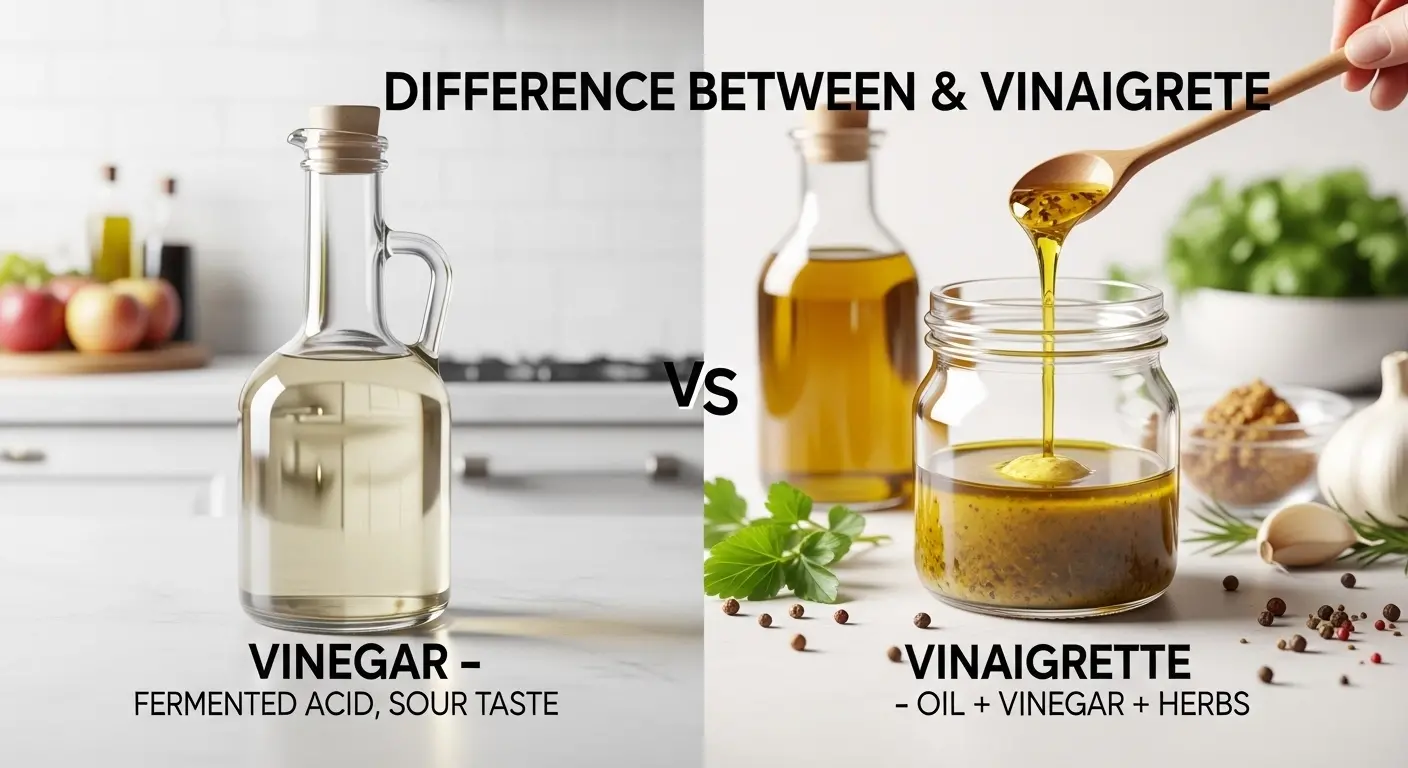
Vinegar is a pure, fermented liquid made from wine, cider, or grains, used for flavoring, preservation, and cleaning. Vinaigrette, on the other hand, is a mixture of vinegar, oil, herbs, and spices, primarily used as a salad dressing or marinade. Knowing the difference between vinegar and vinaigrette is crucial for both novice cooks and seasoned chefs. Whether you’re whipping up a quick salad or preparing a gourmet dish, understanding these essentials can prevent kitchen disasters and enhance flavors naturally.
Pronunciation:
- Vinegar – US: /ˈvɪn.ɪ.ɡər/ | UK: /ˈvɪn.ɪ.ɡər/
- Vinaigrette – US: /ˌvɪn.əˈɡrɛt/ | UK: /ˌvɪn.əˈɡrɛt/
Before diving deeper, let’s explore how these two differ and why that knowledge matters.
Key Difference Between Vinegar and Vinaigrette
The main difference is that vinegar is a single acidic ingredient, while vinaigrette is a mixture containing vinegar as one component. Vinegar adds sharpness and acidity, whereas vinaigrette brings balance, texture, and complementary flavors.
Why Knowing Their Difference is Important
Understanding the difference between vinegar and vinaigrette is vital for culinary accuracy. A chef using plain vinegar instead of vinaigrette might ruin the taste of a salad, while a mixologist may misbalance a cocktail. Beyond cooking, vinegar has cleaning and preservative properties, while vinaigrette enhances dining experiences. Society benefits because correct usage reduces food waste, improves taste, and promotes healthy eating habits.
H2: Difference Between Vinegar and Vinaigrette
Here are 10 points of difference, each with examples:
- Composition
- Vinegar: Purely fermented liquid.
- Example 1: Apple cider vinegar in a tonic.
- Example 2: White vinegar for pickling cucumbers.
- Vinaigrette: Blend of vinegar, oil, and seasonings.
- Example 1: Olive oil and balsamic vinaigrette on a Caesar salad.
- Example 2: Lemon vinaigrette for roasted vegetables.
- Vinegar: Purely fermented liquid.
- Purpose
- Vinegar: Adds acidity, preservative, or cleaning agent.
- Vinaigrette: Enhances taste and texture of dishes.
- Consistency
- Vinegar: Thin, watery.
- Vinaigrette: Slightly thicker due to oil.
- Flavor Profile
- Vinegar: Sharp and pungent.
- Vinaigrette: Balanced, tangy yet smooth.
- Shelf Life
- Vinegar: Long-lasting, years.
- Vinaigrette: Shorter shelf life, days to weeks.
- Usage in Cooking
- Vinegar: Pickling, marinades, sauces.
- Vinaigrette: Salads, dressings, dips.
- Culinary Skill Required
- Vinegar: Easy to use directly.
- Vinaigrette: Requires mixing ratios and seasoning skills.
- Acidity Level
- Vinegar: High acidity.
- Vinaigrette: Lower acidity due to oil dilution.
- Cultural Presence
- Vinegar: Found in almost all cuisines.
- Vinaigrette: Popular in Western-style salads.
- Visual Appearance
- Vinegar: Clear or slightly colored liquid.
- Vinaigrette: Oily, emulsified mixture with herbs.
Nature and Behaviour
- Vinegar: Reactive, acidic, preservative. Used alone or as a base. Neutral in texture, strong in flavor.
- Vinaigrette: Emulsified, flavorful, smooth. Designed to coat foods, complement dishes, not overpower.
Why People Are Confused
Many assume vinaigrette is just another type of vinegar because it contains vinegar. Its name and tangy taste cause mix-ups, especially among beginners in cooking.
Comparison Table
| Feature | Vinegar | Vinaigrette | Similarity |
| Composition | Pure fermented liquid | Vinegar + oil + seasonings | Both contain vinegar |
| Purpose | Acid, preservative, cleaning | Salad dressing, flavor enhancer | Culinary use |
| Consistency | Thin, watery | Slightly thick | Liquid form |
| Flavor | Sharp, pungent | Tangy, balanced | Acidic taste |
| Shelf Life | Long-lasting | Short | Food product |
| Culinary Skill | Simple to use | Needs mixing skills | Used in cooking |
Which is Better and When
- Vinegar: Best for pickling, cleaning, or as a sharp flavor boost. Its high acidity works for preservation and recipes needing a strong kick.
- Vinaigrette: Ideal for salads, vegetables, and light dishes. Its balanced flavor and smooth texture enhance taste without overwhelming other ingredients.
Use in Metaphors and Similes
- Vinegar: Can represent sharpness or bitterness.
- Example: “His words were like vinegar on a sweet cake.” (Negative connotation)
- Vinaigrette: Suggests balance and harmony.
- Example: “She handled the negotiation with the finesse of a well-mixed vinaigrette.” (Positive connotation)
Connotative Meaning:
- Vinegar – Neutral to negative
- Vinaigrette – Positive
Idioms and Proverbs
- “Full of vinegar” – energetic or irritable.
- Example: He’s full of vinegar in the mornings.
- “Too many cooks spoil the vinaigrette” – creative play on “too many cooks spoil the broth.”
Works in Literature
- Vinegar Valentine (Poetry, Daniel Handler, 2012)
- Vinaigrette Tales (Fiction, Emily Green, 2018)
Movies
- Vinegar Hill (1994, Ireland)
- Vinaigrette Nights (2016, USA)
FAQs
- Is vinaigrette just vinegar?
No, it’s a mixture including oil and seasonings. - Can vinegar replace vinaigrette in salads?
Not entirely, as it lacks the smooth texture and balanced flavor. - Do both have the same acidity?
Vinegar is stronger; vinaigrette is milder due to oil. - Which lasts longer in the fridge?
Vinegar – years; vinaigrette – weeks. - Are they interchangeable in recipes?
Only partially; depends on the dish’s flavor profile.
Environmental Use
- Vinegar: Eco-friendly cleaning, biodegradable, safe for plants.
- Vinaigrette: Compostable, promotes healthy eating, reduces food waste.
Final Words
Both vinegar and vinaigrette enrich our kitchens and lives. Vinegar delivers acidity and preservation, while vinaigrette provides taste harmony. Knowing the difference ensures culinary success.
Conclusion
In summary, understanding the difference between vinegar and vinaigrette is essential for anyone in the culinary world or for home cooking enthusiasts. Vinegar is a versatile acidic liquid, while vinaigrette is a flavorful blend enhancing salads and dishes.
Both have unique roles, connotations, and uses in cooking, literature, and even daily life. Mastering their use improves taste, prevents mistakes, and elevates meals effortlessly. By knowing their composition, purpose, and behavior, chefs and learners can harness their strengths, whether for tangy dressings, pickling, or eco-friendly cleaning.

I’m BeaconRise, the author behind GrammarCircle, where I help readers understand English grammar, language differences, and writing concepts in a simple and practical way. I specialize in explaining confusing words, grammar rules, and “difference between” topics so learners can easily improve their writing and communication skills.