Citrus fruits are a staple in many households, but have you ever wondered about the difference between mandarin and tangerine? Imagine visiting a local fruit market. You see bright orange fruits labeled “mandarins” and “tangerines.” They look almost identical, and the vendor casually says, “They are the same!” Many of us have faced this confusion.
However, knowing the difference between mandarin and tangerine can help you pick the right fruit for recipes, snacks, or even juice blends. Mandarin and tangerine are related citrus fruits, but subtle distinctions in taste, size, and origin make them unique.
If you’re a fruit enthusiast, chef, or researcher, understanding these differences is valuable. So, let’s peel back the layers and explore the fascinating world of mandarin and tangerine.
Pronunciation:
- Mandarin – US: /ˈmæn.dər.ɪn/ | UK: /ˈmæn.dər.ɪn/
- Tangerine – US: /ˌtæn.dʒəˈriːn/ | UK: /ˌtæn.dʒəˈriːn/
Now that we know what mandarin and tangerine are, let’s dive deeper into their differences and uses.
Difference Between Mandarin and Tangerine
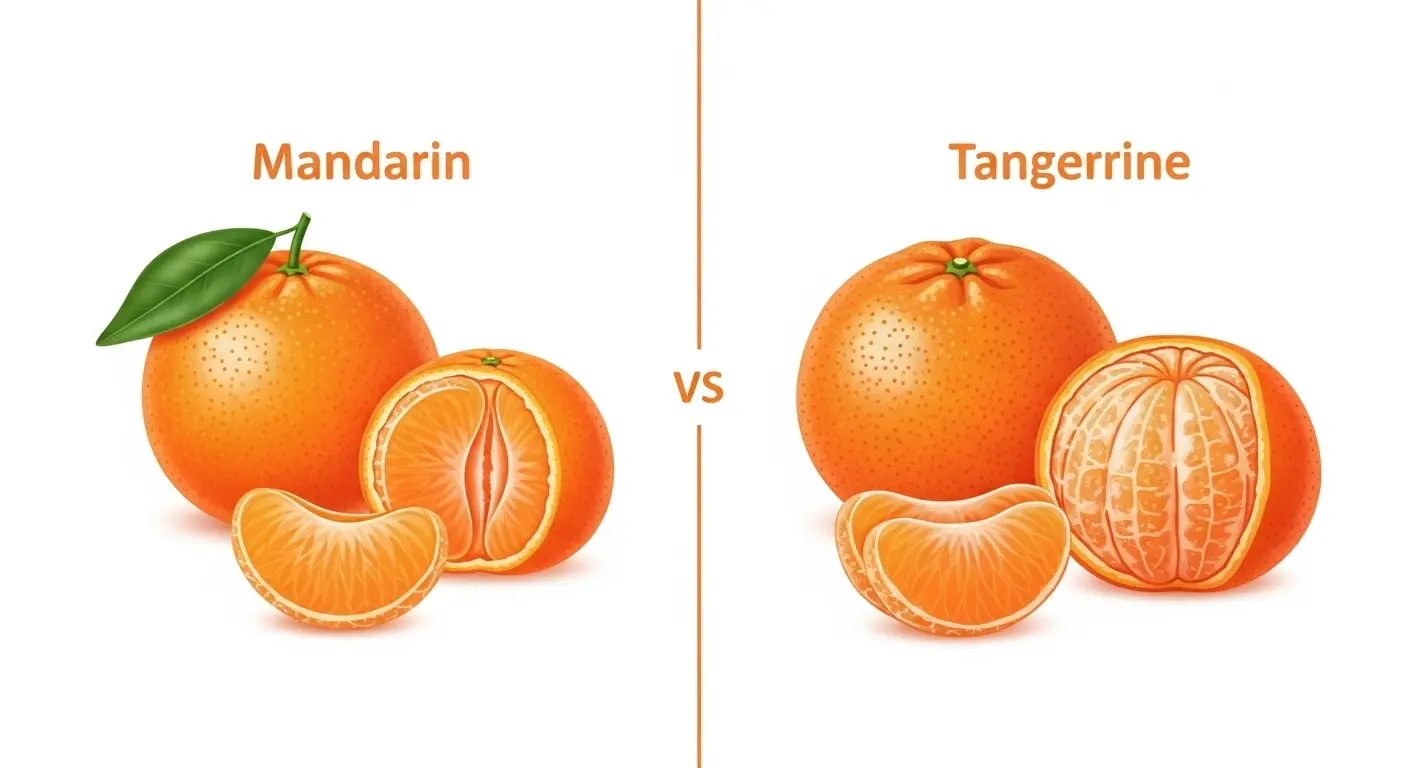
Here are 10 key differences between mandarin and tangerine:
- Origin
- Mandarin: Native to China, widely cultivated in Asia.
Example 1: Mandarins are a popular winter fruit in China.
Example 2: Mandarin orchards are common in southern China. - Tangerine: Originally from Southeast Asia, later introduced to the Mediterranean.
Example 1: Tangerines became popular in Florida in the 19th century.
Example 2: Spanish markets sell tangerines as a winter specialty.
- Mandarin: Native to China, widely cultivated in Asia.
- Size
- Mandarin: Smaller, about 2–3 inches in diameter.
Example 1: A mandarin fits perfectly in the palm of your hand.
Example 2: Children often prefer mandarins due to their smaller size. - Tangerine: Slightly larger, around 3–4 inches in diameter.
Example 1: Tangerines are easy to slice for desserts.
Example 2: Larger tangerines are often used for juicing.
- Mandarin: Smaller, about 2–3 inches in diameter.
- Peel
- Mandarin: Loose skin, easy to peel.
Example 1: Peeling a mandarin is effortless for kids.
Example 2: Mandarins are ideal for fruit salads due to easy peeling. - Tangerine: Thicker and tougher skin.
Example 1: Tangerines require more effort to peel.
Example 2: Their peel is often used in marmalade making.
- Mandarin: Loose skin, easy to peel.
- Taste
- Mandarin: Sweet and mild.
Example 1: Mandarins are naturally sweet without added sugar.
Example 2: They are a favourite in lunchboxes. - Tangerine: Sweet with slight tanginess.
Example 1: Tangerine juice has a tangy zest.
Example 2: Tangerines add a citrusy punch to desserts.
- Mandarin: Sweet and mild.
- Seeds
- Mandarin: Usually fewer seeds.
Example 1: Mandarin segments are mostly seedless.
Example 2: Perfect for children to eat safely. - Tangerine: More seeds than mandarins.
Example 1: Tangerines need careful slicing due to seeds.
Example 2: Seeded tangerines are common in recipes requiring zest.
- Mandarin: Usually fewer seeds.
- Color
- Mandarin: Bright orange to deep orange.
Example 1: Mandarins brighten fruit bowls with their color.
Example 2: Fresh mandarins are visually appealing in salads. - Tangerine: Deep orange with reddish hue.
Example 1: Tangerines are visually distinct due to their reddish shade.
Example 2: They are used in decorative fruit arrangements.
- Mandarin: Bright orange to deep orange.
- Season
- Mandarin: Winter season, November to January.
Example 1: Mandarins are common during Chinese New Year.
Example 2: Farmers harvest mandarins in late winter. - Tangerine: Late autumn to winter, October to January.
Example 1: Tangerines are widely sold during Christmas.
Example 2: Tangerine harvest aligns with winter festivals.
- Mandarin: Winter season, November to January.
- Use in Cuisine
- Mandarin: Eaten raw, in fruit salads, or desserts.
Example 1: Mandarin slices are perfect in yogurt bowls.
Example 2: Mandarin segments garnish cakes. - Tangerine: Juices, marmalades, sauces.
Example 1: Tangerine juice enhances cocktail flavors.
Example 2: Tangerine zest flavors pastries.
- Mandarin: Eaten raw, in fruit salads, or desserts.
- Aroma
- Mandarin: Light, sweet fragrance.
Example 1: Mandarins smell fresh in fruit baskets.
Example 2: They are used in mild aromatherapy. - Tangerine: Stronger, tangy aroma.
Example 1: Tangerine essential oil is common in perfumes.
Example 2: Tangerines make rooms smell citrusy.
- Mandarin: Light, sweet fragrance.
- Botanical Classification
- Mandarin: Citrus reticulata species.
Example 1: Mandarins belong to the true mandarin family.
Example 2: They have several cultivars like Clementine. - Tangerine: A subgroup of mandarins, Citrus tangerina.
Example 1: Tangerines are genetically a type of mandarin.
Example 2: Tangerines have unique hybrid varieties.
Nature and Behavior
- Mandarin: Gentle, mild, and sweet. Often preferred by children.
- Tangerine: Bold, slightly tangy, and aromatic. Popular in cooking and juicing.
Why People Are Confused
Mandarins and tangerines look alike, share similar nutritional profiles, and sometimes overlap in naming conventions. Many grocery stores use the terms interchangeably, causing confusion.
Mandarin vs Tangerine: Table of Differences and Similarities
| Feature | Mandarin | Tangerine | Similarities |
| Origin | China | Southeast Asia | Both are citrus fruits |
| Size | Smaller | Slightly larger | Round and orange |
| Peel | Loose, easy | Thick, tough | Edible and fragrant |
| Taste | Sweet, mild | Sweet, tangy | Both sweet varieties |
| Seeds | Fewer | More | Both have seeds |
| Aroma | Light | Strong | Citrus aroma |
| Season | Nov-Jan | Oct-Jan | Winter fruits |
| Cuisine | Raw, desserts | Juices, marmalades | Edible in many forms |
| Botanical | Citrus reticulata | Citrus tangerina | Same citrus family |
| Color | Bright orange | Deep reddish-orange | Eye-catching |
Which Is Better in What Situation?
- Mandarin: Ideal for snacks, children, and salads. Its easy-to-peel skin and sweet taste make it convenient for immediate consumption.
- Tangerine: Best for juicing, zesting, or recipes needing a tangy punch. Its aromatic peel enhances flavor in desserts and sauces.
Metaphors, Similes, and Connotative Meanings
- Mandarin: Represents sweetness and gentleness.
Example: “Her smile was as sweet as a mandarin.” (Positive) - Tangerine: Suggests zest, boldness, and brightness.
Example: “The sunset was tangerine in hue.” (Positive)
Idioms/Proverbs:
- “Squeeze the day” – inspired by citrus, encourages making the most of life.
- “A peach or a mandarin in every hand” – symbolizes abundance and sharing.
Works in Literature
- “The Mandarin” – Short story, José Maria de Eça de Queirós, 1880
- “Tangerine” – Novel, Edward Bloor, 1997
Movies
- Tangerines – 2013, Estonia/Georgia
- The Mandarin – 1924, USA
Frequently Asked Questions
- Are mandarins and tangerines the same?
No, tangerines are a subgroup of mandarins. - Which is sweeter?
Mandarins are generally sweeter and milder. - Which is better for juicing?
Tangerines are preferred due to their tangy flavor. - Do mandarins have seeds?
Usually fewer seeds than tangerines. - Can they be used interchangeably in recipes?
Yes, but flavor and peel texture may differ.
How Both Are Useful for Surroundings
Both mandarins and tangerines improve the environment through their trees. They provide oxygen, act as natural air purifiers, and their peels can be composted to enrich soil.
Final Words
Mandarins and tangerines may seem similar, but understanding their differences enhances culinary experiences, health benefits, and even cultural appreciation. Both are delightful in taste and versatile in use.
Conclusion
Mandarin and tangerine, though closely related, each have unique traits. Mandarins are sweet, easy to peel, and perfect for snacking. Tangerines offer tangy flavor, aromatic zest, and are ideal for juices and cooking.
Recognizing their distinctions ensures proper culinary and nutritional use. If eaten raw, juiced, or used in creative recipes, both fruits enrich our diet and surroundings. By knowing the differences, fruit lovers, chefs, and nutritionists can make informed choices, ensuring the best taste, presentation, and health benefits. These citrus delights truly add color, flavor, and vitality to life.

Hi, I’m DreamAnchor, the author behind GrammarCircle. I am passionate about language, writing, and helping people understand the small but important differences in English words and concepts. Through my work, I focus on explaining grammar rules, word comparisons, and language usage in a simple and practical way so that students, writers, and professionals can improve their communication skills.