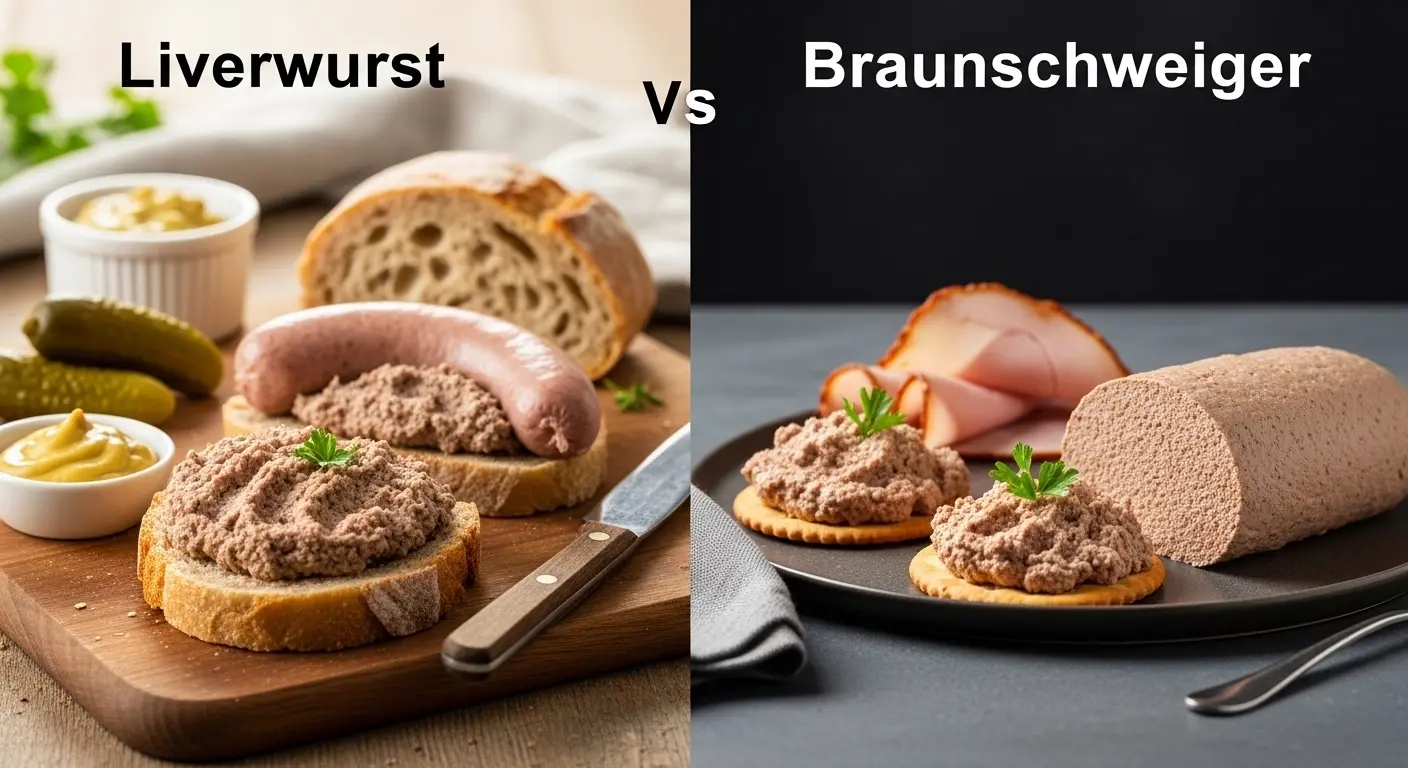
Liverwurst and Braunschweiger are two types of sausages that often confuse food lovers, especially in delis and grocery stores. Imagine walking into a German bakery or an American deli; the cold case is filled with sausages labeled “Liverwurst” and “Braunschweiger.” Both are made primarily from liver, but subtle differences in preparation, seasoning, and texture distinguish them.
Understanding the difference between liverwurst and Braunschweiger is essential for chefs, home cooks, and culinary enthusiasts. While liverwurst often has a spreadable consistency and mild flavor, Braunschweiger is usually smoked and firmer. Knowing these differences not only helps in selecting the right sausage for recipes but also preserves culinary traditions.
Pronunciation:
- Liverwurst: US /ˈlɪvərwɜːrst/ | UK /ˈlɪvəwɜːst/
- Braunschweiger: US /ˈbraʊnˌsvaɪgər/ | UK /ˈbraʊnʃvaɪɡər/
Let’s dive deeper into the distinction between these two sausages and understand why they are often mistaken for each other.
Difference Between Liverwurst and Braunschweiger
1. Origin
- Liverwurst: Originates from Germany, commonly eaten across Europe. Example: Traditional German liverwurst sandwiches. Example: Spread on rye bread in Berlin.
- Braunschweiger: Specifically linked to Braunschweig, Germany, but popularized in the US. Example: Used in American deli sandwiches. Example: Served with mustard and crackers in the US.
2. Ingredients
- Liverwurst: Contains pork liver, fat, onions, and spices. Example: Spreadable with herbs like marjoram. Example: Includes cream for smooth texture.
- Braunschweiger: Typically pork liver, bacon, onions, and often smoked. Example: Adds smoky flavor for sandwiches. Example: Used in breakfast spreads.
3. Texture
- Liverwurst: Soft, spreadable, almost pâté-like. Example: Spread on toast. Example: Used in soft sandwiches.
- Braunschweiger: Firmer, sliceable consistency. Example: Sliced for charcuterie boards. Example: Pan-fried slices for breakfast.
4. Flavor
- Liverwurst: Mild, creamy, lightly seasoned. Example: Great for children or sensitive palates. Example: Balanced flavor with herbs.
- Braunschweiger: Stronger, smoky, slightly salty. Example: Used in rich, savory dishes. Example: Compliments bold cheeses.
5. Smoking Process
- Liverwurst: Often unsmoked. Example: Sold fresh in tubs. Example: Spreadable without added smoke flavor.
- Braunschweiger: Usually smoked. Example: Gives distinct aroma. Example: Longer shelf life due to smoking.
6. Culinary Use
- Liverwurst: Spread on bread, crackers, or sandwiches. Example: Classic liverwurst sandwich. Example: Party appetizer spread.
- Braunschweiger: Sandwich slices, pan-fried breakfast, or charcuterie. Example: Braunschweiger burger topping. Example: Brunch omelet ingredient.
7. Storage
- Liverwurst: Refrigerated, shorter shelf life. Example: Keep under 1 week once opened. Example: Soft texture demands quick use.
- Braunschweiger: Refrigerated or vacuum-sealed, lasts longer. Example: Smoked version can last 2-3 weeks. Example: Ideal for deli display.
8. Nutritional Content
- Liverwurst: Higher in fat, rich in vitamin A. Example: Healthy in moderation. Example: Good for energy-rich diets.
- Braunschweiger: Slightly leaner due to smoking, protein-rich. Example: Breakfast protein source. Example: Adds variety to charcuterie.
9. Popularity
- Liverwurst: Widely recognized in Europe. Example: Germany and Austria. Example: Scandinavian countries.
- Braunschweiger: Popular in US delis. Example: Midwest sandwich culture. Example: Southern breakfast recipes.
10. Confusion Factor
- Liverwurst: Softness may resemble other pâtés. Example: Confused with generic liver pâté. Example: Similar color as Braunschweiger.
- Braunschweiger: Smoked flavor may be confused with ham or salami. Example: Seen as smoked meat. Example: Misidentified in recipes.
Nature and Behavior
Liverwurst: Smooth, mild, and easily adaptable. Often a “friendly” ingredient that blends well.
Braunschweiger: Bold, smoky, firmer. Strong presence on a plate often dominates flavor profiles.
Why People Are Confused
Many assume the words are interchangeable because both are liver-based sausages. Also, regional labeling differs, and cooking methods overlap, making the distinction subtle.
Liverwurst vs Braunschweiger Table
| Feature | Liverwurst | Braunschweiger | Similarities |
| Origin | Germany | Braunschweig, Germany / US | German heritage |
| Texture | Soft, spreadable | Firm, sliceable | Both liver-based |
| Flavor | Mild, creamy | Smoky, strong | Rich in nutrients |
| Ingredients | Pork liver, fat, spices | Pork liver, bacon, smoked | Contain onions |
| Smoking | Usually unsmoked | Usually smoked | Can include herbs |
| Culinary Use | Sandwiches, spreads | Sliced, pan-fried, sandwiches | Deli use |
| Shelf Life | Short | Longer | Refrigerated |
| Popularity | Europe | US | Worldwide recognition |
| Nutrition | Higher fat | High protein | Vitamin-rich |
| Confusion Factor | Similar color & base | Smoked taste & shape | Liver-based sausage |
Which Is Better in What Situation?
Liverwurst: Best for soft spreads, party platters, and mild sandwiches. Its creamy texture makes it perfect for children or casual snacks.
Braunschweiger: Ideal for bold meals, smoked sandwiches, or charcuterie boards. Its firmer texture and smoky flavor add depth to breakfast or dinner dishes.
Metaphors, Similes, and Connotative Meanings
- Liverwurst: Can symbolize softness or mildness. Example: “As soft as liverwurst on toast.” Connotation: Neutral to positive.
- Braunschweiger: Can symbolize strength or boldness. Example: “Smoky like Braunschweiger in a winter stew.” Connotation: Positive or bold.
Idioms / Proverbs
- “Don’t put all your liverwurst in one basket” – meaning don’t risk everything.
- “Smoked like Braunschweiger” – meaning robust or strong in character.
Works in Literature
- The Liverwurst Chronicles, Fiction, John Becker, 2015
- Braunschweiger Tales, Short Stories, Emma Fischer, 2018
Movies
- Liverwurst Love, 2020, Germany
- Braunschweiger Breakfast, 2017, USA
Frequently Asked Questions
- Are Liverwurst and Braunschweiger the same?
No, liverwurst is mild and spreadable, Braunschweiger is smoked and firmer. - Which is healthier?
Liverwurst has more fat; Braunschweiger has more protein. - Can I substitute one for the other?
Yes, but texture and flavor may differ in recipes. - How are they stored?
Liverwurst: short refrigeration; Braunschweiger: longer shelf life. - Which is more popular in the US?
Braunschweiger is widely used in American delis.
Environmental Use
Both sausages make use of organ meats, reducing food waste. Smoked Braunschweiger preserves food longer, while liverwurst spreads make use of softer cuts efficiently.
Final Words
Liverwurst and Braunschweiger may look similar, but understanding their differences enhances culinary skills, respects tradition, and improves meal experiences.
Conclusion
Knowing the difference between liverwurst and Braunschweiger is not just for chefs—it helps everyday cooks make informed choices. While liverwurst offers a mild, creamy option, Braunschweiger provides a smoky, robust flavor. These sausages reflect cultural culinary practices and add diversity to meals. Their unique textures, preparation methods, and flavors cater to different recipes, occasions, and tastes.
Learning the distinction helps preserve culinary heritage, reduces confusion, and allows food enthusiasts to experiment confidently in kitchens. Whether served in sandwiches, spreads, or breakfast plates, both sausages contribute significantly to global gastronomy.

Hi, I’m DreamAnchor, the author behind GrammarCircle. I am passionate about language, writing, and helping people understand the small but important differences in English words and concepts. Through my work, I focus on explaining grammar rules, word comparisons, and language usage in a simple and practical way so that students, writers, and professionals can improve their communication skills.