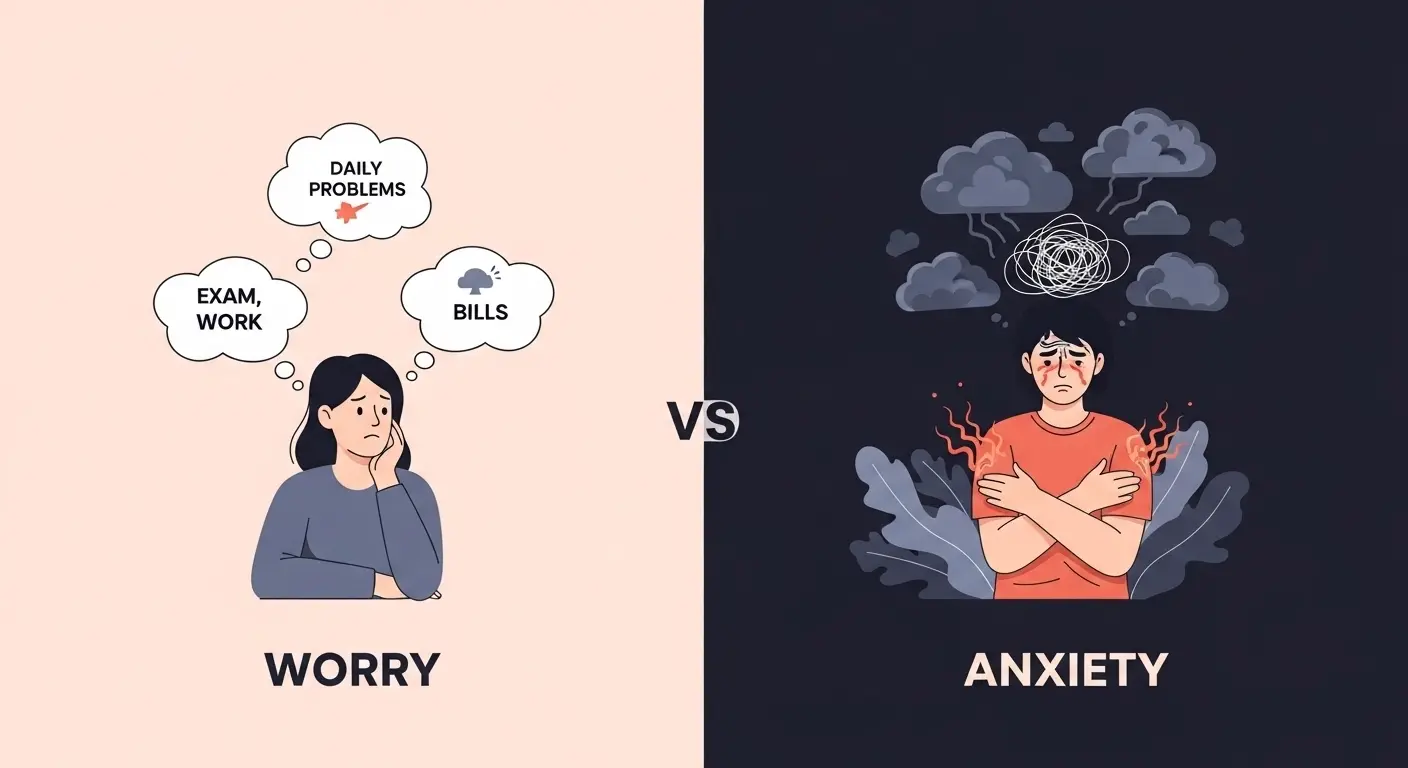
One evening, a student sat quietly, thinking about an upcoming exam. At first, it was just a small concern“Will I pass?” This feeling was worry, a normal and short-term reaction. But as the night went on, the thoughts grew stronger, turning into restlessness, fear, and even physical discomfort.
That was anxiety. Understanding the difference between worry and anxiety is important because many people experience both but cannot tell them apart. The difference between worry and anxiety lies in intensity, duration, and impact on daily life.
While worry is usually temporary and manageable, anxiety can be overwhelming and persistent. Learning the difference between worry and anxiety helps individuals manage their mental health better and seek help when needed.
- Worry Pronunciation: /ˈwɜːri/ (UK), /ˈwɝːi/ (US)
- Anxiety Pronunciation: /æŋˈzaɪəti/ (US & UK)
Before we move forward, let’s explore how these two emotions differ in deeper psychological and practical terms.
Key Difference Between Worry and Anxiety
- Worry: A temporary, specific concern about a real situation
- Anxiety: A deeper, long-lasting feeling of fear or unease, often without a clear cause
Why Understanding the Difference Matters in Society
Understanding the difference between worry and anxiety is essential for both learners and experts. In society, many people ignore anxiety by assuming it is just worry, which can delay proper treatment. For students, it helps improve focus and emotional control. For professionals like doctors and psychologists, it allows accurate diagnosis and care. This knowledge also reduces stigma around mental health. When people clearly understand the difference between worry and anxiety, they can support others better, make informed decisions, and promote a healthier and more aware society.
H2: Difference Between Worry and Anxiety
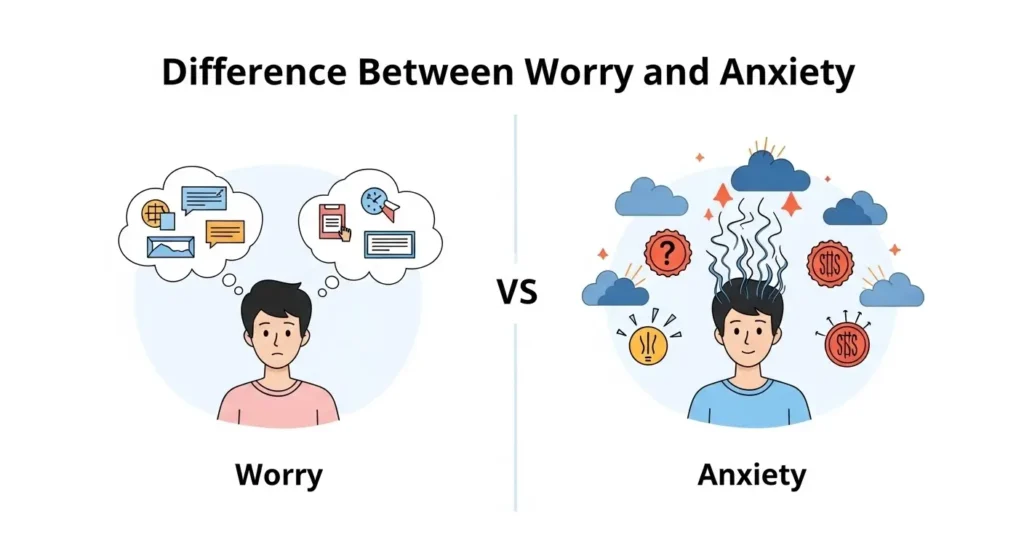
1. Definition
- Worry: Concern about a specific problem
- Example 1: Worrying about an exam tomorrow
- Example 2: Concern about a job interview
- Anxiety: General feeling of fear or unease
- Example 1: Feeling nervous without knowing why
- Example 2: Constant fear about the future
2. Duration
- Worry: Short-term
- Example 1: Ends after exam is over
- Example 2: Stops after problem is solved
- Anxiety: Long-term
- Example 1: Lasts for weeks
- Example 2: Continues even without a problem
3. Cause
- Worry: Clear and identifiable
- Example 1: Financial issue
- Example 2: Upcoming event
- Anxiety: Often unclear
- Example 1: Feeling uneasy for no reason
- Example 2: Fear without a trigger
4. Intensity
- Worry: Mild
- Example 1: Slight nervousness
- Example 2: Occasional thoughts
- Anxiety: Strong
- Example 1: Panic attacks
- Example 2: Extreme fear
5. Physical Effects
- Worry: Minimal
- Example 1: Mild headache
- Example 2: Slight tension
- Anxiety: Noticeable
- Example 1: Rapid heartbeat
- Example 2: Sweating and shaking
6. Control
- Worry: Easy to control
- Example 1: Talking to a friend helps
- Example 2: Planning solves it
- Anxiety: Hard to control
- Example 1: Needs therapy
- Example 2: Requires relaxation techniques
7. Impact on Life
- Worry: Limited effect
- Example 1: Still able to work
- Example 2: Normal routine continues
- Anxiety: Disruptive
- Example 1: Avoiding social situations
- Example 2: Difficulty focusing
8. Nature
- Worry: Thought-based
- Example 1: “What if I fail?”
- Example 2: “What if I am late?”
- Anxiety: Emotion + body response
- Example 1: Fear with physical symptoms
- Example 2: Emotional distress
9. Frequency
- Worry: Occasional
- Example 1: Before exams
- Example 2: During deadlines
- Anxiety: Frequent or constant
- Example 1: Daily nervousness
- Example 2: Ongoing stress
10. Treatment
- Worry: Self-managed
- Example 1: Time management
- Example 2: Problem-solving
- Anxiety: May need professional help
- Example 1: Counseling
- Example 2: Medication
Nature and Behaviour of Both
Worry is usually logical and connected to real situations. It helps in problem-solving and planning. Anxiety, however, is emotional and often irrational. It affects both mind and body, sometimes without a clear reason. While worry comes and goes, anxiety can stay and grow if not managed properly.
Why People Are Confused About Their Use
People confuse worry and anxiety because both involve fear and negative thoughts. In daily language, they are often used interchangeably. Also, mild anxiety can feel like worry, making it harder to differentiate. Lack of awareness about mental health further increases confusion.
Table: Difference and Similarity Between Worry and Anxiety
| Feature | Worry | Anxiety |
| Meaning | Specific concern | General fear |
| Duration | Short-term | Long-term |
| Cause | Clear | Often unclear |
| Intensity | Mild | Strong |
| Physical Signs | Minimal | Significant |
| Control | Easier | Difficult |
| Similarity | Both involve stress and negative thinking |
Which is Better in What Situation?
Worry :
Worry can be useful in situations that require planning and preparation. It acts as a warning signal that something needs attention. For example, worrying about an exam can motivate a student to study harder. It helps individuals think ahead, solve problems, and avoid risks. In small amounts, worry is healthy and necessary for personal growth and responsibility. It keeps people alert and focused on their goals. Therefore, worry is better in situations where action and decision-making are required.
Anxiety :
Anxiety is not necessarily better, but it serves as a signal that something deeper needs attention. It can help identify underlying emotional or psychological issues. In some cases, anxiety prepares the body for danger through the “fight or flight” response. However, when it becomes excessive, it needs proper management. Anxiety is useful in recognizing limits and encouraging individuals to seek help, improve mental health, and develop coping strategies.
Metaphors and Similes
- Worry is like a “small cloud” that passes quickly.
- Anxiety is like a “storm” that stays longer.
- Worry is like a “whisper in the mind.”
- Anxiety is like a “loud alarm bell.”
Connotative Meaning
- Worry: Neutral to slightly positive
- Example: Worry helps in planning
- Anxiety: Negative
- Example: Anxiety affects mental health
Idioms and Proverbs
- “Worried sick”
- Example: He was worried sick about his exam
- “Full of anxiety”
- Example: She felt full of anxiety before the interview
Works in Literature
- Anxiety – Fritz Riemann (Psychology, 1961)
- The Worry Trick – David A. Carbonell (Self-help, 2016)
Movies Related to Worry or Anxiety
- Inside Out (2015, USA) – explores emotions including anxiety-like feelings
- A Beautiful Mind (2001, USA) – shows psychological struggles
Frequently Asked Questions
1. Is worry the same as anxiety?
No, worry is short-term while anxiety is long-lasting and intense.
2. Can worry turn into anxiety?
Yes, excessive worry can develop into anxiety.
3. Is anxiety dangerous?
It can affect health if not managed properly.
4. How can I control worry?
By planning, talking, and staying organized.
5. When should I seek help for anxiety?
When it affects daily life and becomes overwhelming.
How Both Are Useful for Surroundings
Worry helps people stay responsible and prepared, while anxiety raises awareness about mental health. Together, they encourage individuals and communities to focus on emotional well-being and support systems.
Final Words for Both
Worry and anxiety are natural human experiences. While worry can be helpful in small amounts, anxiety requires attention and care. Understanding both leads to a balanced and healthier life.
Conclusion
In conclusion, understanding the difference between worry and anxiety is essential for maintaining mental well-being. Worry is a normal, short-term response to specific situations, while anxiety is a deeper and more persistent emotional state that may not always have a clear cause.
Although both involve stress and concern, their impact on life is different. Recognizing the difference between worry and anxiety allows individuals to manage their emotions effectively and seek help when necessary.
It also promotes awareness in society about mental health issues. By understanding and addressing both, people can lead more balanced, productive, and emotionally healthy lives.

I’m BeaconRise, the author behind GrammarCircle, where I help readers understand English grammar, language differences, and writing concepts in a simple and practical way. I specialize in explaining confusing words, grammar rules, and “difference between” topics so learners can easily improve their writing and communication skills.