In a small village story often told in folklore, a wise old man spent years studying ancient books, quietly helping people with his knowledge he was called a wizard. On the other side of the forest lived a mysterious figure who gained powers through a dark pact, feared yet respected he was known as a warlock. This simple tale beautifully captures the difference between warlock and wizard.
The difference between warlock and wizard lies not just in power, but in how that power is obtained. While both are magical figures, the difference between warlock and wizard often reflects knowledge versus agreement, study versus pact. In modern storytelling, understanding the difference between warlock and wizard helps readers and viewers interpret characters more deeply.
Key Difference Between the Both
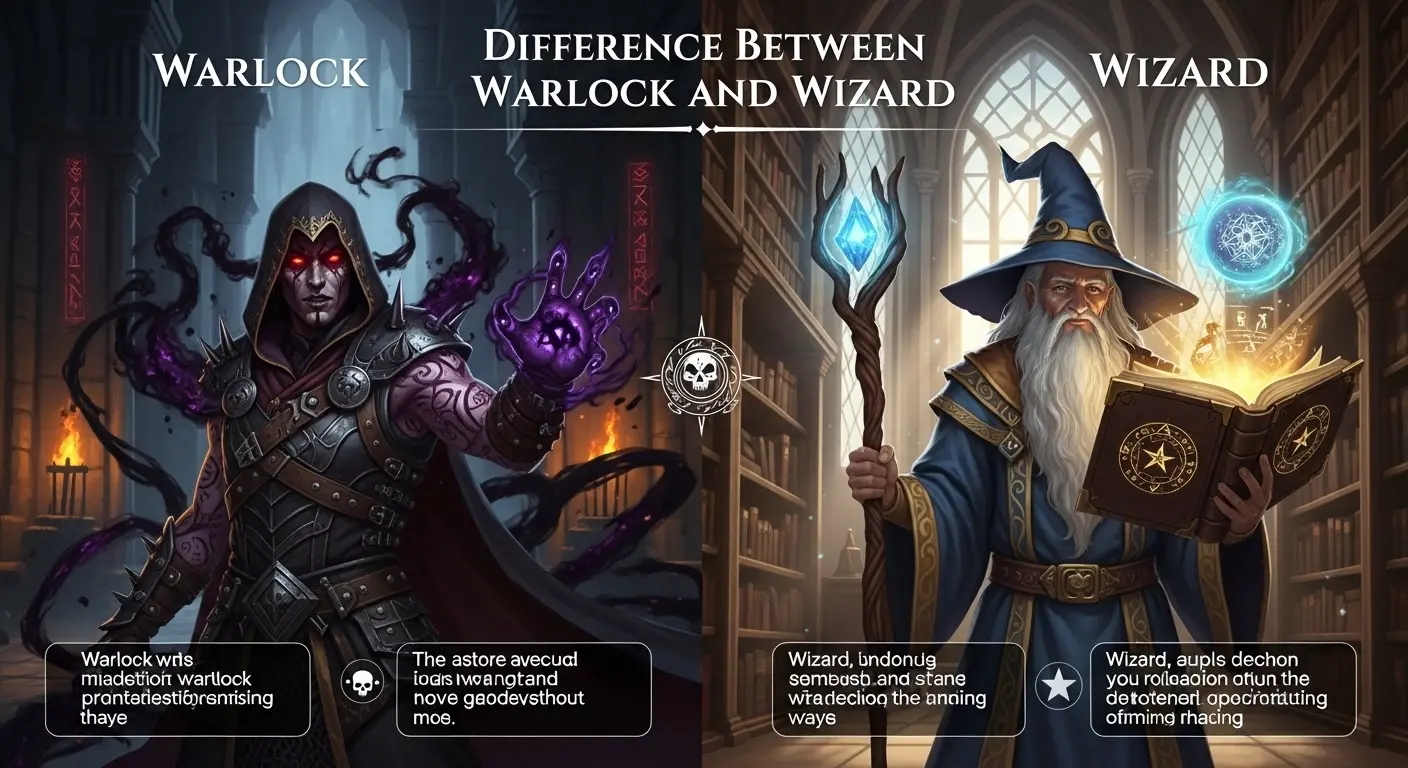
The main difference is that a wizard gains magic through learning and study, while a warlock typically gains magic through a pact with a supernatural entity.
Why Is Their Difference Important in Society?
Understanding the difference between warlock and wizard is important for learners, writers, and fantasy enthusiasts. It helps in analyzing literature, creating accurate characters, and avoiding misuse of terms. In society, these terms also symbolize knowledge versus dependency, ethics versus shortcuts, and wisdom versus powermaking them relevant beyond fantasy.
Pronunciation
- Warlock
- US: /ˈwɔːr.lɑːk/
- UK: /ˈwɔː.lɒk/
- Wizard
- US: /ˈwɪz.ərd/
- UK: /ˈwɪz.əd/
Now that we’ve set the stage, let’s explore the detailed difference between warlock and wizard in depth.
H2: Difference Between Warlock and Wizard
Difference Between Worry and Anxiety: Clear Guide?
1. Source of Power
- Warlock: Gains power through a pact or agreement with supernatural beings.
Examples:- A warlock makes a deal with a demon for magical abilities.
- A character receives powers from a dark spirit.
- Wizard: Gains power through study, practice, and knowledge.
Examples:- A wizard learns spells from ancient books.
- A student studies magic in a magical academy.
2. Learning Method
- Warlock: Does not necessarily study; power is granted.
Examples:- Powers appear instantly after a pact.
- No formal training required.
- Wizard: Requires years of learning and discipline.
Examples:- I attend a magical school.
- Practice spells daily.
- Difference Between Puma and Panther: Clear Facts ?
3. Moral Perception
- Warlock: Often associated with dark or suspicious intentions.
Examples:- Villagers fear the warlock.
- Linked to forbidden magic.
- Wizard: Usually seen as wise and helpful.
Examples:- Helps heroes on quests.
- Acts as a guide.
4. Origin of Term
- Warlock: Historically meant “oath-breaker” or traitor.
Examples:- Used negatively in old Scottish texts.
- Associated with betrayal.
- Wizard: Means “wise one.”
Examples:- Used positively in literature.
- Linked with intelligence.
5. Role in Stories
- Warlock: Often antagonist or morally grey.
Examples:- Dark villain in fantasy.
- Anti-hero character.
- Wizard: Often mentor or hero.
Examples:- Gandalf in Lord of the Rings.
- Dumbledore in Harry Potter.
6. Dependency
- Warlock: Dependent on the entity granting power.
Examples:- Loses power if the pact breaks.
- Must obey supernatural masters.
- Wizard: Independent and self-reliant.
Examples:- Uses learned skills.
- Controls own magic.
7. Symbolism
- Warlock: Represents shortcuts and risk.
Examples:- Power without effort.
- Ethical compromise.
- Wizard: Represents wisdom and patience.
Examples:- Knowledge over time.
- Discipline and mastery.
8. Appearance in Media
- Warlock: Dark robes, mysterious aura.
Examples:- Glowing dark magic.
- Sinister settings.
- Wizard: Classic robes, staff, hat.
Examples:- Pointed hat.
- Magical staff.
9. Skill Development
- Warlock: Limited by pact terms.
Examples:- Cannot exceed granted power.
- Bound by rules.
- Wizard: Unlimited growth through study.
Examples:- Learn new spells.
- Improves with experience.
10. Cultural Meaning
- Warlock: Often feared and mistrusted.
Examples:- Associated with dark magic.
- Seen as dangerous.
- Wizard: Respected and admired.
Examples:- Seen as a wise elder.
- Trusted advisor.
Nature and Behaviour
- Warlock: Secretive, ambitious, sometimes manipulative. Often driven by power or survival.
- Wizard: Thoughtful, patient, and intellectual. Values knowledge and balance.
Why Are People Confused?
People confuse them because both use magic and appear similar in fantasy stories. Modern media sometimes mixes the terms, ignoring traditional meanings, which creates misunderstanding.
Table: Difference and Similarity
| Aspect | Warlock | Wizard | Similarity |
| Power Source | Pact or deal | Study and learning | Both use magic |
| Image | Dark, mysterious | Wise, scholarly | Magical beings |
| Role | Villain/anti-hero | Mentor/hero | Appear in fantasy stories |
| Dependency | Dependent on entity | Independent | Use supernatural powers |
| Meaning | Oath-breaker | Wise person | Mythical characters |
Which Is Better in What Situation?
A wizard is better in situations requiring wisdom, strategy, and long-term problem-solving. For example, guiding a kingdom or teaching magic requires patience and knowledge, which a wizard possesses.
A warlock may be better in urgent or desperate situations where immediate power is needed. If someone needs quick strength or abilities, a warlock’s pact-based power can be useful though risky.
Metaphors and Similes
- “He is a wizard with numbers” (means very skilled).
- “She made a deal like a warlock” (implies risky compromise).
Connotative Meaning
- Warlock: Negative or dark
Example: “He behaved like a warlock, hiding secrets.” - Wizard: Positive
Example: “She’s a wizard at solving problems.”
Idioms or Proverbs
- “Wizard at something” – very skilled
Example: He is a wizard at coding.
(No common idioms for warlock, but used metaphorically in modern speech.)
Works in Literature
- The Lord of the Rings – Fantasy – J.R.R. Tolkien – 1954
- Harry Potter Series – Fantasy – J.K. Rowling – 1997
- The Witcher (features warlock-like characters) – Fantasy – Andrzej Sapkowski – 1993
Movies
- Harry Potter Series – 2001 – UK/USA
- The Lord of the Rings – 2001 – New Zealand/USA
- Warlock – 1989 – USA
FAQs
1. Are warlocks always evil?
No, but they are often portrayed as darker or morally complex.
2. Can a wizard become a warlock?
In some stories, yes if they make a pact.
3. Which is more powerful?
Depending on the story; warlocks may have instant power, wizards grow stronger over time.
4. Is a wizard always good?
Not always, but generally shown as wise and helpful.
5. Why do people mix them up?
Because both use magic and appear similar in fantasy genres.
How Both Are Useful for Surroundings
Both represent important human qualities. Wizards symbolize education, patience, and wisdom encouraging learning. Warlocks symbolize ambition and risk, reminding us of consequences of shortcuts.
Final Words for Both
Warlocks and wizards are more than fantasy figures; they reflect real-life choices between quick gains and long-term growth.
Conclusion
The difference between warlock and wizard goes beyond magic it reflects philosophy, morality, and approach to power. While warlocks often represent shortcuts and risky alliances, wizards stand for knowledge and discipline.
Understanding their differences helps not only in literature and media but also in interpreting symbolic meanings in real life. Whether in stories or metaphors, both hold valuable lessons about human nature, ambition, and wisdom.

Hi, I’m DreamAnchor, the author behind GrammarCircle. I am passionate about language, writing, and helping people understand the small but important differences in English words and concepts. Through my work, I focus on explaining grammar rules, word comparisons, and language usage in a simple and practical way so that students, writers, and professionals can improve their communication skills.