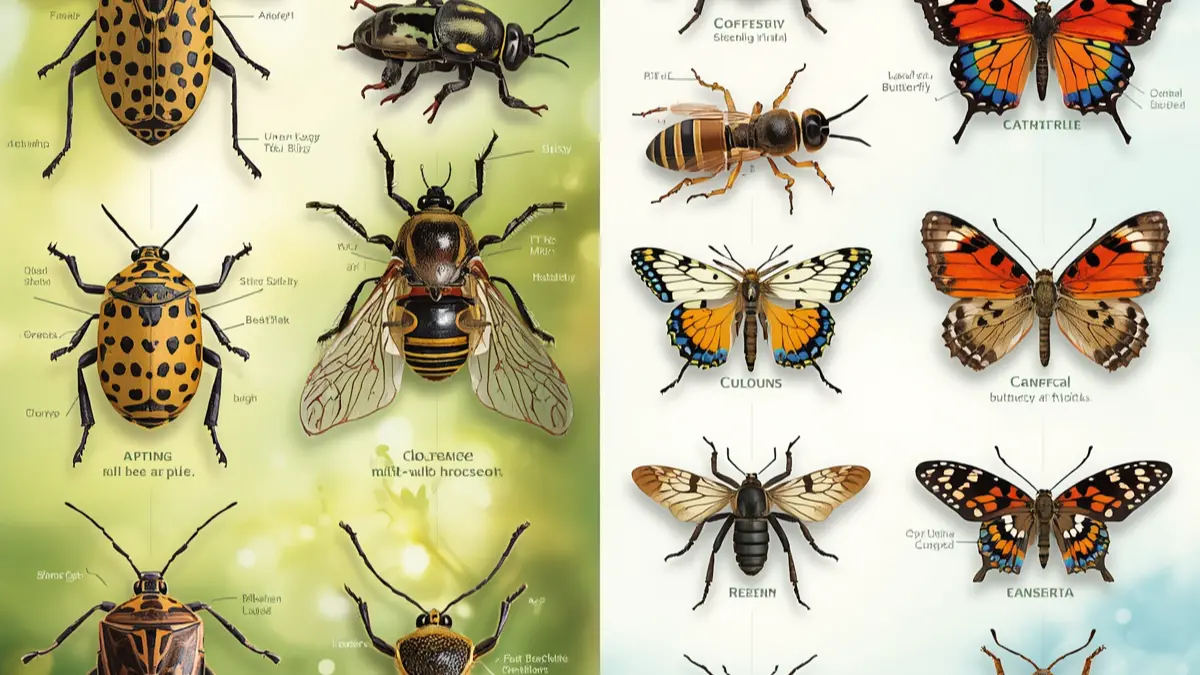
One summer evening, a child pointed at a crawling creature on the wall and shouted, “Look! A bug!” The parent smiled and replied, “Yes… but not all bugs are actually bugs.” This everyday moment captures a common confusion people have about the difference between bugs and insects. In casual language, we often use both words interchangeably, but scientifically, they are not the same.
Understanding the difference between bugs and insects helps us speak more accurately and appreciate nature better. Whether you are a student, a gardener, or simply curious, knowing the difference between bugs and insects can sharpen your observation skills. This article will break down the difference between bugs and insects in a simple and engaging way.
Pronunciation (US & UK)
- Bugs
- US: /bʌɡz/
- UK: /bʌɡz/
- Insects
- US: /ˈɪn.sekts/
- UK: /ˈɪn.sekts/
A Quick Hook to Begin
Now that you know these terms are not identical, let’s explore what truly separates bugs from insects and why this distinction matters.
Difference Between Tags and Keywords : Simple Guide?
Key Difference Between Bugs and Insects
The main difference lies in classification: all bugs are insects, but not all insects are bugs. Bugs belong to a specific group within insects called Hemiptera.
Why Is This Difference Important in Society?
Understanding the difference between bugs and insects is important for both learners and experts. For students, it builds scientific accuracy. For farmers and gardeners, it helps identify harmful pests versus beneficial species. Scientists rely on precise terms to communicate research. Even in daily life, using correct language improves clarity and credibility. This knowledge supports agriculture, environmental protection, and education.
Difference Between Intrastate and Interstate: Clear Guide?
Difference Between Bugs and Insects
1. Scientific Classification
- Bugs are a subset of insects (order Hemiptera).
- Insects include all species in the class Insecta.
Examples: - Bug: Aphid, Cicada
- Insect: Butterfly, Beetle
2. Mouthparts
- Bugs have piercing-sucking mouthparts.
- Insects may have chewing, sucking, or sponging mouthparts.
Examples: - Bug: Bed bug, Stink bug
- Insect: Grasshopper (chewing), Mosquito (sucking)
3. Wings Structure
- Bugs have two pairs of wings, often half leathery and half membranous.
- Insects have varied wing structures.
Examples: - Bug: Shield bug, Water bug
- Insect: Dragonfly, Bee
4. Feeding Behavior
- Bugs mainly suck plant or animal fluids.
- Insects have diverse feeding habits.
Examples: - Bug: Aphid feeds on plant sap
- Insect: Ant eats solids and liquids
5. Habitat
- Bugs often live near plants or water.
- Insects live almost everywhere.
Examples: - Bug: Water strider, Leafhopper
- Insect: Fly, Beetle
6. Diversity
- Bugs are fewer in number.
- Insects are extremely diverse.
Examples: - Bug: Cicada, Assassin bug
- Insect: Moth, Wasp
7. Body Shape
- Bugs usually have flat or oval bodies.
- Insects vary greatly in shape.
Examples: - Bug: Bed bug (flat)
- Insect: Butterfly (slender), Beetle (round)
8. Metamorphosis
- Bugs undergo incomplete metamorphosis.
- Insects may have complete or incomplete metamorphosis.
Examples: - Bug: Nymph to adult (no pupal stage)
- Insect: Caterpillar → Butterfly
9. Role in Ecosystem
- Bugs can be pests or beneficial.
- Insects play broader ecological roles.
Examples: - Bug: Aphid (pest), Assassin bug (predator)
- Insect: Bee (pollinator), Termite (decomposer)
10. Common Usage
- “Bug” is often used informally for all small creatures.
- “Insect” is scientifically accurate.
Examples: - Bug (informal): Calling a spider a bug
- Insect: Referring to ants correctly
Nature and Behaviour
Bugs
Bugs are mostly fluid feeders. They use specialized mouthparts to pierce and suck. Many are plant feeders, while some prey on other insects. They are often slow-moving and rely on camouflage.
Insects
Insects show diverse behavior. Some fly long distances, some build colonies, and others hunt actively. Their adaptability allows them to survive in nearly all environments.
Why Are People Confused?
People are confused because “bug” is widely used in everyday language for any small crawling creature. Media, movies, and casual speech ignore scientific definitions, which leads to misunderstanding.
Table: Difference and Similarities
| Feature | Bugs | Insects | Similarity |
| Classification | Subgroup of insects | Entire class | Both are arthropods |
| Mouthparts | Piercing-sucking | Various types | Used for feeding |
| Wings | Half leathery | Diverse forms | Many have wings |
| Diversity | Limited | Very high | Found worldwide |
| Habitat | Plants/water | Everywhere | Adaptable species |
Which Is Better in What Situation?
Bugs
Bugs are beneficial when they control pests or maintain ecological balance. For example, assassin bugs help farmers by feeding on harmful insects. However, some bugs like aphids can damage crops.
Insects
Insects are essential in many situations. Bees pollinate crops, ants improve soil, and beetles recycle organic matter. Their diversity makes them vital for ecosystems and agriculture.
Metaphors and Similes
- “Busy as a bug” (means active)
- “Social like ants” (for insects)
Connotative Meaning
- Bugs: Often negative (e.g., “There’s a bug in the system”)
- Insects: Neutral or scientific
Examples:
- Negative: “The room is full of bugs.”
- Neutral: “Insects are important for pollination.”
Idioms and Proverbs
- “Catch a bug” (become interested)
- “Snug as a bug in a rug” (comfortable)
Example:
- “He caught the travel bug last year.”
Works in Literature
- The Metamorphosis (Franz Kafka, 1915, Fiction)
- The Insect Play (Karel Čapek, 1922, Drama)
Movies Related to Bugs/Insects
- A Bug’s Life (1998, USA)
- Antz (1998, USA)
- The Fly (1986, USA)
FAQs
1. Are all insects bugs?
No, only a specific group of insects are called bugs.
2. Is a spider a bug?
No, spiders are arachnids, not insects.
3. Why are bugs important?
They help control pests and maintain balance.
4. What is the main difference?
Bugs have piercing-sucking mouthparts.
5. Are insects harmful?
Some are harmful, but many are beneficial.
How Both Are Useful for Surroundings
Bugs help in pest control and nutrient cycling. Insects pollinate plants, decompose waste, and support food chains. Together, they maintain ecological balance.
Final Words for Both
Bugs and insects may seem similar, but their differences matter in science and daily life. Understanding them improves knowledge and communication.
Conclusion
The difference between bugs and insects is more than just a technical detail—it shapes how we understand nature. While bugs belong to a specific group, insects include a vast range of species with diverse roles.
Knowing this distinction helps in education, agriculture, and environmental awareness. By learning the difference between bugs and insects, we not only improve our vocabulary but also gain a deeper respect for the tiny creatures that impact our world in big ways.

Hi, I’m LunarCrest, the author behind GrammarCircle. I’m passionate about language, writing, and helping people understand the finer details of English. Through my work, I focus on explaining grammar rules, word differences, and language concepts in a simple and practical way.