Imagine visiting a natural history museum with your family and pointing at a giant flying reptile fossil hanging from the ceiling. Someone calls it a “pterodactyl,” while another person says it is actually a “pteranodon.” This common confusion happens everywhere in movies, books, schools, and even documentaries. The difference between pterodactyl and pteranodon is often misunderstood because both creatures belonged to the group of flying reptiles known as pterosaurs. However, they were not the same animal.
Understanding the difference between pterodactyl and pteranodon helps students, dinosaur lovers, researchers, and writers use the correct scientific names. The difference between pterodactyl and pteranodon also explains how prehistoric species evolved differently over time. When people learn the difference between pterodactyl and pteranodon, they gain a clearer picture of Earth’s ancient history and the diversity of prehistoric life.
Key Difference Between the Both
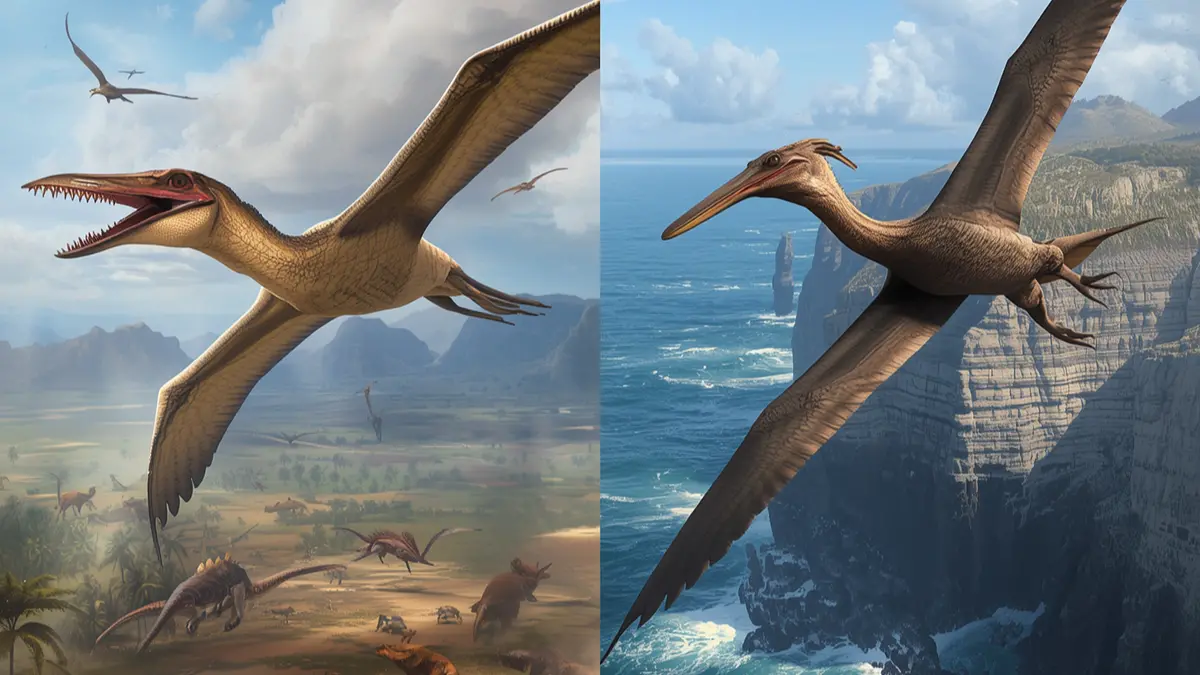
The main difference is that Pterodactyl refers to a smaller flying reptile with teeth, while Pteranodon was much larger and had no teeth. Pteranodon also had a long head crest and wider wingspan.
Difference Between Butterfly and Moth: in (2026)
Why Is Their Difference Necessary to Know for Learners and Experts?
Understanding these prehistoric creatures is important because they help scientists study evolution, climate changes, and animal adaptation. Learners improve their scientific vocabulary, while experts use accurate terms in research and education.
Their distinction also matters in society because:
- Museums use correct classifications for education.
- Films and games influence public understanding of science.
- Paleontologists rely on accurate naming for discoveries.
- Teachers explain evolution better using proper examples.
Difference Between CPVC and PVC: in (2026)
Pronunciation of Both
| Word | US Pronunciation | UK Pronunciation |
| Pterodactyl | ter-uh-DAK-til | teh-ruh-DAK-til |
| Pteranodon | tuh-RAN-uh-don | teh-RAN-uh-don |
Linking Hook to the Main Discussion
Although both creatures ruled prehistoric skies, their physical appearance, behavior, and scientific classification reveal fascinating differences that separate them clearly.
Difference Between Pterodactyl and Pteranodon
| Feature | Pterodactyl | Pteranodon |
| Size | Smaller | Larger |
| Teeth | Had teeth | Toothless |
| Wingspan | Shorter | Wider |
| Crest | Small or absent | Large head crest |
| Diet | Fish and insects | Mostly fish |
| Time Period | Jurassic | Late Cretaceous |
| Scientific Group | Pterodactylus | Pteranodon |
| Body Weight | Lighter | Heavier |
| Skull Shape | Narrow | Long and crested |
| Popularity | Common movie term | Scientifically accurate species |
1. Difference in Size
Pteranodon was much larger than Pterodactyl.
Pterodactyl
- Usually had a wingspan of around 3 feet.
- Easier to maneuver in forests.
Examples:
- A small seabird is closer in size to Pterodactyl.
- It could glide between cliffs quickly.
Pteranodon
- Wingspan could exceed 20 feet.
- One of the largest flying reptiles.
Examples:
- Comparable to a small airplane wing.
- Could soar over oceans for long distances.
2. Difference in Teeth
Pterodactyl had teeth, but Pteranodon did not.
Pterodactyl
- Sharp teeth helped catch prey.
Examples:
- Used teeth to grab fish.
- Could eat small reptiles.
Pteranodon
- Toothless beak for catching slippery fish.
Examples:
- Scooped fish from water.
- Swallowed prey whole.
3. Difference in Head Crest
Pteranodon had a famous long crest.
Pterodactyl
- The Crest was tiny or missing.
Examples:
- Simple skull structure.
- Less visually dramatic.
Pteranodon
- Large backward-pointing crest.
Examples:
- Used for balance during flight.
- May have attracted mates.
4. Difference in Time Period
They lived in different prehistoric eras.
Pterodactyl
- Lived during the Jurassic period.
Examples:
- Shared Earth with early dinosaurs.
- Appeared around 150 million years ago.
Pteranodon
- Lived during the Late Cretaceous period.
Examples:
- Existed near the age of Tyrannosaurus rex.
- Lived about 70 million years ago.
5. Difference in Scientific Classification
They belonged to different genera.
Pterodactyl
- Scientifically called Pterodactylus.
Examples:
- First discovered pterosaur genus.
- Often generalized in the media.
Pteranodon
- A separate genus entirely.
Examples:
- Means “wing without teeth.”
- Recognized for giant size.
6. Difference in Diet
Their feeding methods differed.
Pterodactyl
- I ate insects and fish.
Examples:
- Hunted near rivers.
- Captured insects in flight.
Pteranodon
- Mostly fish eater.
Examples:
- Dove into oceans.
- Followed coastal waters.
7. Difference in Flight Style
Their flying techniques varied.
Pterodactyl
- Agile and fast.
Examples:
- Quick turns in forests.
- Short-distance gliding.
Pteranodon
- Long-distance soaring.
Examples:
- Used ocean winds.
- Flew like modern albatrosses.
8. Difference in Body Structure
Their bodies evolved differently.
Pterodactyl
- Lightweight frame.
Examples:
- Thin bones for quick movement.
- Small neck and head.
Pteranodon
- Larger skeletal system.
Examples:
- Strong wings.
- Longer skull.
9. Difference in Habitat
Their environments were not exactly the same.
Pterodactyl
- Preferred lagoons and forests.
Examples:
- Nested near cliffs.
- Stayed near inland water.
Pteranodon
- Lived near seas and coasts.
Examples:
- Soared over oceans.
- Nested near beaches.
10. Difference in Popular Usage
People use their names differently today.
Pterodactyl
- Commonly used as a general term.
Examples:
- Appears in cartoons.
- Used casually for flying dinosaurs.
Pteranodon
- More scientifically accurate.
Examples:
- Used in paleontology.
- Found in museum labels.
Nature and Behaviour of Both
Pterodactyl
Pterodactyl was active, agile, and likely hunted small prey. It may have lived near forests and lagoons where food was plentiful. Scientists believe it used quick flight movements to survive predators.
Pteranodon
Pteranodon behaved more like modern seabirds. It soared for long periods above oceans and relied on air currents to save energy. It was probably social and nested in colonies.
Why Are People Confused About Their Use?
People confuse them because movies, cartoons, and books often use “pterodactyl” for every flying reptile. The names sound similar, and both belonged to the pterosaur group. Many people also think all prehistoric flying creatures were dinosaurs, which is scientifically incorrect.
Difference and Similarity Table
| Aspect | Pterodactyl | Pteranodon | Similarity |
| Flying Ability | Yes | Yes | Both could fly |
| Teeth | Present | Absent | Both hunted prey |
| Size | Small | Large | Both were pterosaurs |
| Crest | Small | Large | Both had long beaks |
| Era | Jurassic | Cretaceous | Both prehistoric |
| Habitat | Inland | Coastal | Near water |
| Diet | Fish/insects | Fish | Carnivorous |
| Skeleton | Light | Strong | Hollow bones |
| Popularity | Casual name | Scientific name | Famous fossils |
| Classification | Pterodactylus | Pteranodon | Flying reptiles |
Which Is Better in What Situation?
Pterodactyl
Pterodactyl is better when discussing early pterosaur evolution or smaller flying reptiles. Its agile body and toothed mouth show how ancient creatures adapted to hunting in forests and lagoons. Teachers often use it to explain the beginning stages of pterosaur development.
Pteranodon
Pteranodon is better for studying advanced flying adaptations and large prehistoric animals. Its giant wingspan and toothless beak demonstrate efficient soaring over oceans. Museums and documentaries frequently use Pteranodon to represent giant prehistoric flying reptiles.
How the Keywords Are Used in Metaphors and Similes
Pterodactyl
- “He screamed like a pterodactyl.”
- “The old machine sounded like a pterodactyl in flight.”
Pteranodon
- “The glider floated like a pteranodon above the sea.”
- “His wide jacket spread like a pteranodon’s wings.”
Connotative Meaning of Both Keywords
| Word | Connotation | Example |
| Pterodactyl | Neutral/Negative | “Her loud laugh sounded like a pterodactyl cry.” |
| Pteranodon | Positive/Neutral | “The aircraft moved with pteranodon-like grace.” |
Idioms or Proverbs Related to the Words
There are no official English idioms using these exact words, but creative expressions exist.
Examples
- “Screaming like a pterodactyl” → very loud shouting.
- “Flying like a pteranodon” → gliding smoothly and freely.
Works in Literature
Pterodactyl
- The Last Dinosaur Adventure Fiction Harry Harrison 1984
- Pterodactyl Hunters in the Gilded City Fantasy John Bellairs 1985
Pteranodon
- Dinotopia Fantasy James Gurney 1992
- Jurassic Park novels Science Fiction Michael Crichton 1990
Movie Names Based on Keywords
Pterodactyl
- Pterodactyl 2005 USA
- The Land Before Time 1988 USA
Pteranodon
- Jurassic Park III 2001 USA
- Walking with Dinosaurs 2013 UK/USA
Frequently Asked Questions
1. Is a Pteranodon a Pterodactyl?
No. Pteranodon and Pterodactyl are different genera of flying reptiles.
2. Which one was bigger?
Pteranodon was much larger.
3. Did both creatures have teeth?
No. Only Pterodactyl had teeth.
4. Were they dinosaurs?
No. They were pterosaurs, not true dinosaurs.
5. Why do movies call them all pterodactyls?
Because “pterodactyl” became a popular general term in the media.
How Both Are Useful for Surroundings
Both creatures help scientists understand prehistoric ecosystems and evolution. Their fossils teach us about climate, oceans, and animal adaptation. Museums use them to inspire curiosity about natural history and science education.
Final Words for Both
Pterodactyl represents the early diversity of flying reptiles, while Pteranodon symbolizes the peak of prehistoric flight evolution. Both remain fascinating examples of nature’s creativity millions of years ago.
Conclusion
The difference between pterodactyl and Pteranodon goes far beyond their names. Pterodactyl was a smaller, toothed flying reptile from the Jurassic period, while Pteranodon was a larger, toothless species that soared during the Cretaceous era.
Their differences in size, diet, habitat, and flight style show how prehistoric creatures evolved uniquely over millions of years. Understanding these distinctions improves scientific accuracy and helps people appreciate Earth’s ancient biodiversity. Whether in museums, films, or classrooms, both creatures continue to capture human imagination and inspire curiosity about prehistoric life.

Hi, I’m DreamAnchor, the author behind GrammarCircle. I am passionate about language, writing, and helping people understand the small but important differences in English words and concepts. Through my work, I focus on explaining grammar rules, word comparisons, and language usage in a simple and practical way so that students, writers, and professionals can improve their communication skills.