Many English learners get confused between “superior to” and “superior than.” Both sound similar, but only one is correct in standard English. This confusion often appears in writing, exams, emails, and professional communication. People search for this keyword because they want to know the correct grammar rule and avoid mistakes that can affect their credibility.
The problem is simple but common. In everyday speech, people sometimes say “superior than,” but in formal English, this is usually wrong. The correct structure depends on grammar rules that come from Latin and older English usage. Because of this, learners often mix up “to” and “than” after the word “superior.”
This article clears that confusion in a simple way. You will learn the correct form, why the mistake happens, how British and American English treat it, and how to use it in real life. By the end, you will confidently know when to use “superior to” and avoid the incorrect “superior than” in both writing and speaking.
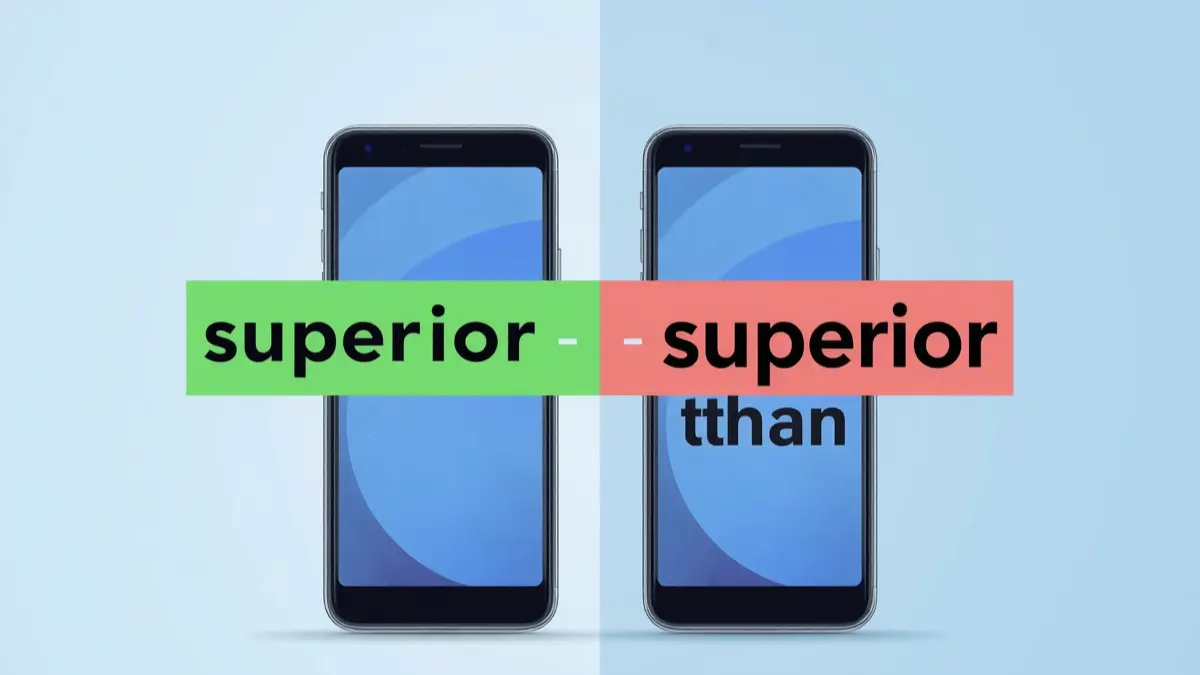
Superior to or Superior Than – Quick Answer
The correct phrase is:
👉 “Superior to” (Correct)
❌ “Superior than” (Incorrect in standard English)
Examples:
- This phone is superior to that one. ✔
- Her work is superior to mine. ✔
- This phone is superior than that one. ✘
👉 Rule: “Superior” always uses “to,” not “than.”
On Time or In Time: What’s the Difference ?
The Origin of “Superior to or Superior Than”
The word “superior” comes from Latin superior, meaning “higher” or “above.”
In Latin-based English grammar, adjectives like superior, inferior, senior, junior use fixed prepositions:
- superior to
- inferior to
- senior to
- junior to
Over time, English kept this structure. That is why “than” does not fit here. “Than” is used for comparisons like:
- bigger than
- faster than
But “superior” is a special case because it already means comparison in its structure.
British English vs American English Usage
There is no real difference between British and American English for this rule. Both use “superior to.”
However, spoken English sometimes creates confusion because people mix “than” in casual speech.
Comparison Table
| Expression Type | Correct Form | Example |
| Standard English | superior to | This model is superior to the old one |
| Incorrect usage | superior than | ❌ Not accepted in formal writing |
| Similar words | inferior to | The old version is inferior to this one |
| Comparative adjectives | better than | This is better than that |
Which Spelling Should You Use?
- US English: Use superior to
- UK English: Use superior to
- Canada / Australia / Global English: Use superior to
👉 Simple rule:
If you are writing anything formal, academic, or professional, always choose “superior to.”
Difference Between Marmot and Groundhog: in (2026)
Common Mistakes with “Superior to or Superior Than”
❌ Mistake 1:
This laptop is superior than that one.
✔ Correct: This laptop is superior to that one.
❌ Mistake 2:
He is superior than his brother in skill.
✔ Correct: He is superior to his brother in skill.
❌ Mistake 3:
Using “than” because of “better than”
✔ Fix: Remember “superior” is different from “better”
“Superior to” in Everyday Examples
Email Example:
- Our new system is superior to the old one in speed and safety.
News Example:
- Experts say the new vaccine is superior to earlier versions.
Social Media Example:
- This camera is just superior to everything else I’ve used! 📸
Formal Writing Example:
- The proposed solution is clearly superior to existing methods.
“Superior to or Superior Than” – Usage & Trends
- “Superior to” is widely used in academic writing, business English, and official documents.
- “Superior than” appears mostly in informal speech or incorrect writing.
- Google search trends show high interest in this keyword from students and ESL learners.
- Countries with high ESL learning demand (India, Pakistan, Philippines) show frequent searches due to confusion with “than.”
👉 Key insight:
The confusion exists because learners overapply the common “than” rule from other comparisons like “bigger than.”
Comparison Table: Keyword Variations
| Phrase | Correct? | Usage Level |
| superior to | ✔ Yes | Formal + Academic |
| superior than | ✘ No | Incorrect |
| more superior than | ✘ No | Double error |
| superior over | ⚠ Rare | Informal/Non-standard |
FAQs
1. Is it correct to say “superior than”?
No. The correct phrase is “superior to.”
2. Why do we say “superior to” and not “superior than”?
Because “superior” already includes comparison and uses the fixed preposition “to.”
3. Can I use “more superior than”?
No. It is incorrect because “superior” already means “more advanced.”
4. Is “superior to” formal English?
Yes. It is correct in formal, academic, and professional writing.
5. What is the opposite of “superior to”?
The opposite is “inferior to.”
6. Do native speakers ever say “superior than”?
Rarely in speech, but it is considered incorrect in writing.
7. Is this rule the same in British and American English?
Yes. Both use “superior to.”
Conclusion
The difference between “superior to” and “superior than” is simple but important. Only “superior to” is correct in standard English. The confusion comes from mixing it with other comparison words like “better than” or “bigger than.”
Remember this key rule: adjectives like superior, inferior, senior, and junior always use “to,” not “than.” This applies in both British and American English without exception. Using the correct form improves your writing clarity and professionalism.
Whether you are writing emails, essays, or business documents, always choose “superior to.” Avoid “superior than” and “more superior than,” as they are grammatically incorrect. Mastering this small rule will make your English sound more natural and accurate. Simple, correct usage builds strong communication skills and helps you avoid common grammar mistakes in everyday writing.

Hi, I’m LunarCrest, the author behind GrammarCircle. I’m passionate about language, writing, and helping people understand the finer details of English. Through my work, I focus on explaining grammar rules, word differences, and language concepts in a simple and practical way.