The difference between renting and leasing is something many people experience in daily life without even realizing it. Imagine a young family moving to a new city for work. They urgently need a home, so they choose short-term accommodation.
On the other hand, a small business owner signs a long-term contract for office space and vehicles that is leasing. Both involve using something that you do not own, yet the terms and commitments are very different.
Understanding the difference between renting and leasing helps avoid confusion in contracts, payments, and responsibilities. The difference between renting and leasing also affects financial planning and legal obligations. In simple terms, both are agreements to use property or assets, but their structure changes everything.
Pronunciation:
- Renting: US /ˈren.tɪŋ/ | UK /ˈren.tɪŋ/
- Leasing: US /ˈliː.sɪŋ/ | UK /ˈliː.sɪŋ/
To fully understand their practical use, let’s explore their detailed comparison.
Key Difference Between Renting and Leasing
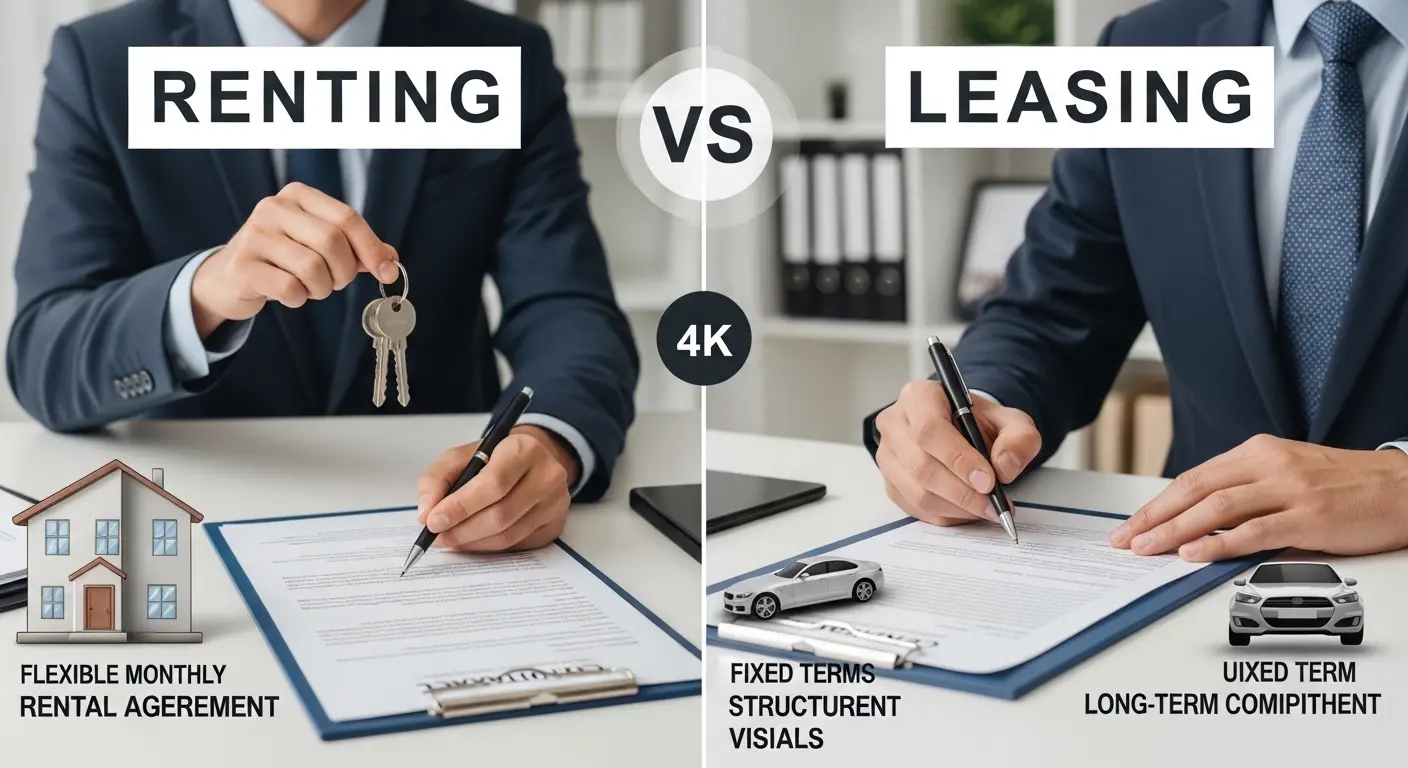
The main difference between renting and leasing lies in duration, flexibility, and legal commitment. Renting is usually short-term and flexible, while leasing is long-term and more binding with fixed terms.
Difference Between Autotrophs and Heterotrophs: in (2026)
Why Understanding This Difference is Important in Society
Knowing the difference between renting and leasing is essential for students, professionals, landlords, and business owners. It helps people make better financial decisions, avoid legal issues, and choose the right type of agreement. In society, it ensures transparency in housing, transportation, and commercial agreements, reducing misunderstandings and disputes.
Difference Between Renting and Leasing
Below are 10 clear differences explained simply:
1. Duration of Agreement
- Renting is short-term (daily, weekly, monthly).
Example 1: Renting a hotel room for 2 days.
Example 2: Renting a scooter for a weekend trip. - Leasing is long-term (months or years).
Example 1: Leasing a car for 3 years.
Example 2: Leasing office space for 5 years.
Difference Between Polyurethane and Polycrylic: in (2026)
2. Flexibility
- Renting is highly flexible.
Example 1: Leaving a rented apartment after 1 month.
Example 2: Returning a rented camera after use. - Leasing is less flexible.
Example 1: Breaking a car lease may involve penalties.
Example 2: Office lease cannot be ended easily.
3. Cost Structure
- Renting usually has variable or daily/monthly costs.
Example 1: Paying daily hotel rent.
Example 2: Paying hourly equipment rent. - Leasing has fixed monthly payments.
Example 1: Fixed car lease payment every month.
Example 2: Fixed rent for commercial property.
4. Ownership Rights
- Renting gives no long-term rights.
Example 1: Renters cannot modify apartments.
Example 2: Rental bikes cannot be sold. - Leasing may allow limited control.
Example 1: Leaseholders can modify office interiors.
Example 2: Business can sublease property (in some cases).
5. Maintenance Responsibility
- Renting: owner handles most maintenance.
Example 1: Hotel repairs room issues.
Example 2: Rental car company fixes breakdowns. - Leasing: lessee may handle maintenance.
Example 1: Business maintains leased equipment.
Example 2: Tenant repairs leased office damage.
6. Contract Terms
- Renting: simple agreements.
Example 1: Signing a basic rental form.
Example 2: Verbal rental agreements in some cases. - Leasing: detailed legal contracts.
Example 1: Car lease agreement paperwork.
Example 2: Commercial property lease contract.
7. Purpose of Use
- Renting: temporary use.
Example 1: Renting chairs for an event.
Example 2: Renting tools for a day. - Leasing: continuous long-term use.
Example 1: Leasing a delivery truck.
Example 2: Leasing machinery for factory production.
8. Payment Commitment
- Renting: pay as you use.
Example 1: Pay per night for lodging.
Example 2: Pay per hour for equipment. - Leasing: fixed long-term commitment.
Example 1: Monthly car lease payment.
Example 2: Annual office lease payment schedule.
9. Termination Rules
- Renting: easy to end.
Example 1: Leaving a rented room anytime.
Example 2: Returning rented items immediately. - Leasing: strict termination rules.
Example 1: Early car lease termination fee.
Example 2: Breaking office lease penalties.
10. Legal Complexity
- Renting: simple legal setup.
Example 1: Basic rental receipt.
Example 2: Short-term property agreement. - Leasing: complex legal framework.
Example 1: Multi-page lease contract.
Example 2: Lawyer-reviewed business lease.
Nature and Behavior of Both
Renting behaves like a short visit: you use something quickly and return it without long responsibility. Leasing behaves like a long relationship; it involves commitment, responsibility, and planning for the future. Renting is casual and flexible, while leasing is structured and disciplined.
Why People Get Confused
People confuse the two because both involve paying for usage instead of ownership. In everyday language, “rent” and “lease” are often used interchangeably, especially in housing and car markets. However, their legal meanings are different, which leads to misunderstanding.
Table: Difference and Similarity Between Renting and Leasing
| Feature | Renting | Leasing |
| Duration | Short-term | Long-term |
| Flexibility | High | Low |
| Contract | Simple | Complex |
| Cost | Variable | Fixed |
| Maintenance | Owner responsibility | Shared/lessee responsibility |
| Purpose | Temporary use | Long-term use |
| Termination | Easy | Restricted |
Similarity: Both allow use of property without ownership and involve payment agreements.
Which is Better in Different Situations?
Renting is better when the need is temporary or uncertain. For example, travelers, students staying short-term, or people attending events benefit from renting because it offers flexibility and low commitment. It is also ideal for testing products or services before making a long-term decision.
Leasing is better when long-term stability is required. Businesses often lease offices, machinery, or vehicles because it reduces upfront costs while ensuring continuous use. Leasing is also suitable for individuals who want stability, such as long-term car usage or residential stability without purchasing property.
Metaphors and Similes
- Renting is like “borrowing a book from a library for a short time.”
- Leasing is like “signing a long journey contract with fixed rules.”
- Renting feels like “a short stopover in life.”
- Leasing feels like “a long road trip with commitments.”
Connotative Meaning
- Renting: Neutral to positive (flexibility, freedom, temporary access)
Example: “Renting gives freedom to move easily.” - Leasing: Neutral to positive (stability, responsibility, structure)
Example: “Leasing provides long-term financial planning.”
However, leasing can feel negative when early termination penalties apply.
Idioms and Proverbs
- “Renting peace of mind for a while” – used when someone chooses temporary comfort.
- “Leasing today, owning tomorrow’s responsibility” – implies long-term commitment consequences.
Literature References
- The Tenant – Drama genre, Roman Polanski (1976), explores rented living and identity.
- The Money Pit – Comedy, USA (1986), shows struggles of renting/owning property confusion.
- Pacific Heights – Thriller, USA (1990), deals with rental property conflict themes.
Movies Related to Renting/Leasing Themes
- The Money Pit (1986, USA) – Rental home chaos story
- Pacific Heights (1990, USA) – Rental property disputes
- The Tenant (1976, France/USA) – Psychological rental apartment story
Frequently Asked Questions
1. Is leasing more expensive than renting?
Not always. Leasing has fixed long-term payments, while renting can vary.
2. Can renting become leasing?
Yes, short-term rentals can sometimes convert into long-term leases.
3. Which is better for cars?
Leasing is better for long-term use; renting is better for short trips.
4. Do both require contracts?
Yes, but leasing contracts are more detailed and legal-heavy.
5. Can I cancel both anytime?
Renting is easier to cancel; leasing usually has penalties.
How Both Are Useful for Society
Both renting and leasing support modern economies. Renting helps tourism, events, and short-term needs. Leasing supports businesses, infrastructure, and long-term financial planning. Together, they provide flexibility and stability in housing, transport, and commercial industries.
Final Words
Understanding the difference between renting and leasing helps individuals and businesses make smarter financial and legal choices. Renting offers freedom and flexibility, while leasing provides stability and long-term structure. Both serve different purposes in society and are equally important depending on the situation. Choosing the right option depends on need, duration, and financial planning.
Conclusion
In conclusion, the difference between renting and leasing is not just about time duration but also about responsibility, commitment, and financial structure. Renting is ideal for short-term, flexible needs, while leasing is designed for long-term stability and planning.
Many people confuse these terms, but understanding their differences helps avoid financial mistakes and legal issues. Whether in housing, transportation, or business, both options play a vital role in modern life. Choosing wisely ensures better control over expenses, convenience, and future planning.

Hi, I’m DreamAnchor, the author behind GrammarCircle. I am passionate about language, writing, and helping people understand the small but important differences in English words and concepts. Through my work, I focus on explaining grammar rules, word comparisons, and language usage in a simple and practical way so that students, writers, and professionals can improve their communication skills.