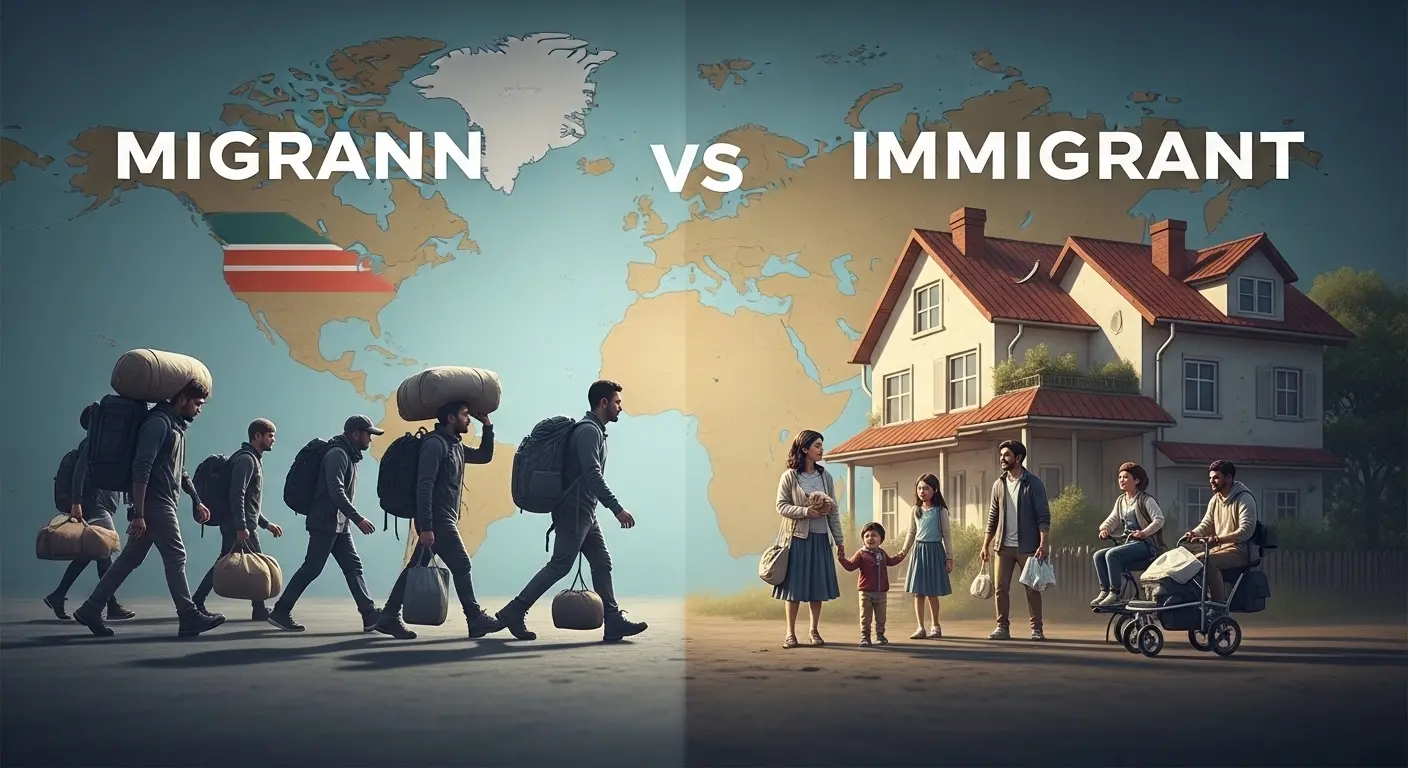
The confusion between migrants vs immigrants is very common in English, especially in news, academic writing, and everyday conversation. A family moving from one country to another for work may be described differently depending on the context, which often leads to misunderstanding of the term migrants vs immigrants.
To understand the difference between migrants vs immigrants, imagine a farmer from Pakistan moving to the UAE for seasonal work. In his home country, he is leaving temporarily for better income opportunities. In the UAE, he may be seen as an immigrant because he has entered a new country to live and work. This simple real-world example shows how the meaning of migrants vs immigrants changes depending on perspective.
In global discussions, the terms migrants vs immigrants are often used interchangeably, but they are not exactly the same. Understanding migrants vs immigrants helps in education, journalism, and social awareness, especially in today’s interconnected world.
Key Difference Between Migrants vs Immigrants
The main difference is perspective:
- A migrant is someone who moves from one place to another (within or outside a country), often temporarily.
- An immigrant is someone who enters a new country to live there permanently or long-term.
Difference Between Macarons and Macaroons: in (2026)
Why Knowing the Difference is Important
Understanding migrants vs immigrants is important for learners, researchers, journalists, and policymakers. It helps avoid confusion in communication, supports accurate reporting, and improves cultural understanding in society. Misusing these terms can lead to misunderstanding of legal status, human rights issues, and migration policies.
Pronunciation
- Migrant
- US: /ˈmaɪɡrənt/
- UK: /ˈmaɪɡrənt/
- Immigrant
- US: /ˈɪmɪɡrənt/
- UK: /ˈɪmɪɡrənt/
- Difference Between Autotrophs and Heterotrophs: in (2026)
Linking Hook
Now that we understand the basic idea behind migrants vs immigrants, let’s explore their detailed differences, usage, and real-world implications more deeply.
Difference Between Migrants vs Immigrants
1. Definition
- Migrant: A person moving from one place to another, temporarily or permanently.
- Example 1: A worker moving from India to Dubai for 6 months.
- Example 2: A farmer shifting between rural areas for seasonal farming.
- Immigrant: A person who enters a foreign country to settle there.
- Example 1: A family moving from Mexico to the USA permanently.
- Example 2: A student staying in Canada after completing studies.
2. Duration of Stay
- Migrants may stay temporarily or seasonally.
- Example: Construction workers moving for a project.
- Example: Shepherds moving with livestock during seasons.
- Immigrants usually plan long-term or permanent residence.
- Example: A doctor settling in Australia.
- Example: A family relocating to Germany for life.
3. Legal Status
- Migrants may or may not have permanent legal residency.
- Example: Seasonal farm workers on temporary visas.
- Example: Refugees moving between camps.
- Immigrants usually apply for permanent residency or citizenship.
- Example: Green card holders in the USA.
- Example: Naturalized citizens in the UK.
4. Movement Type
- Migrants move internally or internationally.
- Example: Rural to urban migration within Pakistan.
- Example: Cross-border labor migration to Saudi Arabia.
- Immigrants specifically move into a foreign country.
- Example: A person moving from China to Canada.
- Example: A person relocating from Egypt to France.
5. Purpose
- Migrants move for work, climate, or temporary needs.
- Example: Harvest workers moving seasonally.
- Example: Students studying abroad temporarily.
- Immigrants move for settlement, family, or permanent opportunity.
- Example: Marriage-based relocation.
- Example: Permanent job relocation.
6. Identity Perspective
- Migrant identity is flexible and changing.
- Example: A worker moving across countries yearly.
- Example: A nomadic lifestyle group.
- Immigrant identity is fixed in the new country.
- Example: Settled families becoming citizens.
- Example: Long-term residents in urban cities.
7. Time Frame Perspective
- Migrants focus on movement process.
- Example: Seasonal migration patterns.
- Example: Short-term relocation for jobs.
- Immigrants focus on arrival and settlement.
- Example: Permanent relocation stories.
- Example: Citizenship applications.
8. Policy Usage
- Migrant is used in labor and mobility policies.
- Example: International labor agreements.
- Example: Seasonal visa programs.
- Immigrants are used in citizenship and residency laws.
- Example: Immigration acts.
- Example: Naturalization processes.
9. Emotional Association
- Migrants often reflect mobility and flexibility.
- Example: Freedom to move for better jobs.
- Example: Economic adaptability.
- Immigrants reflect settlement and belonging.
- Example: Building a new home abroad.
- Example: Cultural integration.
10. Global Usage
- Migrant is a broader global term.
- Example: Climate migrants.
- Example: Economic migrants.
- Immigrants are country-specific.
- Example: US immigrants.
- Example: Canadian immigrants.
Nature and Behaviour
- Migrants: Flexible, mobile, adaptive, and often seasonal in behavior. They continuously move based on opportunity or necessity.
- Immigrants: Settled, stable, and integration-focused. They adapt to new cultures and aim to build long-term life in one country.
Why People Get Confused
People confuse migrants vs immigrants because both involve movement across regions or countries. The media often uses the terms interchangeably, and in real life, one person can be both at different stages of their journey.
Table: Difference and Similarity Between Migrants vs Immigrants
| Feature | Migrants | Immigrants |
| Movement | Any place | Foreign country |
| Duration | Temporary or seasonal | Long-term or permanent |
| Purpose | Work, climate, travel | Settlement, citizenship |
| Legal focus | Temporary visa | Permanent residency |
| Identity | Flexible | Stable |
| Similarity | Both involve relocation and adaptation |
Which is Better in What Situation?
Migrants are better suited for seasonal industries such as agriculture, construction, and short-term labor needs where flexibility is important. Migration allows individuals to earn income without long-term settlement commitments.
Immigrants are more beneficial in long-term economic development because they contribute to population growth, innovation, and cultural diversity in a country. Immigrants often fill skilled labor gaps, start businesses, and integrate deeply into society. Both roles are important depending on whether the need is temporary mobility or permanent settlement.
Metaphors and Similes
- Migrants are like birds in migration, constantly moving with the seasons.
- Immigrants are like trees planted in new soil, growing roots over time.
- Migrants move like waves across borders, temporary and flowing.
- Immigrants settle like stones in a riverbed, forming stability.
Connotative Meaning
- Migrant: Neutral to positive (adaptability, survival, flexibility).
- Example: “He is a migrant worker seeking better opportunities.”
- Immigrant: Neutral to positive (settlement, growth, contribution).
- Example: “She is an immigrant building a new life abroad.”
Idioms and Proverbs
- “A rolling stone gathers no moss” → Often used for migrants who keep moving.
- “Home is where the heart is” → Common for immigrants settling in new lands.
- Example: Migrants often live by movement, while immigrants create a new “home” in foreign soil.
In Literature
- The Grapes of Wrath – John Steinbeck, 1939 (Novel, USA) – Migration and displacement
- Exit West – Mohsin Hamid, 2017 (Novel, Pakistan/UK) – Migration and refugees
- Americanah – Chimamanda Ngozi Adichie, 2013 (Novel, Nigeria/USA) – Immigration experience
Movies Based on the Theme
- The Immigrant (2013, USA)
- Brooklyn (2015, Ireland/UK/USA)
- The Terminal (2004, USA)
- Lion (2016, Australia/India)
- Sin Nombre (2009, Mexico/USA)
Frequently Asked Questions
1. Are migrants and immigrants the same?
No, migrants move in general, while immigrants settle in a foreign country.
2. Can a migrant become an immigrant?
Yes, if they decide to settle permanently in a new country.
3. Is immigration legal?
Yes, when done through proper legal processes.
4. Why do people migrate?
For jobs, safety, education, or better living conditions.
5. Which term is more formal?
“Immigrant” is more legal and formal, while “migrant” is broader.
How Both Are Useful for Surroundings
Migrants help economies by filling seasonal labor shortages and supporting agriculture and infrastructure projects. Immigrants contribute long-term by building communities, paying taxes, and enriching cultural diversity. Together, both play a vital role in global development and human mobility systems.
Final Words
Both migrants vs immigrants represent human movement driven by opportunity, survival, and aspiration. While migrants reflect flexibility and temporary movement, immigrants represent stability and long-term settlement. Understanding both terms helps build clearer communication and deeper respect for global human movement.
Conclusion
The distinction between migrants vs immigrants is more than just vocabulary—it reflects real human experiences across borders. Migrants often move temporarily for work or survival, while immigrants settle permanently in a new country seeking long-term stability.
Recognizing the difference helps in better understanding global migration trends, social policies, and cultural integration. In a connected world, both migrants and immigrants contribute significantly to economic growth and cultural diversity.
By learning the correct usage of migrants vs immigrants, we improve communication, reduce confusion, and appreciate the shared human journey of movement and settlement.

I’m BeaconRise, the author behind GrammarCircle, where I help readers understand English grammar, language differences, and writing concepts in a simple and practical way. I specialize in explaining confusing words, grammar rules, and “difference between” topics so learners can easily improve their writing and communication skills.