Have you ever typed vender in an email or business document and wondered whether it should actually be vendor? You are not alone. Many English learners, business professionals, and writers search for vender or vendor because the two words look very similar and both appear in dictionaries.
The confusion exists because both words are technically real English words, but they are not used in the same way. In modern English, vendor is far more common and is the preferred term in business, technology, retail, and legal writing. Meanwhile, vender is an older variant that appears much less frequently.
Understanding the difference between vender or vendor can help you write more professionally, avoid spelling mistakes, and communicate clearly in business settings. Whether you are creating contracts, writing emails, discussing suppliers, or studying English vocabulary, knowing the correct usage is important.
This guide explains the meanings, origins, examples, common mistakes, usage trends, and FAQs related to vender or vendor so you can confidently choose the right word every time.
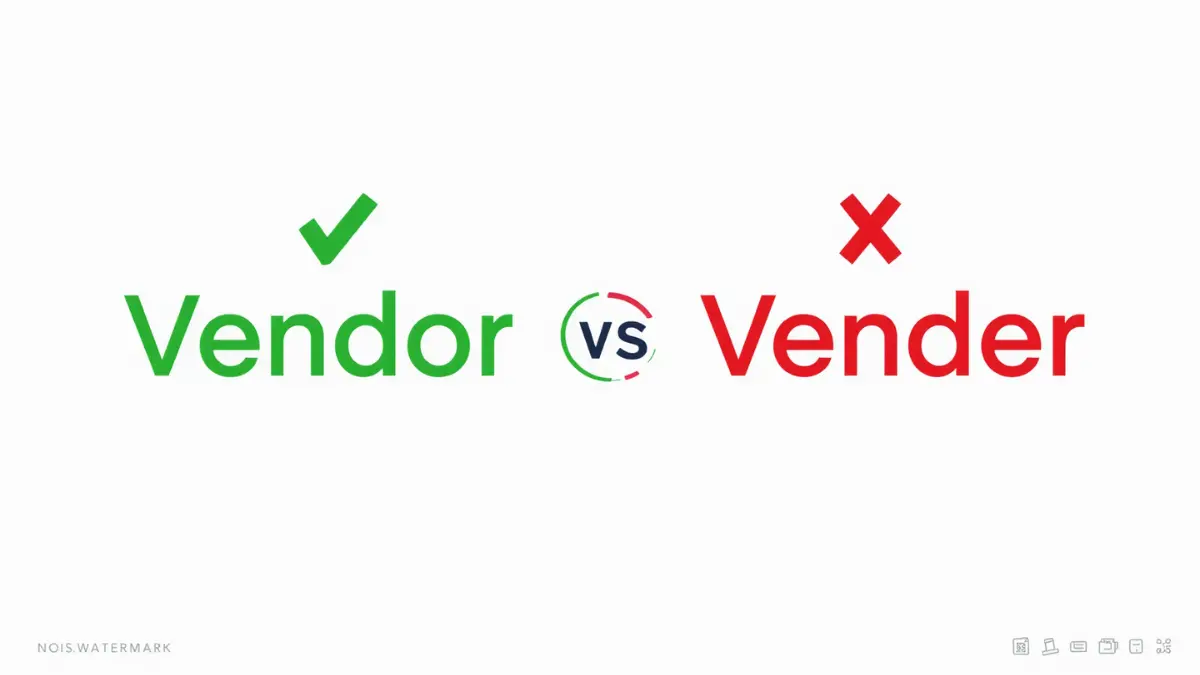
Vender or Vendor – Quick Answer
Simple Rule
- Vendor = The preferred modern spelling for a person or company that sells goods or services.
- Vender = An older and less common spelling variant.
Examples
✅ The software vendor released a new update.
✅ We selected a vendor for the project.
❌ We selected a vender for the project. (Less common and usually avoided.)
Easy Memory Trick
- Vendor = Modern business English
- Vender = Rare older variant
Read more: Dialog or Dialogue: What’s the Difference
The Origin of Vender or Vendor
Origin of “Vendor”
The word vendor comes from the Latin word vendere, meaning “to sell.” It entered English through Anglo-French legal language and became widely used in commerce.
Origin of “Vender”
The spelling vender developed as an alternative form based on the verb vend, meaning “to sell.” While dictionaries recognize it, it never became as popular as vendor.
Why Both Spellings Exist
The confusion comes from the English verb:
- Sell → Seller
- Vend → Vender
However, historical usage favored vendor, making it the standard spelling today.
Read more: Period Inside or Outside Parentheses? Grammar Rules Explained
British English vs American English Spelling
Unlike many English words, there is no major regional difference here.
Both British and American English strongly prefer vendor.
Comparison Table
| Term | British English | American English |
| Vendor | Preferred | Preferred |
| Vender | Rare | Rare |
| Business Usage | Common | Common |
| Legal Usage | Common | Common |
Examples
British English
- The vendor supplied office equipment.
American English
- The vendor signed a service agreement.
In both regions, vendor is the accepted standard.
Which Spelling Should You Use?
Use “Vendor” When:
- Writing business documents
- Creating contracts
- Discussing suppliers
- Talking about technology providers
- Writing professional emails
Examples
- The vendor delivered the products on time.
- We evaluated several vendors before choosing one.
Use “Vender” When:
- Referring to historical texts
- Quoting older documents
- Discussing alternative dictionary forms
Examples
- The old legal record used the term vender.
- Some dictionaries still list vender as a variant.
Global Advice
For nearly all modern writing, use vendor.
Common Mistakes with Vender or Vendor
Mistake 1
❌ The software vender released a patch.
✅ The software vendor released a patch.
Mistake 2
❌ Our vender agreement expires next year.
✅ Our vendor agreement expires next year.
Mistake 3
❌ Most businesses prefer the term vender.
✅ Most businesses prefer the term vendor.
Mistake 4
❌ Vendor and vender are equally common.
✅ Vendor is much more common in modern English.
Vender or Vendor in Everyday Examples
In Emails
- The vendor has confirmed the shipment.
- Please contact the vendor regarding payment.
In News Writing
- The vendor signed a multi-year contract.
- Local vendors participated in the trade fair.
On Social Media
- Support your local vendors this weekend.
- Looking for a reliable software vendor.
In Formal Writing
- The vendor shall provide services according to the agreement.
- Vendors play an important role in supply chains.
Vender or Vendor – Google Trends & Usage Data
Searches for vender or vendor are common among business professionals and English learners.
Popular Countries
| Country | Search Interest |
| United States | Very High |
| India | High |
| United Kingdom | High |
| Canada | Moderate |
| Australia | Moderate |
Why People Search This Keyword
People often search because:
- They are writing business documents.
- Spell-check suggests different forms.
- They work with suppliers.
- They want professional writing accuracy.
- They are learning business English.
Usage Trends
| Word | Modern Popularity |
| Vendor | Extremely High |
| Vender | Very Low |
Today, vendor dominate business, legal, and technical writing worldwide.
Comparison Table: Vender vs Vendor
| Feature | Vender | Vendor |
| Dictionary Word | Yes | Yes |
| Modern Usage | Rare | Very Common |
| Business Writing | Uncommon | Standard |
| Legal Documents | Rare | Standard |
| Technology Industry | Rare | Common |
| Recommended Choice | Usually No | Yes |
FAQs About Vender or Vendor
1. Is vendor or vender correct?
Both are technically correct, but vendor is the standard modern spelling.
2. Why is vendor more common than vender?
Historical usage and business conventions made vendor the preferred form.
3. Is vender wrong?
No. It is recognized by dictionaries but is rarely used today.
4. Which spelling should I use in business writing?
Always use vendor unless quoting historical material.
5. Do British and American English use different spellings?
No. Both prefer vendor.
6. Is vendor used in technology?
Yes. Terms like “software vendor” and “hardware vendor” are very common.
7. Can I use vender in professional documents?
It is not recommended because most readers expect vendor.
Conclusion
Understanding vender or vendor is important for professional and accurate writing. While both words exist in English dictionaries, vendor has become the standard spelling used worldwide in business, legal, retail, and technology contexts. The alternative spelling vender survives mainly as a historical or dictionary variant and is rarely seen in modern communication.
For most writers, the choice is simple: use vendor whenever referring to a person or company that sells products or services. This spelling is recognized globally and aligns with current business standards. Using the preferred form helps your writing appear polished, professional, and credible.
Whether you are drafting contracts, writing emails, creating reports, or learning English vocabulary, remembering that vendor is the modern standard will help you avoid confusion. In nearly every situation, choosing vendor is the safest and most professional option.

Hi, I’m DreamAnchor, the author behind GrammarCircle. I am passionate about language, writing, and helping people understand the small but important differences in English words and concepts. Through my work, I focus on explaining grammar rules, word comparisons, and language usage in a simple and practical way so that students, writers, and professionals can improve their communication skills.