Have you ever stopped while writing and wondered whether ageing or aging is correct? You are not alone. Many writers, students, bloggers, and professionals search for this spelling question because both versions appear in books, websites, newspapers, and academic papers.
The confusion comes from the difference between British English and American English spelling rules. In some countries, you’ll often see ageing, while in others, aging is the standard form. Since both spellings refer to the same process of growing older, people often wonder which one they should use in emails, articles, business writing, and social media posts.
This guide explains the difference between ageing or aging, where each spelling comes from, which countries prefer each version, and how to choose the right one for your audience. By the end, you’ll know exactly when to use each spelling and avoid common mistakes.
Ageing or Aging – Quick Answer
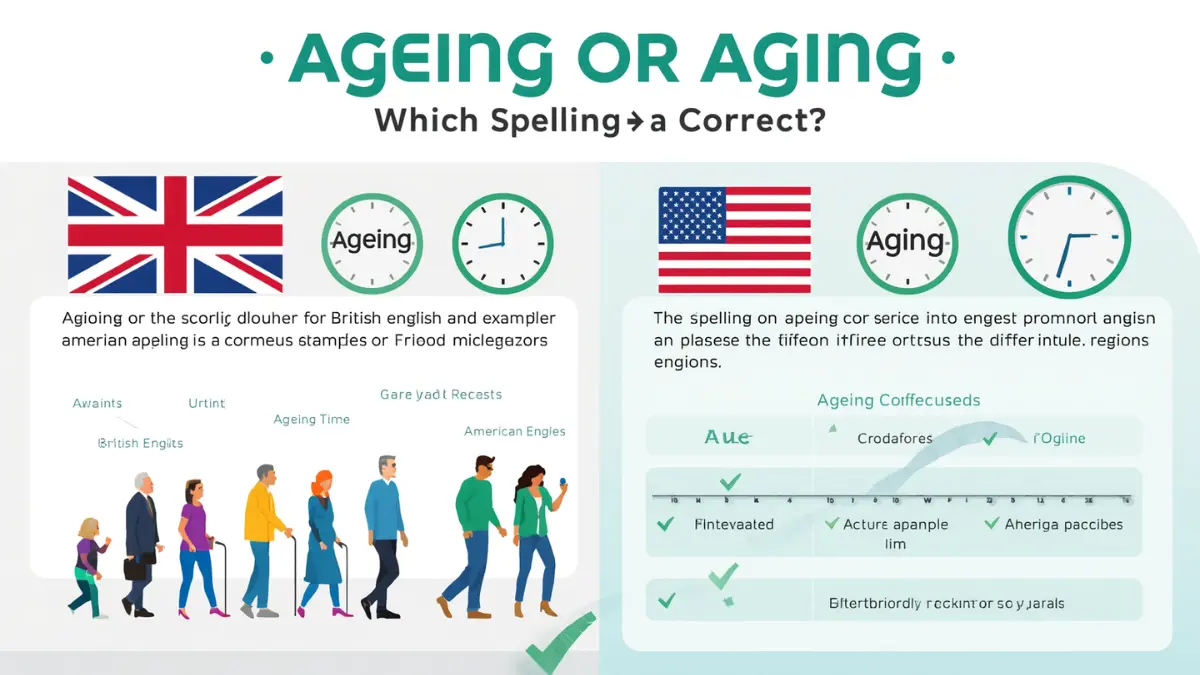
Both ageing and aging are correct spellings.
- Ageing is the preferred spelling in British English.
- Aging is the preferred spelling in American English.
Examples
British English
- The ageing population is increasing.
- Many ageing buildings require repairs.
American English
- The aging population is growing rapidly.
- Scientists study the aging process.
The meaning is exactly the same. The only difference is regional spelling preference.
Read more: Dialog or Dialogue: What’s the Difference
The Origin of Ageing or Aging
The word age comes from Old French aage and Latin roots related to time and lifespan.
When English speakers created the present participle form, they added -ing to age. Over time, different spelling traditions developed.
British English generally keeps the extra e before adding -ing, creating ageing. American English simplified the spelling and adopted aging as the standard form.
Although both forms have existed for centuries, regional writing standards eventually made one spelling more common in the UK and the other more common in the United States.
British English vs American English Spelling
The difference between ageing and aging follows a broader pattern found in many English words.
Read more: Period Inside or Outside Parentheses? Grammar Rules Explained
| British English | American English |
| Ageing | Aging |
| Judgement | Judgment |
| Travelling | Traveling |
| Cancelling | Canceling |
| Ageing population | Aging population |
Comparison Table
| Feature | Ageing | Aging |
| Meaning | Growing older | Growing older |
| English Variant | British English | American English |
| Used in UK | Yes | Rarely |
| Used in USA | Rarely | Yes |
| Correct Spelling | Yes | Yes |
| Formal Writing | Yes | Yes |
The meaning never changes. Only the regional spelling changes.
Which Spelling Should You Use?
The best spelling depends on your audience.
Use “Ageing” If:
- You write for a UK audience.
- Your readers are in Australia.
- Your readers are in New Zealand.
- Your readers are in South Africa.
- Your organization follows British English rules.
Use “Aging” If:
- You write for a US audience.
- Your company uses American English.
- You publish primarily in American media.
For Global Audiences
Choose one spelling and stay consistent throughout your document. Consistency is more important than choosing one version over the other.
Common Mistakes with Ageing or Aging
Many writers make these mistakes.
| Incorrect | Correct |
| Mixing ageing and aging in one article | Use one style consistently |
| Assuming ageing is wrong | Ageing is correct in British English |
| Assuming aging is wrong | Aging is correct in American English |
| Changing spelling randomly | Follow audience preference |
Example of Incorrect Usage
❌ The ageing population is increasing, and experts study the aging process.
Better Usage
✅ The ageing population is increasing, and experts study the ageing process.
OR
✅ The aging population is increasing, and experts study the aging process.
Ageing or Aging in Everyday Examples
Email Example
British English
Our company is developing services for the ageing population.
American English
Our company is developing services for the aging population.
News Example
British English
The ageing workforce presents new challenges.
American English
The aging workforce presents new challenges.
Social Media Example
British English
Tips for healthy ageing after 50.
American English
Tips for healthy aging after 50.
Formal Writing Example
British English
Researchers examined factors affecting healthy ageing.
American English
Researchers examined factors affecting healthy aging.
Ageing or Aging – Google Trends & Usage Data
Search trends show clear regional preferences.
| Country | Preferred Spelling |
| United States | Aging |
| United Kingdom | Ageing |
| Australia | Ageing |
| New Zealand | Ageing |
| Canada | Both, with ageing slightly common in British-style writing |
Usage Contexts
Ageing
- UK government reports
- British newspapers
- Commonwealth publications
Aging
- American medical journals
- US newspapers
- American business writing
The popularity of each spelling closely follows regional English standards.
Keyword Comparison Table
| Variation | Correct? | Region |
| Ageing | Yes | British English |
| Aging | Yes | American English |
| Ageing process | Yes | British English |
| Aging process | Yes | American English |
| Healthy ageing | Yes | British English |
| Healthy aging | Yes | American English |
FAQs
Is ageing or aging correct?
Both are correct. The choice depends on whether you use British English or American English.
Why do British people write ageing?
British English traditionally keeps the letter e before adding -ing, creating ageing.
Why do Americans write aging?
American English adopted simplified spelling aging, which became the standard in the United States.
Which spelling is more common worldwide?
Both are widely used. Aging dominates in the United States, while ageing is common across many Commonwealth countries.
Is ageing wrong in America?
It is not technically wrong, but it is uncommon and may look unusual to American readers.
Is aging wrong in the UK?
It is understandable, but British publications generally prefer ageing.
Should I use ageing or aging for SEO?
Use the version that matches your target audience. For international SEO, consider mentioning both spellings naturally in your content.
Conclusion
The debate between ageing or aging is not about right versus wrong. Both spellings are correct and carry the same meaning: the process of growing older. The real difference lies in regional language preferences.
If you write for readers in the United Kingdom, Australia, New Zealand, or other Commonwealth countries, ageing is usually the preferred choice. If your audience is in the United States, aging is the standard spelling used in newspapers, academic publications, business documents, and everyday communication.
For international content, the most important rule is consistency. Pick the spelling that matches your audience and use it throughout your article, report, website, or email. Consistent spelling improves readability, looks more professional, and helps meet audience expectations.
By understanding the difference between ageing and aging, you can write with greater confidence and choose the spelling that best fits your readers and communication goals.

I’m BeaconRise, the author behind GrammarCircle, where I help readers understand English grammar, language differences, and writing concepts in a simple and practical way. I specialize in explaining confusing words, grammar rules, and “difference between” topics so learners can easily improve their writing and communication skills.