Many people type “truely” when writing emails, school assignments, social media posts, or business messages. Spellcheck tools often underline the word, which creates confusion. Is it truely or truly? This is one of the most searched spelling questions in English because both words seem like they should work.
The confusion happens because many English adverbs end in “-ly,” so people naturally think the word should be spelled “truely.” However, English spelling rules can be tricky. In reality, only one spelling is correct in modern English.
Understanding truely or truly is important for students, bloggers, writers, and professionals. Using the correct spelling improves grammar, writing quality, and professional communication. A small spelling mistake can affect credibility, especially in formal writing.
In this guide, you will learn the correct spelling, history, grammar rules, common mistakes, usage examples, FAQs, and writing tips. By the end, you will confidently know whether to use truely or truly in every situation.
Truely or Truly – Quick Answer
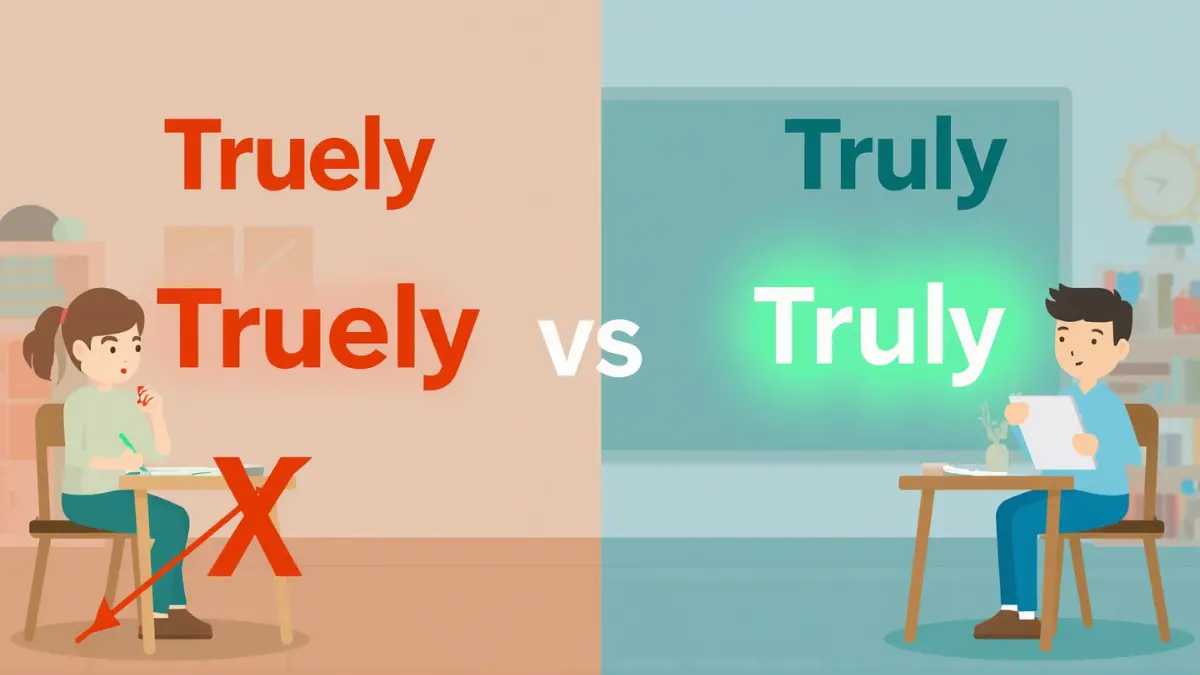
Correct Spelling
✅ Truly = Correct
❌ Truely = Incorrect
Meaning of “Truly”
“Truly” means:
- Honestly
- Really
- Sincerely
- Genuinely
Examples
✅ I truly appreciate your help.
✅ She is truly talented.
✅ He truly loves his family.
Read more: Up to date or Up-to-Date: Meaning and Differences explained?
Incorrect Examples
❌ I truely appreciate your help.
❌ She is truely happy.
Quick Memory Tip
The word true drops the “e” before adding “-ly.”
- true → truly
The Origin of Truely or Truly
The word truly comes from the Old English word triewe, meaning faithful or trustworthy. Over time, the adjective “true” became common in English.
Normally, many adjectives add “-ly” to form adverbs:
- quick → quickly
- brave → bravely
However, “true” is different. The silent “e” is removed before adding “-ly,” creating the word “truly.”
Readv more: Benefitting or Benefiting: Understanding the Correct Spelling ?
Why the Confusion Exists
People often write “truely” because:
- The base word is “true”
- Most similar words keep the “e”
- English spelling rules are inconsistent
Even though “truely” looks logical, it is not accepted in standard English dictionaries.
British English vs American English Spelling
The spelling of truly is the same in both British and American English.
Comparison Table
| Usage | British English | American English |
| Correct spelling | Truly | Truly |
| Incorrect spelling | Truely | Truely |
| Formal writing | Truly | Truly |
| Casual writing | Truly | Truly |
Key Point
There is no spelling difference between UK and US English for this word.
Which Spelling Should You Use?
You should always use truly in every type of English writing.
Use “Truly” For:
- Academic writing
- Business emails
- Social media
- Blog posts
- Formal letters
- Everyday conversation
Audience Advice
| Audience | Correct Choice |
| US readers | Truly |
| UK readers | Truly |
| International audience | Truly |
Never use “truely” in professional or academic writing because it is considered a spelling error.
Common Mistakes with Truely or Truly
Mistake 1
❌ I am truely sorry.
✅ I am truly sorry.
Mistake 2
❌ She truely understands me.
✅ She truly understands me.
Mistake 3
❌ This gift is truely special.
✅ This gift is truly special.
Mistake 4
❌ He was truely excited.
✅ He was truly excited.
Easy Grammar Rule
Remove the “e” from “true” before adding “-ly.”
- true → truly
Truely or Truly in Everyday Examples
In Emails
✅ I truly appreciate your support.
✅ Thank you truly for your time.
In News Writing
✅ The athlete was truly inspirational.
✅ The event was truly historic.
On Social Media
✅ This movie is truly amazing.
✅ I am truly grateful today.
In Formal Writing
✅ The research was truly groundbreaking.
✅ She truly deserves recognition.
Truely or Truly – Google Trends & Usage Data
Search interest for “truely or truly” remains high because many people accidentally spell the word incorrectly.
Countries with High Search Interest
| Country | Search Popularity |
| United States | Very High |
| United Kingdom | High |
| India | High |
| Canada | Moderate |
| Australia | Moderate |
Why People Search This Keyword
People commonly search this term when:
- Writing professional emails
- Correcting grammar mistakes
- Learning English
- Preparing assignments
- Using spelling checkers
Writing Contexts
| Context | Common Usage |
| Academic writing | Truly |
| Business communication | Truly |
| Social media | Both appear, but “truely” is incorrect |
| Blogging | Truly |
Comparison Table: Truely vs Truly
| Feature | Truely | Truly |
| Correct spelling | ❌ No | ✅ Yes |
| Dictionary accepted | ❌ No | ✅ Yes |
| Used in formal writing | ❌ No | ✅ Yes |
| Used in professional emails | ❌ No | ✅ Yes |
| Grammar status | Misspelling | Standard English |
FAQs About Truely or Truly
Is “truely” a real word?
No. “Truely” is a spelling mistake.
What is the correct spelling?
The correct spelling is “truly.”
Why does “true” lose the “e”?
English grammar removes the silent “e” before adding “-ly.”
Is “truly” used in British English?
Yes. Both British and American English use “truly.”
Can I use “truely” informally?
You can type it accidentally, but it is still incorrect.
Is “truly yours” correct?
Yes. “Truly yours” is a correct phrase in formal writing.
Why do many people misspell truly?
Because “true” normally suggests adding “-ly” without removing the “e.”
Conclusion
Understanding the difference between truely or truly is simple once you know the spelling rule. The correct word is always truly, while truely is incorrect. Even though “truely” may look natural because it comes from “true,” English grammar removes the silent “e” before adding “-ly.”
This spelling rule is important in emails, essays, business writing, academic work, and social media posts. Using the correct spelling makes your writing look more professional and trustworthy. Since both British and American English use the same spelling, you can confidently use “truly” anywhere in the world.
A helpful trick is to remember:
- true → truly
The more you practice writing the word correctly, the easier it becomes. Good spelling improves communication and helps readers focus on your message instead of grammar mistakes.

Hi, I’m DreamAnchor, the author behind GrammarCircle. I am passionate about language, writing, and helping people understand the small but important differences in English words and concepts. Through my work, I focus on explaining grammar rules, word comparisons, and language usage in a simple and practical way so that students, writers, and professionals can improve their communication skills.